




Table of Contents
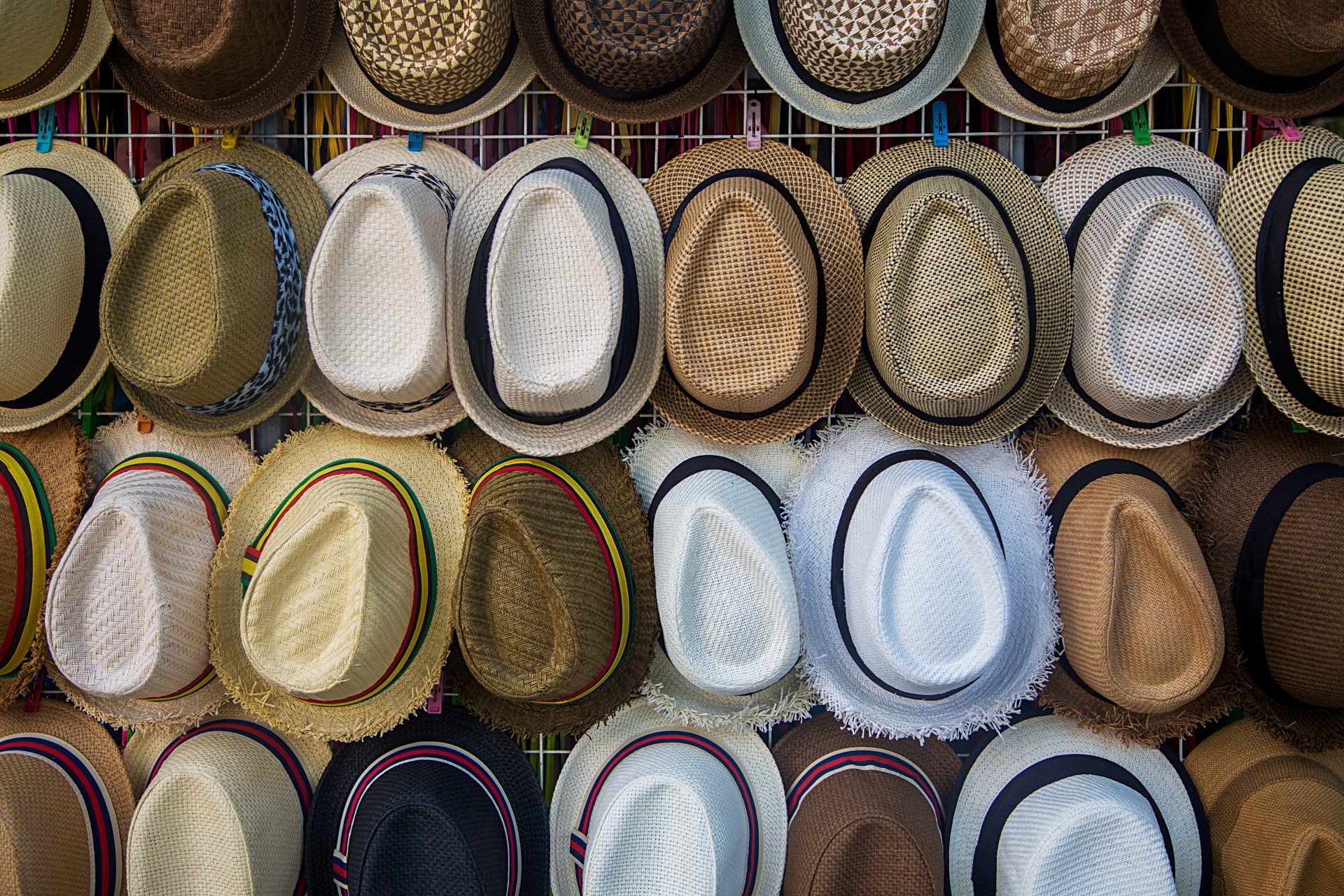
If you look at any old painting made or photograph taken in the past 300 years, one thing you might notice is just how people back then were rarely seen bareheaded.
From fancy crowns seated atop a king’s noggin to a simple straw hat shielding a peasant’s eyes, hats seemed to be everywhere back in the day.
And yet, they are nowhere to be found nowadays, with a special exception for the humble baseball cap. Even at formal events such as weddings and funerals, hats are generally nowhere to be seen even if the suits that they used to be paired with stay fashionable.
So, what killed the hat and might it make a comeback in the near future?
Why wear a hat at all?

Hats have been a part of human fashion from the moment people started weaving plant and animal material into clothing.
Otzi the Iceman, a mummy found frozen in the Alps, died around 3,250BC and among his preserved possessions was a cap made from animal hides.
We also have evidence people living in ancient civilisations wore hats, with ancient Egyptian and Greek artworks showing people wearing hats while working in the fields.
Hats were also part of daily fashion in other ancient civilisations such as Mesoamerica, China and India, where wearing a fancier hat would often be reserved for people of higher standing.
Thus, it can be inferred that hats were multi-purposed – to provide protection, whether from the elements or falling objects, and as a status symbol.
Additionally, hats could also be used to shown allegiance to a cause, as evidenced by the red Phrygian caps popular among French revolutionaries in the late 18th century.
Gender was also never a boundary when it came to hat-wearing, with European women’s fashion in the modern era including extremely extravagant hats, for the rich at least.
Hats would continue to stay relevant all the way into the 19th century, when wealthy men would wear top hats and their poorer counterparts flat caps.
The early 20th century saw fedoras and bowler caps replace the top hat, while women adorned their heads with pillbox hats and cloche hats.
And yet, by the turn of the century, hats mostly sat in wardrobes, gathering dust.
No wear like class wear

When it comes to explaining why something goes out of fashion, it never is that simple.
There rarely ever is a singular reason one can point to. Oftentimes, there are a variety of factors at play, with lots of maybes rather than certainties.
Thus, any discussion of fashion, such as why hats are not as popular nowadays, will result in hypothetical rather than definite answers.
In any case, one reason why hats are no longer everywhere is because we tie hats less to social class these days.
Back in the day, the tycoons of the time would never be seen without a hat made of the finest material by the most famous hatmakers.
Rich folks these days, such as Elon Musk and Jeff Bezos, have little need to show off their wealth through headgear.
In fact, rich folks tend to try to appear as “normal” as they imagine, with people such as Mark Zuckerberg wearing casual wear such as sweaters and sweatpants.
At most, pricey watches and cars are more popular ways for the wealthy to flaunt their riches via fashion these days.
Let’s stay casual
Another major contributor to the decline of hats in fashion might be the casualisation of fashion in the past century.
In the 20th century, more and more people began enrolling in college. Before this, college and university students were expected to dress formally – hats suits, ties and dress shoes.
By the 1940s and afterwards, such dress was seen as excessive and old-fashioned. Casual wear was the order on most college campuses, with jeans, shorts, flannel shirts and sweatshirts being commonly worn.
While some institutions kept strict dress codes, including uniforms with hats, most public colleges had liberal rules regarding dress.
After these college students graduated, they would bring into society their preference for casual wear, which also meant wearing hats became far more scarce.
The 1960s were possibly another nail in the hat’s coffin, as hippie culture was in full swing then. Fashion changed further then, with the professional look of the 1950s being rejected as being boring. Why wear a bowler hat when a beanie would do?
As the 20th century progressed, people began prioritising convenience, as evidenced by the rise of canned food and disposable packaging.
The same likely applied for clothes, as people preferred to dress simpler and easier, so the hat lost its place in the world.
Things that go bump in the car
Perhaps it is not a coincidence that hats went out of fashion right when cars became more widely available for everyone.
Before cars became widely available for the average citizen, trains, buses and trams were most people’s mode of transport.
These often had high ceilings, which allowed passengers to wear their hats comfortably, without the need to remove them at any point.
Then came the rise of the private car, which gave people the means to drive themselves around.
Funnily enough, the earliest cars did actually have enough headroom to accommodate hat-wearing passengers.
The modern sedan, however, does not afford much comfort to any passenger who insists on keeping their hat on.
Think about it, even without a hat atop your head, it is not beyond the realm of possibility that you have bumped your head against the ceiling before without trying.
So, hats likely became more of a hassle for people going out for a drive and ended up being left at home.
Not all hats

It should be noted hats and headwear in general have not completely disappeared from public life. In Malaysia alone, the songkok is visible at formal events and at the mosque during prayer hours.
And baseball caps are still popular headwear worldwide, worn by farm workers and hip-hop artistes on stage alike.
Mortarboards are synonymous with school and university graduations, while hardhats remain necessary at construction sites.
The armed forces and the police in Malaysia also have their own choice of headwear, ranging from berets to peak caps.
So to say hats have gone completely extinct is wrong, but one can definitely say that they are no longer a necessity for polite, wider society.
That said, there is nothing stopping you from wearing a hat this instant. Who knows? You might just start a trend!
After all, fashion is a cycle and nothing ever truly stays dead in the world of fashion.
READ MORE:
Exclusive: Dickson Lim, renegade in couture
Why Indian piercings were never just about beauty
Rise of thrift culture in Malaysia



