




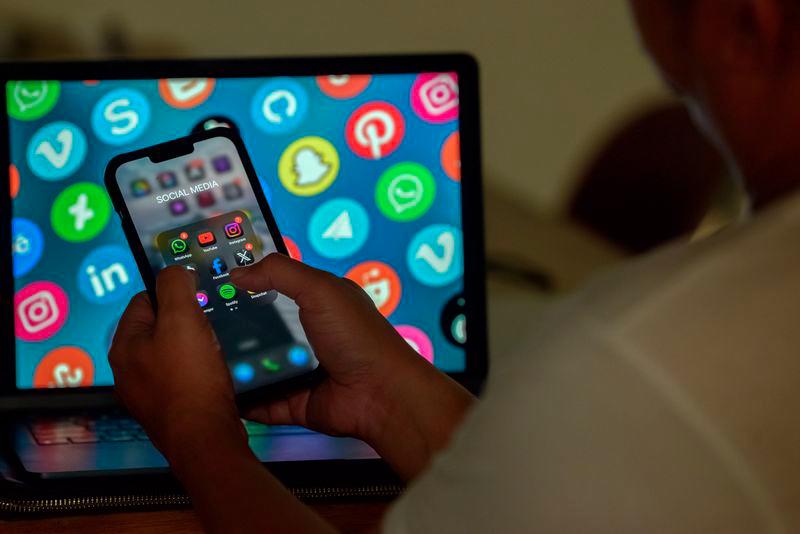
PETALING JAYA: As Malaysia enters 2025, internet messaging and social media services providers with eight million or more users are mandated to hold an Applications Service Provider class licence (ASP (C) Licence).
This has sparked a nationwide debate about online safety versus freedom of expression.
Cyber security specialist firm Novem CS CEO Murugason Thangaratnam said the new licence is required pursuant to the Communications and Multimedia Act 1998 for providers to make their services available in Malaysia.
“Licensing is a way to create a trusted ecosystem, provided it is not biased or has a hidden agenda.
So transparency in its implementation is the key to its success.”
He said online safety and freedom of expression are not mutually exclusive, but jointly achieve harmony, and that the new licensing requirement could serve as a cornerstone for building trust in the digital space.
Murugason emphasised that democracy thrives on the free exchange of ideas which enables the public to make informed decisions.
ALSO READ: Social media licensing: Telegram, third provider to receive license – Fahmi
“However, the ease of online communications has led to abuses such as cyberbullying, threats and the spread of extremist content, which should not be protected.
“Online users are increasingly aware of the importance of safety. Most are willing to accept additional security measures, such as the need for additional licensing, provided their rights and privacy are protected.”
Murugason said “overreach” is a pressing concern and may discourage some Malaysians from expressing their opinions online out of fear of surveillance or content takedown.
“Social media platforms that are now accountable for moderating harmful content must navigate the fine line between removing illegal content and preserving lawful speech.”
Hence, he said a balanced review system is critical to ensuring that platforms respect users’ rights while adhering to the new licensing requirement.
ALSO READ: Communications Ministry reviewing France and Australia’s social media legislation for children
He said licensing should incentivise platforms to create robust review systems that respect free speech while effectively addressing harmful content since this is crucial to fostering trust in the digital space.
The new licensing requirement focuses on social media and messaging platforms as it aims to enhance child safety and curb harmful behaviour, he added.
In contrast, the European Union’s (EU) Digital Services Act (DSA) applies to a broader spectrum, including e-commerce platforms and online marketplaces.
He said the DSA imposes stricter transparency and accountability requirements, such as annual independent audits for those designated as “very large online platforms”.
Besides that, India’s IT Rules 2021 mandate swift action where social media platforms must remove illegal content within 36 hours of receiving a complaint.
Murugason said the comparisons highlight opportunities for Malaysia to refine its approach by incorporating lessons from more comprehensive frameworks in the EU and India.
“A core difficulty lies in defining harmful content.
“Cultural, social, and political differences influence perceptions of what constitutes offensive material.
“For instance, critical commentary on governments may be considered harmful in some countries but viewed as legitimate dissent that is protected by ‘free speech’ in democracies.”
He said a universal definition of “harmful content” is nearly impossible to achieve due to cultural and societal differences, so Malaysia’s approach should be context-sensitive and adaptable to local needs.
Murugason said cyber threats such as deepfakes and online scams pose significant risks, and countries that have successfully tackled them can offer valuable insights.
“Leveraging advanced technologies like artificial intelligence-driven moderation and blockchain programmes for content verification could enhance the efficacy of our licensing regime.”
Murugason added that investing in cutting-edge technologies and fostering public-private collaborations will be crucial to combating such emerging threats.
The new licensing requirement is a pivotal step to shaping the country’s digital future and its success hinges on striking the delicate balance between safety and freedom, he said.



