




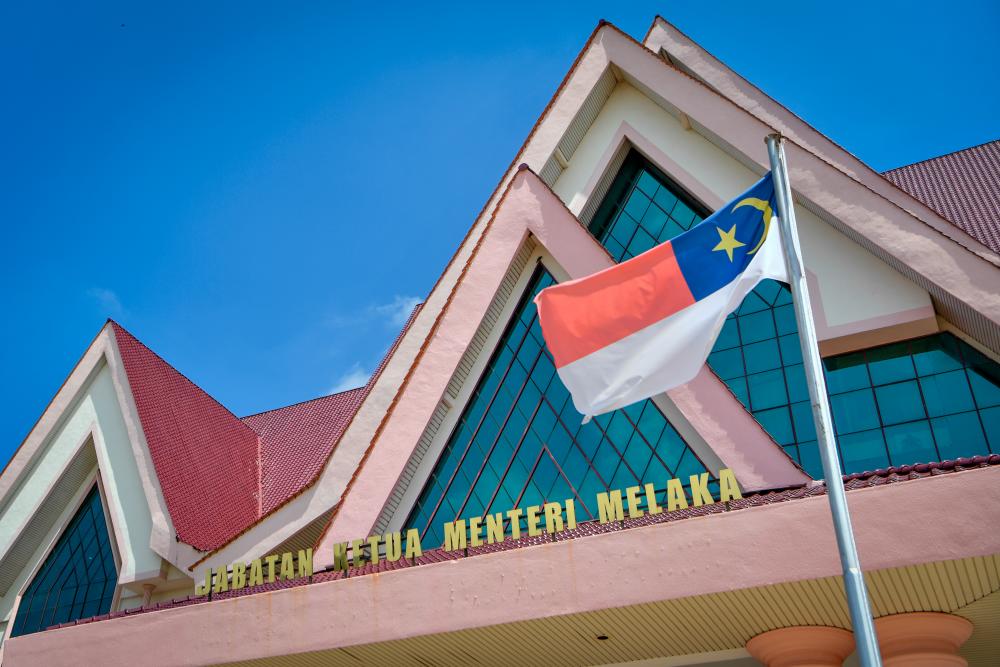
PETALING JAYA: The Malacca snap election is turning out to be an intense battle, yet the most sedate the country has ever seen.
As the countryâs second smallest state, it has only 28 seats. Yet there are 112 contenders. More than that, every seat will see at least a three-cornered fight.
On the other hand, the ban on open campaigning will also make it the most placid ever. The main battles are likely to be fought in cyberspace.
These conditions will make it all the more challenging for candidates to woo the voters for support.
It will be arduous, as political analyst Dr Jeniri Amir of Universiti Malaysia Sarawak pointed out.
Ultimately, the election will be a battle among three contending forces â the Perikatan Nasional (PN), which is the incumbent, Barisan Nasional (BN) and Pakatan Harapan (PH).
PH actually won the state in the 2018 general election but its government fell when several lawmakers switched camps in the infamous Sheraton Move in March last year that also led to a change of administration at the federal level.
BN then teamed up with Bersatu, which had spurned its partners in PH, as well as PAS to take charge of not just the federal government but several state governments, including Malacca, as well.
But the new alliance was short-lived. Last month, four lawmakers from BN announced that they no longer supported incumbent Chief Minister Datuk Seri Sulaiman Md Ali, leading to the dissolution of the state assembly and paving the way for the snap polls, which will be held on Nov 20.
When nominations closed yesterday, a total of 112 have thrown their hat in the ring.
Umno, which will lead the charge for BN, is contesting in 20 seats. Its partners MCA will vie for seven seats and the MIC will go for the last seat.
From PN, Bersatu will field candidates in 15 constituencies, PAS will have eight and Gerakan will go for five.
From PH, a total of 11 seats will be contested by PKR. Amanah will take nine and the DAP eight.
There are smaller parties such as Perkasa, which is contesting in five seats and Parti Perikatan India Muslim Nasional, which is going for only one seat. Also in the fray are 22 independents, but collectively they are not expected to pose a meaningful challenge to the big three.
Jeniri noted that with the standard operating procedure (SOP) to curb the spread of Covid-19 still in place, candidates will have to be more creative in their strategy to get support.
âThis will be especially tough for the newbies,â he said. Given that there will be no house-to-house visits or ceramah, candidates are most likely to bank on social media to carry their message across to the voters.
On the other hand, Jeniri said, the restrictions could work in favour of the incumbents. Having had a record of serving their constituents, they are already familiar faces. âUnlike them, the younger contenders will have to win the confidence of the voters,â he said.
The Election Commission (EC) is not without its challenges either. Jeniri said it would be tough for the EC to ensure that at least 70% of the 495,195 voters will turn up to cast their ballots.
âThis will be a real challenge,â he added.



