



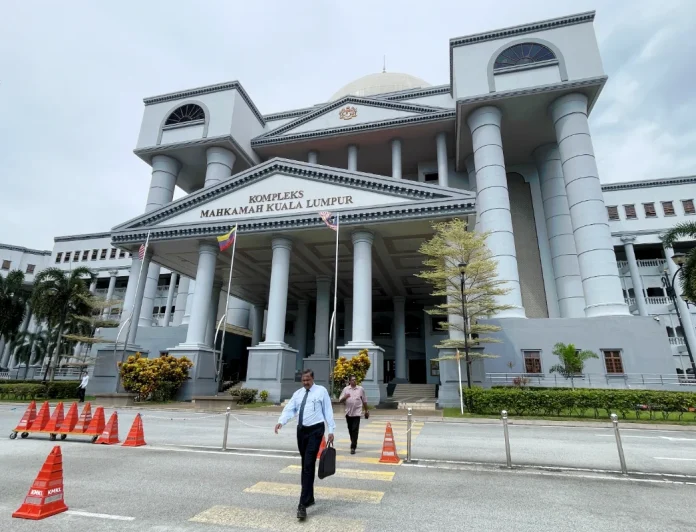
Postponed justice leaves victims in prolonged states of fear, vulnerability, emotional distress, says NGO
PETALING JAYA: Persistent delays in Malaysia’s courts continue to erode public trust and undermine fundamental human rights, warned Global Human Rights Federation (GHRF) president S. Shashi Kumar, describing prolonged justice as one of the nation’s most damaging systemic failures.
In the run-up to Human Rights Day on Dec 10, Shashi said delays do more than just postpone justice, as they also inflict ongoing harm on victims, leaving them in prolonged states of fear, vulnerability and emotional distress.
“When justice is postponed, victims are left unprotected while perpetrators continue their actions without meaningful consequence. The delay itself becomes a form of harm,” he said.
He cited the decades-long legal battle of Indira Gandhi, who remained separated from her abducted daughter for more than a decade despite multiple court rulings in her favour, as a stark example of systemic failure.
He also highlighted stalled investigations involving controversial Islamic preachers, which left victims and whistleblowers feeling exposed and reinforced a “culture of fear, silence and impunity”.
“These recurring delays erode trust in police, the judiciary and the government.”
According to him, the delays often follow predictable patterns, particularly in cases involving race, religion or influential individuals.
“This fuels the belief that certain groups receive preferential treatment while others wait indefinitely for justice,” he said, noting that such practices violate Article 8 of the Federal Constitution, which guarantees equality before the law.
Malaysia has seen multiple high-profile cases in which prolonged justice caused severe consequences.
Shashi referred to disputes over unilateral conversion, which have torn families apart, and extended investigations involving controversial preachers that traumatised victims further as well as heightened community tensions.
He also cited the cyberbullying case of teenager A. Rajeswary, better known as “Esha”, in which repeated reports went unheeded.
Esha ultimately died by suicide, most likely feeling she had no protection or recourse.
“In all these cases, the pattern is clear. Delayed justice is not merely administrative inefficiency, it is also a direct violation of human rights,” said Shashi.
His concerns echo the pledge made by newly appointed Chief Justice Datuk Seri Wan Ahmad Farid Wan Salleh, who in his oath-of-office address vowed to address the country’s mounting case backlog.
“Justice delayed is justice denied. I know many litigants are frustrated that their cases take years to resolve,” he said, adding that the judiciary is working with the government to increase courtrooms, appoint more judicial commissioners and deploy circuit judges to clear ageing cases within set timelines.
GHRF also proposed several reforms to ensure timely justice:
- Strengthen enforcement of court orders with mandatory timelines, improved inter-agency coordination and penalties for non-compliance.
- Set statutory deadlines for investigations and prosecutions, ensuring high-profile and sensitive cases, especially those involving vulnerable victims, do not stall.
- Reform laws on unilateral conversions and custody disputes to close loopholes, preventing prolonged and emotionally damaging battles.
- Eliminate political and religious interference in legal processes, reinforcing judicial independence and impartiality.
Shashi also called on civil society and ordinary Malaysians to help improve accountability.
NGOs and community groups should document cases, monitor high-profile cases and assist with police reports to expose delays or selective enforcement, he said.
“We must promote a culture of zero tolerance for impunity. Society must reject narratives that excuse perpetrators because of influence, status, race or religion.”
In his Human Rights Day message, he emphasised to Malaysians that the nation’s strength lies in its diversity and commitment to fairness.
“Our Constitution binds everyone. Every citizen, regardless of race or religion, must be protected equally under the law.”
He warned that persistent double standards threaten social harmony, economic stability and Malaysia’s international reputation.
“No country that violates fundamental human rights based on race or religion has ever achieved true prosperity.
“Equality, non-discrimination and justice are not only moral imperatives, but are also essential for social stability and sustainable development.”



