



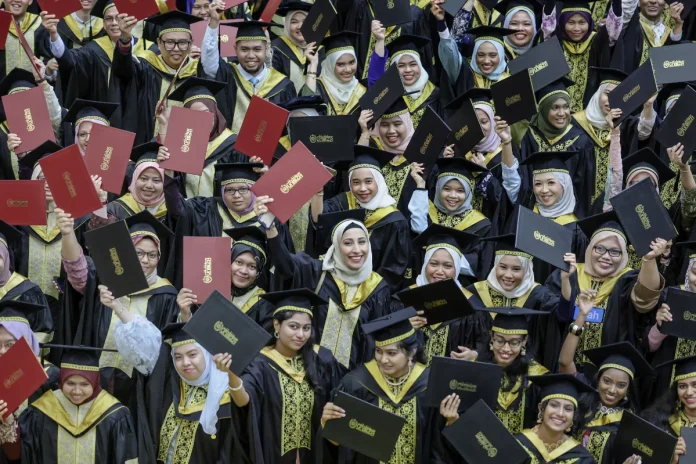
Employment rate for 2024 at nearly 95%, says Higher Education Ministry
PETALING JAYA: The job market is looking friendly to Malaysia’s new graduates, who are increasingly joining the workforce, with public universities, polytechnics, and community colleges reporting employment rates almost 95% in 2024, according to the Higher Education Ministry.
Speaking at the Dewan Negara yesterday, its minister Datuk Seri Dr Zambry Abd Kadir said 99,503 graduates from public universities secured jobs, while 5,343 remained unemployed.
He said polytechnic graduates fared slightly better, with 98.8% being employed, leaving only 199 without work, adding that community college graduates also saw a 98.8% employment rate, with just 55 students unemployed.
“The ministry remains committed to continuous efforts to address graduate-related issues through a comprehensive approach, including focusing on talent development, industry needs and national economic growth.
“Emphasis is also placed on initiatives to enhance graduate value, including strengthening the TVET ecosystem and ensuring that the direction of higher education aligns with market demand.”
He said the key initiatives by the ministry to boost graduate employability include:
- skills training & upskilling: programmes for final-year students and graduates to enhance existing skills and learn new ones;
- EXCEL programmes: experiential and competency-based learning integrating industry, community and research;
- industry partnerships: work-based learning with companies such as Intel, Nvidia, Huawei and Turkish Aerospace Industries, giving students hands-on experience in real-world settings; and
- strategic collaboration: synergy with platforms such as the National Employment Council and Industry Advisory Committees to address job-matching and skill gaps.
“There are also programmes to strengthen entrepreneurship among students through action plans implemented by the ministry via universities and polytechnics.”
Zambry said universities review courses every three to five years to ensure they remain relevant, with traditional programmes such as civil and electrical engineering now being integrated across multiple disciplines to adapt to the global shift from hands-on to minds-on learning.
He was responding to a question posed by Senator Musoddak Ahmad, who asked why, despite the initiatives, graduates continue to pursue programmes that do not match emerging industries, high-level job matching remains limited and talent continues to leave the country due to a lack of domestic opportunity.
“This is a question we often discuss when addressing talent and the so-called ‘brain drain’, which happens when skilled individuals leave the country.
“At the same time, we need to examine the issue from a broader perspective.
“One issue is that some courses are lagging behind, which requires attention.
“While we have qualified professors, universities have received feedback that certain courses remain on offer despite low demand.”
He said under the National Higher Education Plan 2026-2035, the ministry would focus on transforming higher education from a hands-on approach to a holistic minds-on approach with the aim of better preparing graduates for the workforce.
Responding to remarks by Senator Datuk Prof Dr Mohammad Redzuan Othman that some graduates take unrelated jobs, such as engineering graduates becoming e-hailing drivers for higher income, Zambry said the ministry plans to align graduate numbers with market demand and address skill mismatches through bridging and reframing programmes.
He also said graduates in humanities or social sciences are being guided to highlight marketable skills such as research, writing and communication, while STEM education now incorporates the arts, transforming STEM into STEAM (science, technology, engineering, arts and mathematics) to develop balanced, holistic thinkers.
“Adaptive and transferable skills are also emphasised through work-based learning programmes, especially in the final year, ensuring students acquire competencies relevant to the job market.”



