




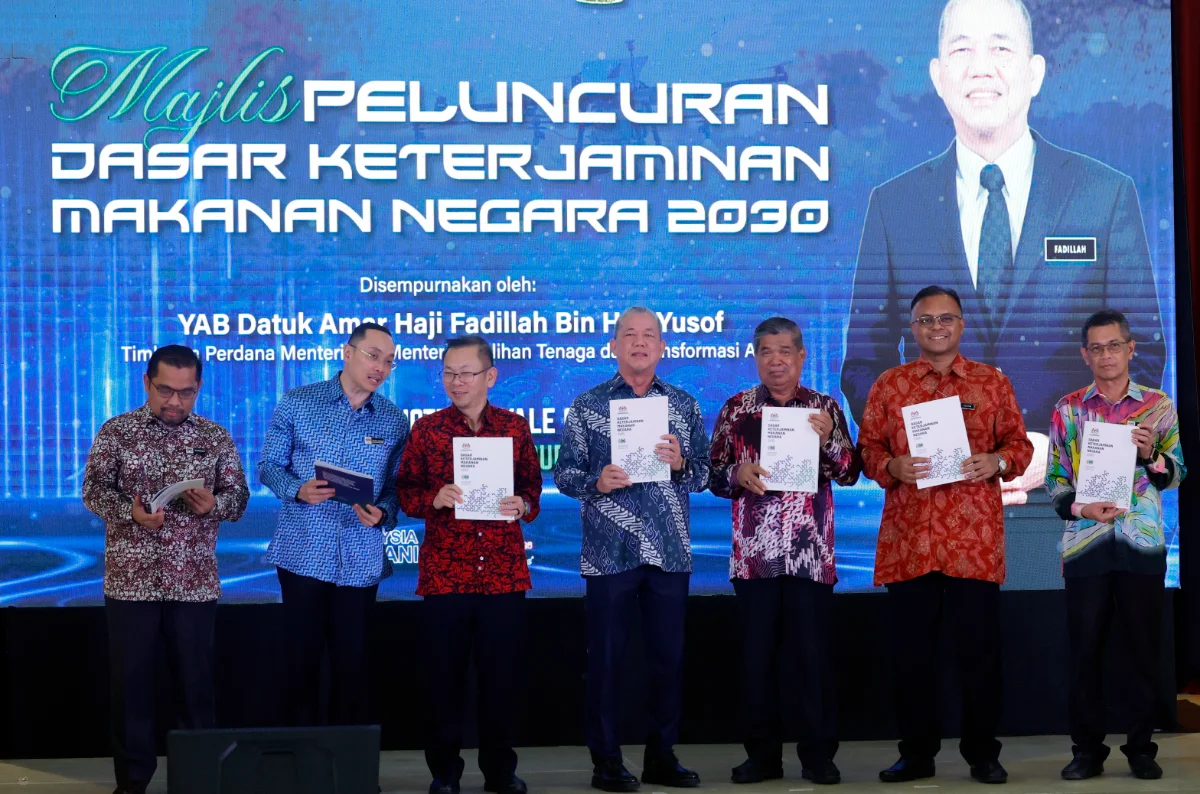
The government is drafting a National Food Security Act to ensure sustainable food supply and sovereignty, as part of a new policy to modernise agriculture and combat global uncertainties.
KUALA LUMPUR: The government is drafting a National Food Security Act to serve as a strong legal foundation for the nation’s food sovereignty.
Deputy Prime Minister Datuk Seri Fadillah Yusof said the act represents a strategic commitment to ensure Malaysia never faces food shortages.
He launched the National Food Security Policy 2030 (DKMN 2030), describing it as the main compass for transforming the agri-food sector.
Fadillah cited extreme climate change, geopolitical tensions and rising input costs as major threats to global food supply chains.
He warned these factors create a domino effect leading to global food price inflation.
“Although Malaysia remains in a stable food security position with sufficient supply and controlled affordability for the people, the government cannot afford to be complacent,” he said.
The policy aims to ensure adequate food availability, safety, quality and environmental sustainability.
It focuses on empowering farmers and fishermen through agricultural modernisation.
A key shift involves adopting smart agriculture using drones, IoT and AI to boost productivity.
This approach aims to attract youth and make agriculture a modern, profitable career.
Fadillah stressed the agenda requires a whole-of-government and society approach.
Cross-ministerial collaboration and private sector involvement are crucial to reduce import dependence.
DKMN 2030 is guided by six core pillars: availability, accessibility, utilisation, stability, sustainability and agency.
It introduces a paradigm shift emphasising sustainability through smart and regenerative practices.
The policy ultimately seeks to enhance farmers’ wellbeing and eradicate poverty through sector modernisation.



