



Access to clean water and proper sanitation is basic necessity: Specialist
PETALING JAYA: Dirty toilets and unsafe water are putting lives and dignity at risk, experts warned ahead of World Toilet Day today.
Observed annually on Nov 19 to highlight the global sanitation crisis, the day is a reminder that access to safe, clean and accessible sanitation remains a struggle for many.
Universiti Kebangsaan Malaysia public health medicine specialist Prof Dr Sharifa Ezat Wan Puteh said access to clean water and proper sanitation is not just a basic necessity, but also underpins public health, safety and human dignity.
“Clean water is essential for drinking, cooking and hygiene. It must be free from microbes and harmful pathogens even before boiling.
“Without it, communities face higher risks of waterborne diseases, such as dysentery, fever, diarrhoea, vomiting and weight gain.
“These issues are especially dangerous for children, pregnant women and the elderly,” she added, noting that poor sanitation could contaminate water sources with sewage and faecal matter, fuelling disease outbreaks.
She said clean water and sanitation are also vital for human productivity, environmental health and economic growth.
She also said women and girls are disproportionately affected when water, sanitation and hygiene (WASH) services are inadequate.
“Without safe WASH facilities, they become more vulnerable to abuse, attacks and illness. It limits their ability to study, work and live with dignity.”
The challenge is especially acute during menstruation or when safe, private spaces to urinate, defecate or wash are unavailable.
In many low-resource communities, some have to walk long distances, sometimes to rivers or communal taps, to access water.
Poor sanitation could also lead to urinary tract infections, vaginitis, kidney infections, septic abortion and even early labour, said Sharifa.
“Improving WASH facilities in schools, at home, workplaces and public areas is a crucial step towards promoting gender equity.”
She also highlighted the impact on children’s health and education.
“Clean facilities reduce waterborne diseases, lower absenteeism and prevent infections.”
She emphasised that lasting progress requires long-term solutions, including policy reforms, community participation, infrastructure investment and designs that prevent contamination.
“Clean water and sanitation are essential not just to reduce disease but also for health, dignity and overall wellbeing.
“The government needs to ensure clean water and sanitation are provided for rural areas and urban poor.
“As a community, we all play a role by keeping our environment clean, disposing of trash properly, washing ourselves to prevent disease and saving water. Water is a luxury and should not be wasted.”
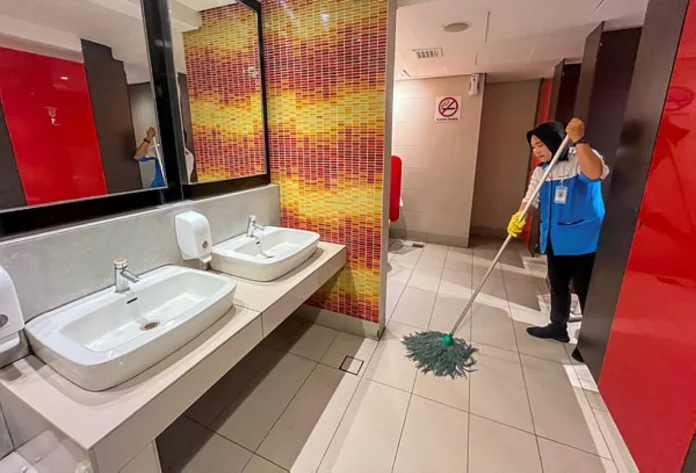
The realities of sanitation work are best understood by those on the front lines, including a veteran janitor at a corporate office known as Kak Ros.
She cleans toilets and stressed that maintaining hygiene is vital.
“People often leave toilets very dirty and do not flush, which makes my job harder.
“In the female toilets, I often find blood stains during menstruation. In the male toilets, it is often unflushed, leaving a mess.”
Her routine includes wiping sinks, mopping floors, restocking toilet paper and keeping cubicles clean.
One of her biggest challenges is dealing with inconsiderate users, who leave wet floors, unflushed toilets and litter.
“It is not pleasant but we just do our best.”
She said public cooperation would make a huge difference.
“If people flush, throw rubbish in the bin and keep the cubicles dry, it will make the toilets much cleaner for everyone.
“Most people do not see our job unless the toilet is dirty. But a simple ‘thank you’ really makes my day. It reminds me that my work matters.”
Her message to the public is simple as she said: “Treat the toilet like your own. If everyone plays their part, it stays clean for everyone.”
ALSO READ:
Litterbugs to face clean-up duty under new Bill
Food premises with dirty toilets will not have licences renewed from 2026



