




A road safety expert says stronger enforcement, not harsher penalties, is key to reducing drink-driving deaths, citing weak systems and low catch rates.
PETALING JAYA: Stronger enforcement, an effective demerit system and preventive measures at drinking outlets would do more to reduce fatal drink-driving cases than calls for harsher punishments, said a road safety veteran.
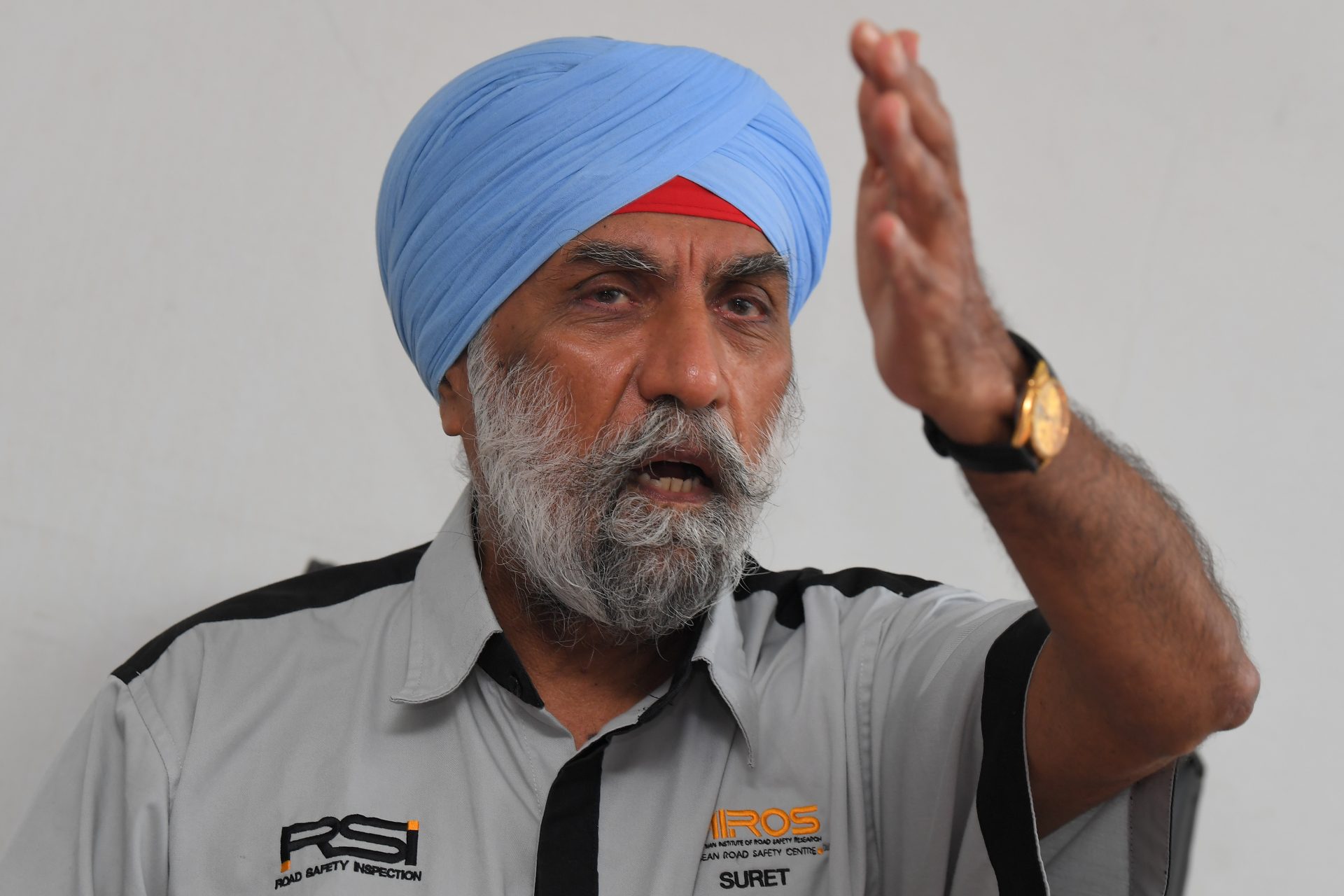
Road Safety Council of Malaysia executive council member Datuk Suret Singh (pic) said the main weakness lies not in the absence of severe penalties but in poor enforcement and a system that still allows risky drivers to remain on the road.
He said authorities should focus on increasing the likelihood of offenders being caught, improving the effectiveness of licence suspensions and closing gaps in the Road Traffic Offences Demerit Points (Kejara) system.
“We have already raised the fines and made the penalties much heavier as a deterrent. But the question is, why are people still taking the risk?
“As long as people feel they can still get around the system, enforcement will never be fully effective. The bigger issue here is the overall quality and consistency of law enforcement,” he told theSun.
Suret, who was also Malaysian Institute of Road Safety Research chairman from 2019 to 2022, said stricter punishment alone would have limited impact if drivers believe they could escape the consequences of drink-driving.
He said perceived low enforcement remains a key weakness in changing road behaviour.
“The bigger issue here is the quality and effectiveness of law enforcement. People are less likely to be deterred if they do not believe they will be caught.
“The Malaysian Institute of Road Safety Research defines this as the probability of a traffic offender being caught (POBC). The POBC in Malaysia is 30%, compared with 95% to 99%, if not close to 100%, in countries such as the UK, Australia, the US and Singapore.
“That gap is the real problem.”
He also pointed to weaknesses in summons enforcement and what he described as a failure to act firmly once serious traffic offenders accumulate enough demerit points to justify licence suspension.
“In the last meeting of the Road Safety Council, I tabled a paper stating that our Kejara system, the driver merit and demerit system, is not working as it should.
“Once you reach your 15 points, there should be no room for discretion. The licence should be suspended.
“If the system was working effectively, many of these reckless drivers would not still be on the road,” he said.
On calls for the death penalty in fatal drink-driving cases, Suret said the demand risks overlooking deeper and more practical challenges, particularly the difficulty of proving intent.
He said while public anger over fatal cases is understandable, the law still requires a much higher threshold for a murder charge, making capital punishment unlikely and difficult to pursue.
“I do not think it would be easy for such a charge to hold, because the question is how intent would be proven. You can have the heaviest penalties, but if enforcement is weak, the effect would still be limited.
“Compensation for victims is important, and I support that. But I do not support the death penalty,” he said.



