


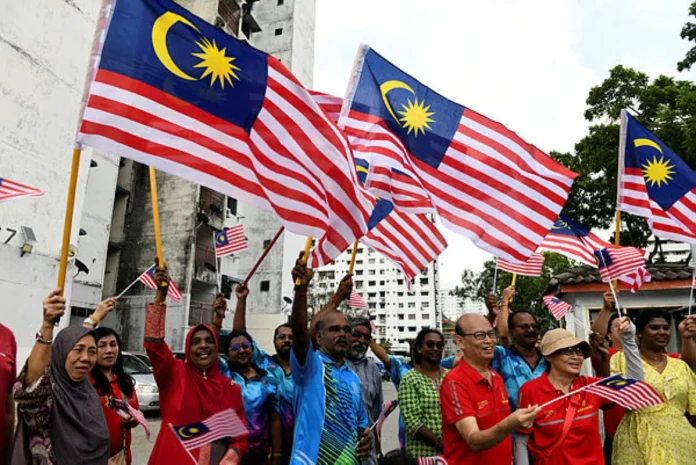
Malaysia’s National Unity Index rises to 0.7, indicating improved social cohesion driven by political stability and economic recovery, says expert.
GEORGE TOWN: The National Unity Index (IPNas), which rose to 0.7 this year from 0.629 in 2022, indicates that Malaysian society continues to have a strong foundation of social relations despite facing a challenging political and economic environment.
Universiti Sains Malaysia (USM) School of Social Sciences lecturer Prof Datuk Dr Sivamurugan Pandian said that while a score of 0.7 is not exceptional, it is sufficient to demonstrate that social cohesion has not deteriorated.
“In fact, there are signs of recovery compared with several years ago. The increase from 2022 is driven by several factors, including a more stable political climate following the 15th General Election (GE15) and the formation of the Unity Government, as well as a stronger narrative of moderation and cooperation.
ALSO READ: Malaysia’s national unity index hits 0.7, meeting 13MP target
“Post-pandemic economic recovery, although gradual, has helped ease social pressures. Strengthening inclusive policies, particularly in the areas of youth, education and cross-ethnic interaction, has also contributed to the improvement in the score,” he told Bernama.
Sivamurugan, who is a member of the National Unity Advisory Council, acknowledged that gaps in the perception of unity still exist among certain demographic groups, particularly youths who are more vulnerable to digital polarisation.
Sivamurugan said variations in unity perceptions also exist across ethnic groups and states, including Sabah and Sarawak, which place greater emphasis on autonomy and local identity.
However, he noted that such differences are not necessarily negative, but rather reflect the diversity of experiences in the country.
On the key challenges to national unity, he identified prolonged political polarisation, social media echo chambers and socio-economic disparities as three critical issues that require immediate attention.
To strengthen unity in the medium and long term, he suggested intensifying civic education and digital literacy efforts, as well as expanding cross-cultural and cross-regional programmes.
Commenting on whether the index accurately reflects unity on the ground, Sivamurugan said IPNas provides only a broad overview, as the reality of unity is more complex and dynamic, shaped by factors such as daily interactions, social media sentiment, local identities and prevailing issues.
On Nov 27, National Unity Minister Datuk Aaron Ago Dagang was reported as saying that the level of national unity had improved after IPNas achieved its target score of 0.7 this year, reflecting better community relations across races, religions and cultures.
The achievement marks an improvement compared to findings from earlier studies, which recorded scores in the range of 0.5 to 0.6. The first IPNas study, conducted in 2018, recorded a score of 0.567, which later increased to 0.629 in 2022.
Meanwhile, Principal Research Fellow at the Institute of Ethnic Studies, Universiti Kebangsaan Malaysia (UKM), Prof Emeritus Datuk Dr Teo Kok Seong, said while the score is good, the method used makes it very hard to capture sentiment in a way that reflects sincere truth.
Thus, he suggested that a more balanced combination of quantitative (mentalist) and qualitative (behaviourist) methods would better capture a more genuine reality on the actual ground.
“Institutions of learning at all levels also play a crucial role in building inter-ethnic understanding, beginning with ensuring sufficient meaningful interaction among students from different communities,” he said. – Bernama



