




Legal expert says proposal could create additional pressure on lawmakers
PETALING JAYA: Malaysia risks undermining parliamentary democracy if it imposes a legal requirement forcing MPs to attend key votes, said a legal expert.
Taylor’s University senior law lecturer Dr Wilson T.V. Tay said mandatory attendance could create additional pressure on elected representatives and erode independent decision-making.
He added that absenteeism does not affect the legal validity of parliamentary decisions as there is no constitutional obligation for MPs to be present or vote.
“I don’t think Malaysia should adopt such a requirement because MPs are supposed to represent their constituents and conduct themselves according to their conscience.
“Staying away or abstaining from voting during a key vote may be a subtle sign that the particular MP does not agree with the proposal on the table.
“It is a legitimate form of expression,” he said.
Tay added that such freedom forms an important component of the constitutional system of checks and balances.
“The ability of MPs to express disagreement with legislative proposals coming from the government is a key part of our constitutional check-and-balance mechanism.
“This should not be watered down by unnecessary requirements that give the government of the day more avenues to control MPs.”
He said from a legal standpoint, absenteeism alone does not undermine the validity of parliamentary decisions.
“There is no direct impact because there is no legal requirement for MPs to attend and vote.
“Even if members are in attendance, they can voluntarily decide not to vote if they choose to,” he added.
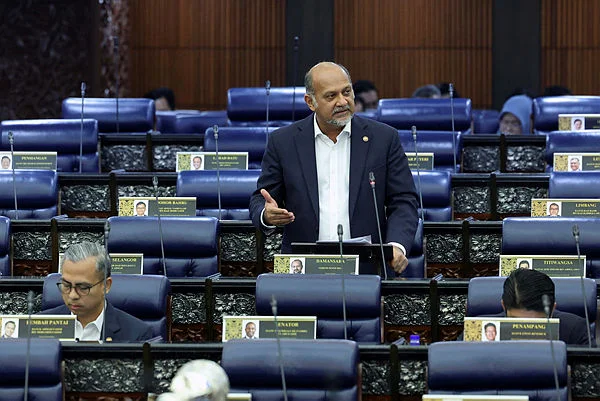
Tay pointed out that during last week’s vote on the prime minister’s term limit Bill, a significant number of MPs abstained, particularly from the opposition benches.
He explained that the legitimacy of constitutional amendments depends on whether the threshold set out under Article 159(3) of the Federal Constitution is met.
He stressed that the requirement refers to two-thirds of the total membership of the Dewan Rakyat – 148 votes – not merely the number of MPs present or voting.
“As long as the requirement is met, the constitutional amendment Bill will pass and is considered legitimate. If the votes fall below that threshold, the Bill fails.”
On proposals to impose legal requirements for attendance, Tay said such matters are typically governed by internal party discipline rather than legislation.
“Generally, the requirement for MPs to attend and vote during key votes is a matter of internal party discipline, to be enforced by the political parties to which the MPs belong.”
He added that party whips are responsible for ensuring MPs follow party positions during important votes, although enforcement largely depends on how strongly a party wishes to impose discipline.
Tay also said introducing a legal requirement would present significant practical and legal challenges.
“It would be unheard of among Commonwealth countries and proper democratic systems.
“There would be many practical difficulties in devising and enforcing such a requirement as there are valid reasons why an MP might have to be away from Parliament on a particular day.”
He added that the timing of constitutional votes is often uncertain as it depends on the government’s legislative agenda and available parliamentary time.
“As such, MPs would face difficulties managing their schedules if such a requirement is imposed.”
Tay said from a legal perspective, Article 52(1) of the Federal Constitution already provides a safeguard against prolonged absenteeism, stating that an MP who is continuously absent from every sitting for six months may have his seat declared vacant.
Beyond that, said disciplinary action should remain primarily within political parties.
“This is the current position Malaysia has and in my opinion, it strikes a reasonable balance.
“It balances an MP’s duty to represent constituents according to conscience with responsibilities to the political party that got him or her elected.”
Last week, theSun reported that an expert suggested a law be introduced to regulate absenteeism among MPs, particularly during crucial votes such as constitutional amendments.
International Islamic University Malaysia constitutional law expert Assoc Prof Datuk Dr Wan Ahmad Fauzi Wan Husain said attendance should not only be expected during major votes but also made mandatory for all parliamentary sittings.
“In all parliamentary proceedings, MPs need to be present – to participate in debates, to listen and argue, and ultimately to support or oppose any motion.”



