




How Donald Trump’s World Cup intervention sparked global backlash, challenged FIFA’s integrity and fuelled concerns over America’s soft power.
WHAT is likely to become an important part of football history annals is the own goal of the US President Donald Trump against the country.
Sporting events are remembered not only for the winners, losers and individual and team performance but also for the fair or foul play, sporting integrity or lack of it and memorable incidents on and off the field.
One incident that emerged to become headline news and a focal point of controversy in the 2026 Fifa World Cup tournament was the personal intervention by the American president following the match ban on US striker Folarin Balogun.
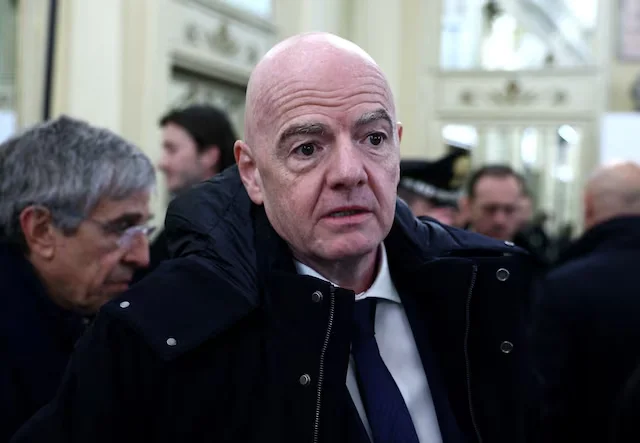
Following Balogun’s red card in the US match against Bosnia and Herzegovina, Trump called Fifa president Gianni Infantino to request a review of the suspension.
Fifa subsequently invoked Article 27 of its disciplinary code to suspend the one-match ban for a one-year probationary period, effectively clearing Balogun to play in the round of 16 match against Belgium.
Global media and institutional reaction
The decision triggered an immediate and widespread outcry, with many international observers arguing that it compromised the independence of football’s governing body.
UEFA, Europe’s governing body was one of the harshest critics, accusing Fifa of “crossing a red line”. In a statement, UEFA warned that when the certainty of rules is no longer guaranteed by their guardians, the integrity of the game is at stake.
The Belgian perspective: The Royal Belgian Football Association expressed “astonishment”, describing the reversal as a “direct contradiction” of the World Cup rule book. They attempted to lodge a formal appeal, which Fifa subsequently dismissed as “inadmissible”.
Political concerns
Global media outlets and sports commissioners have highlighted the incident as a prime example of the “weaponisation of sport for political purposes”, noting that political leaders should not dictate outcomes within independent sporting institutions.
The event has been widely labelled by international critics as an unprecedented “political storm”. While American proponents celebrated the removal of what they viewed as an unjust hurdle for the host nation, sceptics argue that the intervention fundamentally undermined Fifa’s credibility while damaging American soft power by associating it with perceived favouritism and the erosion of neutral sporting governance.
Ironically, the US hosting of football’s marquee event was expected to give American soft power an uplift.
America’s soft power
Over the past decade, American soft power has experienced a notable and, by many metrics, sustained decline.
While the US remains a dominant cultural and technological force, its ability to influence global affairs through attraction and institutional leadership has been eroded significantly by political polarisation, shifts in foreign policy and a changing global order.
This latest unprecedented, but what most observers view as typical Trumpian bullying conduct, may just be the biggest hit to American soft power given the global audience of football.
Trends in global perception (2016 to 2026)
Polling data has already reflected a significant erosion of the “favourable” view of the US over this period.
Favourability ratings: According to Gallup, the percentage of the global population that views the US favourably has remained largely below 50% since 2021. By 2026, roughly 40% of the world views the US favourably while 59% express an unfavourable view. This is a marked shift from the broader international optimism observed in the mid-2010s.
The “reliability” gap: Recent surveys from the Pew Research Centre indicate that in many nations, majorities do not believe the US contributes to global peace and stability or takes the interests of other nations into account.
Global Soft Power Index: As of January 2026, the Global Soft Power Index (Brand Finance) reported that the US experienced the steepest decline among 193 nations. While the US retains its #1 ranking primarily due to its historical influence, familiarity and cultural/technological dominance, its reputation – specifically regarding governance, human rights and rule of law – has suffered significant drops.
Main drivers of change
The decline in American soft power is frequently attributed to a combination of internal governance challenges and foreign policy shifts.
- Foreign policy and “America First” realignment
Multilateralism vs withdrawal: The strategic pivot away from traditional multilateral institutions – often associated with “America First” policies – has weakened the perception of the US as a reliable, rules-based leader.
Transactional diplomacy: A shift toward transactional or coercive approaches in international relations has come at the expense of “soft” attraction, as observers note a tendency to prioritise immediate national interest over long-term alliance building.
- Domestic political polarisation
Democracy and rule of law: Polling consistently shows that the global public is increasingly skeptical of American style democracy. When domestic institutions are seen as unstable or polarised, it diminishes the “model” power that historically attracted foreign audiences.
Institutional trust: Domestic political volatility and foreign interventions has led to a perception that the US is incapable of delivering on long-standing promises of stability, directly impacting its brand as a predictable global leader.
- Rise of strategic alternatives
China’s multi-faceted strategy: China has actively addressed its own perceptual weaknesses, focusing on economic expansion, technological advancement and cultural engagement. According to the 2026 Global Soft Power Index, China has overtaken the US in “reputation” for the first time, positioning itself as a credible alternative for countries marginalised by Western-led structures and interpretation of rule of law and order.
- Cultural and technological dominance
Despite the decline in political and diplomatic soft power, the US retains a core of attraction through its cultural hegemony and continued global dominance in arts, entertainment and media.
Another key positive is that Silicon Valley’s leadership in science and technology and the internet remains a primary anchor, ensuring the US stays central to the global agenda, despite opposition to Trump’s Maga political and economic policies.
Conclusion
The last factor – cultural and technological prowess – has not been enough to overcome the perception that American soft power is in a state of precipitous decline. This perception, reinforced by the aggressive application of hard power in Venezuela and Iran, rests on the premise that global influence is increasingly derived from credibility and alignment with international norms, rather than mere hard power and coercive capacity.
The fundamental lesson is that when a state prioritises hard power – military force, economic sanctions and unilateral “America First” policies – it creates a paradox where the tools used to achieve immediate tactical objectives simultaneously destroy the attraction that defines soft power.
In an era of decentralised information and dominance by social media, the US no longer has a monopoly of the global narrative.
The global outrage and response to Trump’s attempt to influence a sporting event is indicative that, in the arena of soft power, it is now subjected to instant global scrutiny and critique.
If the action is perceived as inconsistent with its claimed values, the backlash spreads faster and deeper, undermining its global standing and reputation.
Pollsters engaged in the next global soft power ranking surveys will undoubtedly have much to write on how the world’s largest sporting event and audience have impacted their latest findings on impacted countries.
Lim Teck Ghee’s Another Take is aimed at demystifying social orthodoxy. Comments: [email protected]



