




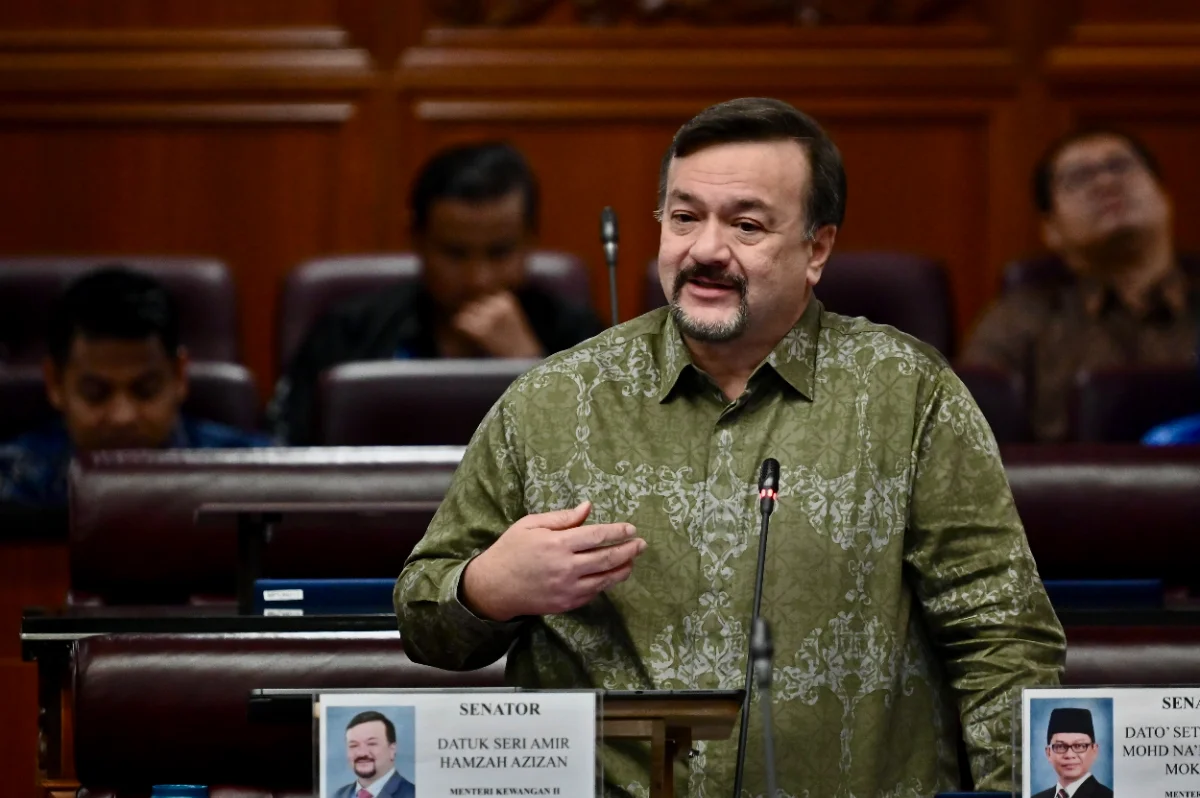
Finance Minister says tiered RON95 pricing post-quota is inefficient and risks leakages, with average use far below the 300-litre BUDI95 limit
KUALA LUMPUR: Implementing a tiered price for RON95 after a user exhausts their subsidised quota would be inefficient.
Finance Minister II Datuk Seri Amir Hamzah Azizan said such a proposal under the BUDI MADANI RON95 programme retains elements of inefficiency.
He stated the government views the idea as raising the risk of leakages without strengthening the fiscal position.
“The government will continue to closely monitor usage patterns and trends, and re-evaluate the (BUDI95) limit from time to time,” he said in the Dewan Negara.
He added this ensures the targeted subsidy policy is continuously refined for the people and fiscal sustainability.
Amir Hamzah was responding to a question on implementing a tiered price versus the current floating price for excess usage.
The current BUDI95 structure provides fuel at RM1.99 per litre for the first 300 litres monthly.
Usage exceeding this 300-litre quota is charged at a floating market price, currently around RM2.60.
A proposed alternative was to set tiered prices, such as RM2.10 or RM2.30, after the initial quota.
Amir Hamzah revealed that average petrol consumption for private users is only 98 litres per month.
This figure represents just 33% of the set monthly allocated limit of 300 litres.
He explained it would be administratively difficult to change limits at an individual level.
The programme currently involves 14 million people, making personalised quotas impractical.
“If I have to set limits like this person 301 litres, that person 350 litres — the Finance Ministry’s work will never end,” he said.
The government will consider opportunities to improve the programme after sufficient data is collected.
Amir Hamzah said proposals will be reconsidered about a year after BUDI95’s implementation. – Bernama



