




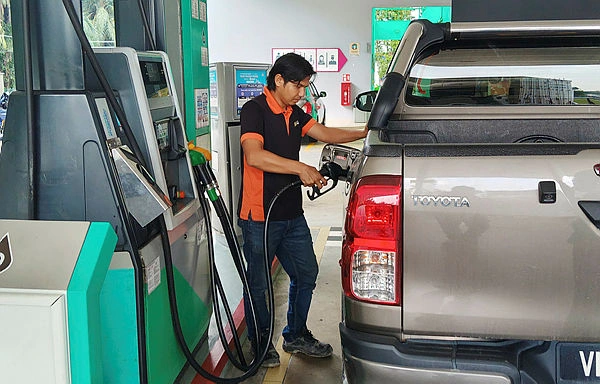
Armizan says cost of living, leakage risks and fiscal space are key factors in expanding targeted diesel subsidies to Sabah, Sarawak and Labuan.
KUALA PENYU: Three core pillars of improvement – namely the impact on the people’s cost of living, the management of leakage risks, and the government’s fiscal space position – serve as the main axis in streamlining the implementation of targeted diesel subsidies in Sabah, Sarawak, and the Federal Territory of Labuan.
Domestic Trade and Cost of Living Minister Datuk Armizan Mohd Ali said the Federal Government is highly open to working closely with state governments to realise this, given that local administrations better understand the actual situation and needs.
“These three factors are highly critical to ensure that those in need continue to receive assistance without any compromise,” he said, commenting on the improvement measures for expanding the targeted subsidy scheme in Sabah, Sarawak, and Labuan, which began implementation on July 1.
He was met by reporters after officiating the MADANI Foster Village Project at Kampung Sekalong, Menumbok, here today.
Regarding the division of jurisdiction, Armizan said that the Ministry of Finance (MoF) is responsible for policy formulation and leading negotiations, while his ministry holds the role in technical implementation aspects and regulating fuel supply.
He said the MoF, as the central agency framing the policy, is currently actively holding discussions at the agency level, in addition to scheduling its top officials to go on the ground to gather direct feedback from local leaders.
Meanwhile, Armizan said that to strengthen diesel subsidy delivery operations in the interior areas of the two states, state-level agencies will be mobilised to assist with registration and to verify eligible target groups so that no one is left out.
As an immediate intervention measure approved by the cabinet, he said small company owners and contractors who own commercial vehicles are now confirmed eligible to receive fleet card assistance.
“Registered small companies will receive 300 liters per month in their fleet cards, even if the diesel vehicle is registered under the small company’s name rather than an individual’s name,” he explained.
He added that the initial phase of the targeted diesel subsidy was implemented in the Peninsula first in 2024 to ensure smooth system monitoring before being expanded to Sabah and Sarawak, which record the highest diesel consumption rates.
Commenting on the MADANI Foster Village project in Kampung Sekalong, Armizan said a total of RM500,000 has been allocated to the village to implement five projects that will bring a direct impact to its residents.
The Papar Member of Parliament said the projects include the construction of an open multi-purpose hall, upgrading village roads, constructing and repairing culverts, installing solar lights, and building a landmark for Kampung Sekalong.
“These projects will start immediately and must be completed within this year. They are small-scale projects that will be carried out following this launch, and we expect them to be completed within two to three months,” he said.
He added that this was the ministry’s third MADANI Foster Village after the first one in Mukim Kaiduan, Papar, Sabah in 2024, and another last year in Mukim Tikam Batu, Kedah.
The MADANI Foster Village Programme is a government initiative to narrow the development gap between urban and rural areas. It aims to provide basic amenities such as water supply, electricity, roads, streetlights, internet access, and community facilities in villages in need.



