



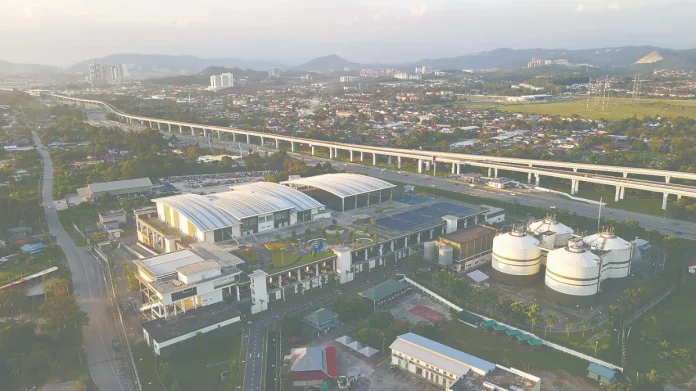
Indah Water explains why Malaysia’s sewerage tariffs were updated after 28 years to ensure sustainable, affordable and safe wastewater services nationwide.
PETALING JAYA: Sewerage services may operate largely out of sight, but they play a critical role in protecting public health, safeguarding water sources and preserving the environment, said Indah Water Konsortium (IWK).
As demand for these essential services continues to grow alongside urban development and population expansion, the company emphasised the need for a sustainable system to ensure reliable, round-the-clock wastewater treatment nationwide.
Against this backdrop, IWK highlighted that its sewerage tariffs were recently updated for the first time in nearly 28 years to support long-term operations and infrastructure upgrades, while keeping charges affordable for consumers.
The revised charges, introduced in October 2022 for desludging services and January 2023 for connected sewerage services, aim to ensure sustainable operations while continuing to provide high-quality, affordable services to customers across the country.
“The revised tariffs reflect the need to sustain and enhance Malaysia’s sewerage system to meet modern standards, comply with environmental regulations and support growing populations.
“IWK charges its customers below the actual cost of providing sewerage services.
“The average maintenance cost for premises connected to the central sewerage system is approximately RM17 per month, whereas the current tariff ranges between RM4.09 and RM15.32 per month, depending on the property category.”
The company added that the gap between current charges and actual operating costs is also evident in its desludging services, in which customers are charged RM192 per service.
It said in comparison, the actual cost is about RM430 per individual septic tank, based on an average desludging volume of 1.7m³ and a unit cost of RM263 per m³.
“Understanding the role of sewerage services and how the billing works helps in appreciating what goes into managing one of society’s most essential utilities.
“Imagine a future in which IWK could no longer operate efficiently, in which sewage treatment plants fail, leading to polluted rivers, health hazards and environmental impacts. That’s why continued support is crucial.”
IWK said the charges for connected systems are used to support the development, operation and maintenance of sewerage infrastructure.
This includes operating and maintaining 9,260 sewage treatment plants and pumping stations, as well as more than 22,000km of sewerage pipelines serving a Connected Population Equivalent of 33 million, alongside environmental monitoring, regulatory compliance and upgrades to ageing infrastructure.
“IWK’s Sewage Treatment Plants (STPs) run 24/7 to manage the constant flow of wastewater, supported by advanced monitoring systems to ensure equipment operates efficiently, minimising disruptions and supporting reliable service delivery.
“Although most STPs are mechanised and automated, thousands of workers remain essential to effectively manage and maintain the entire system.”
IWK emphasised that the impact of sewerage services is far-reaching in preventing untreated wastewater from contaminating rivers, soil and water supplies, thereby safeguarding the environment as well as public health and sanitation.
“Sewerage may not be visible in everyday life, but its value cannot be overstated. The charges paid to IWK support a nationwide system that protects health, preserves the environment and ensures safe, clean communities.”



