




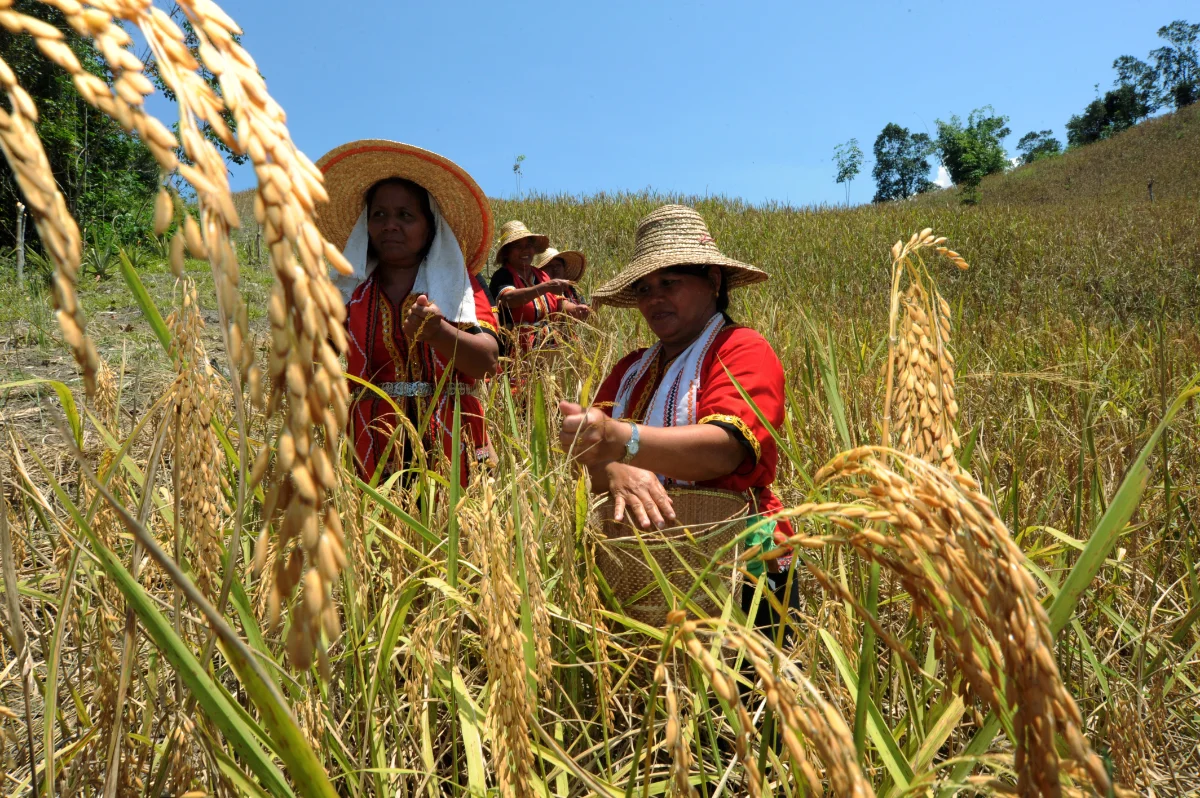
Lawmakers said the authorities must also overhaul existing food production strategies, as Sarawak has yet to fully utilise millions of hectares of native customary land for agricultural development.
KUCHING: State assembly representatives from both sides of the political divide in Sarawak agree that the state government must learn from past failures involving major food production projects, including a failed RM950 million paddy cultivation initiative.
Lawmakers said the authorities must also overhaul existing food production strategies, as Sarawak has yet to fully utilise millions of hectares of native customary land for agricultural development.
Speaking during the Sarawak State Legislative Assembly sitting today, Gabungan Parti Sarawak (GPS) assemblyman John Ilus, who represents Bukit Semuja, expressed concern that Sarawak is currently producing only 32% of the rice needed for its population of 2.8 million.
“Sarawak is still unable to produce enough food for local consumption despite having millions of hectares of land.
“The state is importing up to 68% of its rice supply from foreign countries, mainly Vietnam and India.
“Many Dayak communities, despite owning vast areas of native customary land, are not involved in paddy cultivation.
“The state government must address these policy weaknesses, as there has been too much emphasis on the production of other commodities,” he said.
Bawang Assan assemblyman, Datuk Seri Wong Soon Koh, said the failed Batang Lupar Jelapang Padi project in southern Sarawak, launched in 2013 at a cost of RM950 million, should serve as an important lesson.
“The RM950 million allocation for the Batang Lupar Jelapang Padi project came from the Federal Government.
“The funds were disbursed to Sarawak in stages.
“However, the project failed to meet its production targets due to various weaknesses and land administration issues.
“We thank the YB for Padungan, Chong Chien Jen, for raising questions about how the funds were utilised, but the more important matter is learning from the failure,” he said.
Chong had questioned why the project failed to achieve its intended objective of helping Sarawak improve rice self-sufficiency despite the substantial federal allocation.
State Minister for Food Industry, Commodity and Regional Development Datuk Seri Stephen Rundi Utom said the project failed to achieve its self-sufficiency goals partly because many landowners eventually withdrew from the initiative.
He said many native landowners had shifted towards more profitable crops such as oil palm and pepper, as paddy farming required intensive labour and costly machinery.
“The authorities are now looking at modern paddy farming methods that utilise advanced planting and harvesting technologies while reducing dependence on manual labour,” he said.
The State Legislative Assembly has since passed the Sarawak Padi and Rice Board Bill 2026.
Under the new legislation, a dedicated board will be established to oversee paddy production and strengthen Sarawak’s food security efforts amid rising living costs and growing food import bills.
Sarawak reportedly spent about RM7.3 billion last year importing rice, vegetables and meat products from overseas.



