





Table of Contents
Supergirl’s intergalactic adventure unfolds
A FUN movie on its own terms, Supergirl falls short as an adaptation of Tom King and Bilquis Evely’s Eisner Award-winning eight-issue miniseries Supergirl: Woman of Tomorrow (2021).
Difficult source material
King remains difficult to separate from his former work with the CIA, particularly given his role in the agency’s planning surrounding the Iraq invasion and the false claims used to justify it. He has written excellent comics before, especially Mister Miracle, but many of his more recent works have become repetitive exercises in patriotic angst. His Wonder Woman run is terrible, while his frequent use of nine-panel page layouts often makes his storytelling feel rigid.
The greater loss in the adaptation is Evely’s artwork. Woman of Tomorrow is hyper-saturated, colourful and visually enormous. Craig Gillespie’s film replaces much of that with greys, browns and dusty wastelands. It still looks better than the flat lighting found in plenty of modern films and television series, but as an adaptation of Evely’s work, it falls short.
It is also unfortunate that Bilquis, the planet named after the artist, has been turned into an apocalyptic wasteland where women and young girls are kidnapped and forced into marriage.
Familiar journey, major changes
The basic structure from the comics remains. Kara Zor-El meets Ruthye Mary Knoll, Krypto is shot with a poison-tip arrow and the pair pursue Krem of the Yellow Hills across several planets. The green sun, public space transport and the Brigands also survive the transition.

Beyond that, Supergirl takes major liberties, and most of its weaker decisions come from those departures.
Movie Kara is a drunk, depressed mess drifting between bars to drown her grief. Comic Kara only gets drunk while celebrating her 21st birthday on Ruthye’s planet. The film’s version is understandable because Kara has survived enormous loss and remains lonely despite having Clark (David Corenswet) and Krypto, but it sometimes pushes her into familiar damaged-hero territory.
Ruthye is less articulate and less capable in a fight than her comic counterpart, while her movie backstory is far more painful.
Krem receives the weakest treatment. In the comics, he looks like an ordinary man despite being bizarrely sadistic and capable of galactic-scale violence. Matthias Schoenaerts’ version resembles an overdesigned Cenobite reject and behaves like a bland Phase One Marvel Cinematic Universe villain. A normal-looking man responsible for that much cruelty would have been far more disturbing and interesting.

The film’s pacing is also better than the comic’s. King’s story appears to unfold over months, with Kara and Ruthye repeatedly arriving after Krem has pillaged another world. Compressing the chase into three days gives it urgency because Krypto is dying and Kara needs the antidote.
Krypto not actually being poisoned in the comics feels like a fake-out, even if it makes sense within the wider chronology. The movie commits more strongly to the possibility of his death, which gives the pursuit greater weight.
Main Man arrives
Lobo does not appear in the original miniseries, but Jason Momoa is a welcome addition to the DC Universe. He was born to play the character and is far better suited to Lobo than Aquaman.
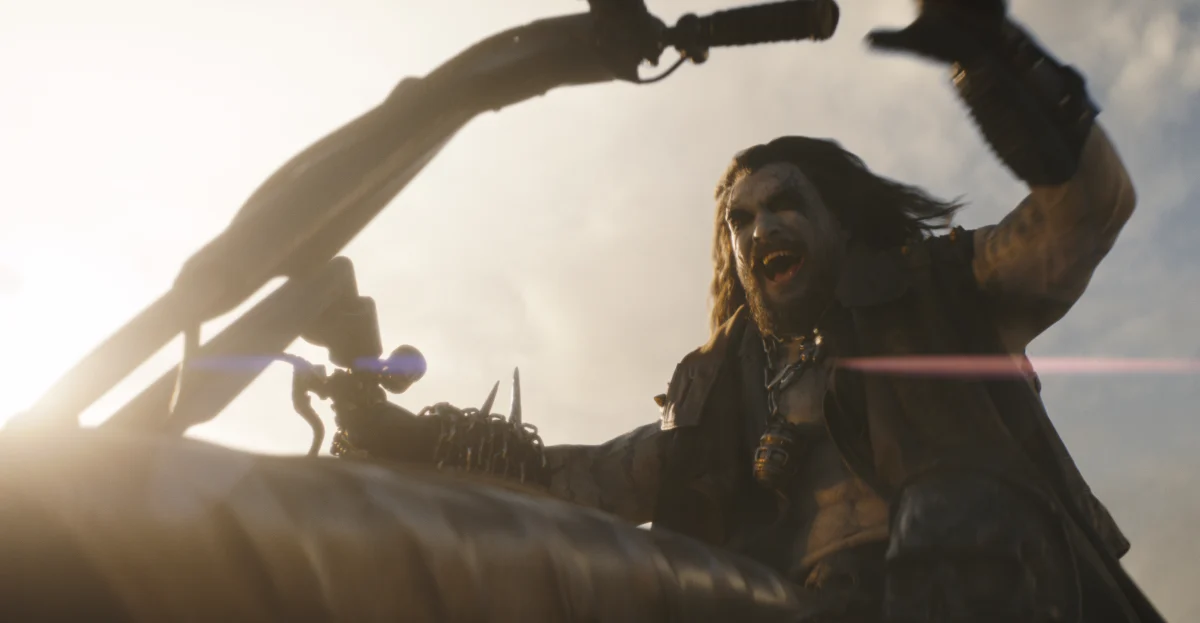
His appearance is brief, he never calls himself “the Main Man” and red eyes might have improved the design. Hopefully, he returns to face Superman or the wider Justice League, or Justice Gang, depending on what James Gunn eventually decides to call them.
Weaker ending
The ending, however, raises the question of whether the writers finished reading the book.
In the comic, Kara traps Krem in the Phantom Zone for hundreds of years. He eventually becomes remorseful and rehabilitated. Compared with the comic’s more thoughtful resolution, the movie ending feels abrupt and undermines some of Kara’s earlier choices.
It cheapens the movie’s message and undermines Kara’s lesson to Ruthye. Introducing the Phantom Zone would also have expanded the DCU’s Superman mythology. Comet the Super-Horse is missing too, which is a wasted opportunity that would have been a funny inclusion.
Kara’s history follows the Silver Age origin in which she is born in Argo City, a surviving fragment of Krypton floating through space. It is surprising that the film avoids the more popular modern origin, where Kara is the older cousin and survives Krypton’s destruction as a teenager.
More frustratingly, Supergirl doubles down on the idea from Superman (2025) that Jor-El is a mad man who sent Clark to Earth as a conqueror. Many fans hoped Lex Luthor or Brainiac had altered the message despite Gunn’s insistence otherwise. Traditionally, Jor-El and Lara send their son away because they love him and want him to live. That was enough. Turning them into would-be imperial parents remains difficult to accept.
Alcock carries the film
Milly Alcock gives a strong, layered performance. Kara begins without conviction, drifting through the galaxy with Krypto and showing little interest in becoming the hero Clark believes she can be.
Her trauma explains why she is not immediately as noble or selfless as Superman. Her eventual decision to embrace hope gives the title Woman of Tomorrow real meaning.
The soundtrack is predictably strong for a Gunn property. Sleigh Bells’s This Summer opens Supergirl with a bright, energetic beat that captures Kara’s depression while foreshadowing a colourful adventure ahead.
The use of Kelty Greye and KidMotel’s cover of Jimmy Eat World’s The Middle as the needle drop during the climactic fight has divided viewers, but it makes thematic sense. Gunn previously included the original song in Clark Kent’s Spotify character playlist, while this softer rendition suggests Kara is embracing the same symbol of hope in her own way.
Some of the one-take fights become dizzying, although the practical alien effects are impressive enough to make the Star Wars (1977) cantina scene jealous. The film is at its best when it resembles Gunn’s Guardians of the Galaxy, but that familiarity also prevents Supergirl from developing a stronger identity of its own.
Fun despite flaws
The online right-wing campaign calling the film “woke” is predictably worthless. These commentators call almost every modern media woke and insist Sydney Sweeney should be cast in everything despite her mediocre acting chops, yet the irony is they do not show up for her films, most of which have performed poorly. Alcock is not the problem.
Supergirl is an enjoyable standalone adventure with a strong lead, good music and enough strange science-fiction texture to carry its 108-minute running time. It becomes harder to embrace when weighed against Evely’s artwork, King’s background and the comic’s stronger ending.
Gunn appears jammed here. Hopefully, the Gunn is more loaded for Clayface and Lanterns.
READ MORE:
Clayface teaser reveals DC’s horror turn
Project Hail Mary review: Pure cosmic fun with Ryan Gosling
Disclosure Day review: Spielberg’s alien sermon rings hollow



