




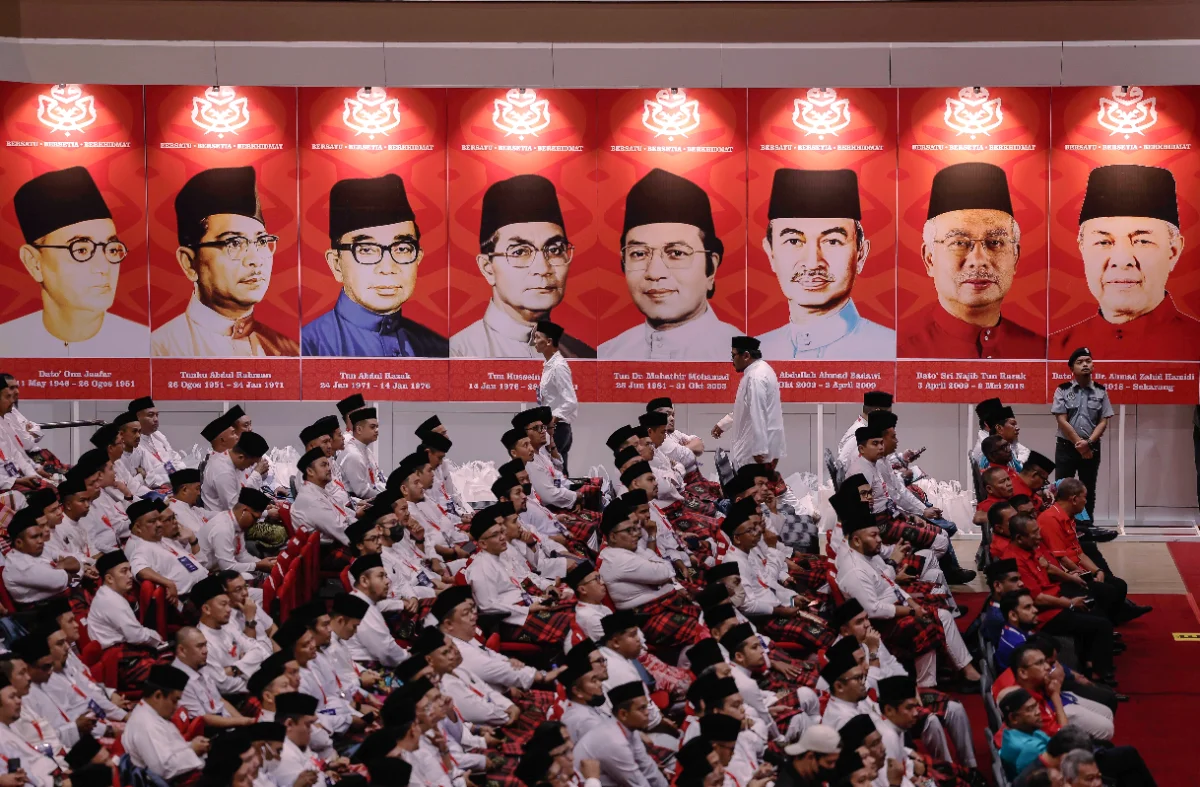
Party can no longer stand alone after losing electoral dominance once enjoyed during Barisan Nasional era, says analyst
PUTRAJAYA: Umno’s political survival is now closely tied to its continued role within the Madani government as the party no longer commands the dominance needed to stand on its own.
Universiti Sains Malaysia political analyst associate professor Dr Azeem Fazwan Ahmad Farouk said Umno’s position in Malaysian politics has fundamentally changed, forcing the party to adapt to coalition politics after suffering a sharp decline in electoral support.
“Gone are the days when Umno could flex its political muscle and claim to be the only political party that could defend Malay interests.
“The political landscape has shifted since the fall of Barisan Nasional (BN) in 2018,” Azeem said, adding that it is highly unlikely Umno would regain the dominance it enjoyed during the BN era.
He said Umno cannot reposition itself as a moderate party because Pas would continue escalating issues involving Islam and Malay interests.
READ MORE: Bersatu’s mass sacking won’t drive Malay voters back to Umno – Analysts
“This role is increasingly being claimed by Pas.”
Umno marked its 80th anniversary on May 11. Founded in 1946, the party was once regarded as the dominant force in Malaysian politics and the central pillar of BN during its decades-long rule of the country.
However, despite remaining part of the federal administration and holding key cabinet positions, Umno suffered its worst electoral defeat in the 2022 general election, winning only 26 parliamentary seats.
On May 2, Umno president Datuk Seri Ahmad Zahid Hamidi said political cooperation was now “essential rather than optional” amid the country’s evolving political landscape, while stressing that Malay interests remained a priority for the party.
He also called for Malaysian politics to shift “from confrontation to collaboration”.
Azeem said the party’s reduced political clout has also weakened its ability to dispense incentives and rewards traditionally associated with dominant ruling parties.
He said appointments to government-linked companies and statutory bodies are now largely controlled by the prime minister, who is from PKR.
“Under the ministries that are headed by ministers from Umno, that party can still dispense some largesse to its members,” he said.
Azeem said Umno’s future electoral fortunes would depend heavily on the political path it chooses ahead of upcoming state elections in Johor and Malacca, as well as the 16th General Election.
He said questions remain over whether Umno would continue backing the Unity government or contest more independently under BN, potentially triggering three cornered fights involving existing allies in the Madani coalition.
At the same time, he said ideological tensions between Umno and DAP grassroots supporters continue to pose challenges for the Unity government despite cooperation at the leadership level.
“Even though the top leaderships of Umno and DAP have shown some degree of unity, the grassroots members of both parties remain at loggerheads over numerous issues.”
Azeem said Umno’s political direction would determine how the party fares in future elections.
He added that despite setbacks, Umno’s long political experience and resilience would likely help the party weather future political turbulence.
“It’s a Catch-22 situation. The Madani brand name has been under attack from all sides and this could be detrimental to Umno as guilty by association,” he said.



