



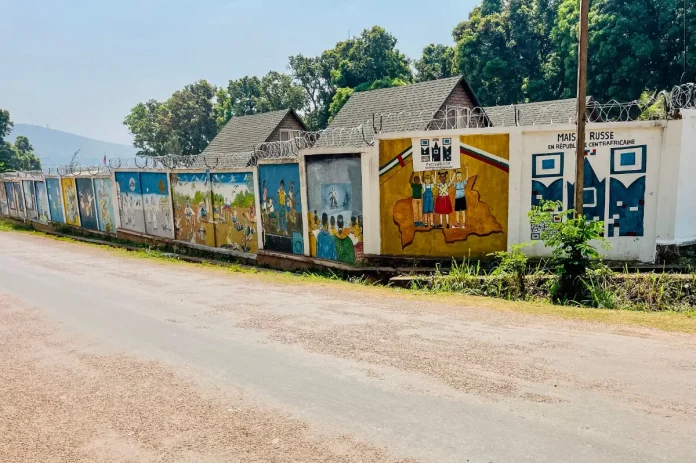
The Central African Republic votes amid relative calm, facing challenges of poverty, mineral exploitation, and a significant Russian military presence.
BANGUI: The Central African Republic holds presidential, legislative, regional, and local elections on Sunday.
This vote caps a period of relative calm following years of instability and civil war.
Since independence from France in 1960, the country has endured coups, authoritarian regimes, and conflict.
Fighting since 2013 has claimed thousands of lives and displaced nearly a quarter of the population.
French troops under a UN mandate helped secure main cities from 2014, with later support from Russia’s Wagner Group and Rwanda.
A 2019 peace agreement brought more stability ahead of the polls.
Violence persists in the east near Sudan and in the northwest, with the country sheltering over 31,000 Sudanese refugees.
Ethnic clashes between Fulani herders and farmers also occur regularly in the southeast.
Successive conflicts have stalled economic development despite vast mineral wealth.
Poor infrastructure, high fuel costs, and a lack of skilled labour deter investors.
The country struggles to feed its population despite having 15 million hectares of farmland.
The World Food Programme says 31% of the population is severely food insecure.
More than 68% live below the poverty line, ranking the country 191 out of 193 on the UN Development Index.
Foreign businesses from China, France, Rwanda, Russia, and the US exploit resources like wood, gold, lithium, and uranium.
The government revised its mining code and permit process, resuming diamond exports in 2024.
France’s Orano holds the sole uranium mining permit.
Russia’s Wagner Group gained major gold mining and forestry concessions after deploying in 2017.
The country is now Wagner’s last bastion after its withdrawal from Mali.
President Faustin-Archange Touadera invited the group to help fight rebels and train troops.
An estimated 1,500 to 2,000 Wagner fighters remain in the country.
Since Yevgeny Prigozhin’s 2023 death, Moscow has pressured Bangui to replace Wagner with the Africa Corps.
In 2022, the country became the world’s second to adopt bitcoin as legal tender.
Authorities promoted it as a tool to modernise the economy and fund infrastructure.
Central banks warn of difficulties tracing transactions and high risks of fraud and money laundering.
They also fear international criminal networks could gain control of national resources.



