



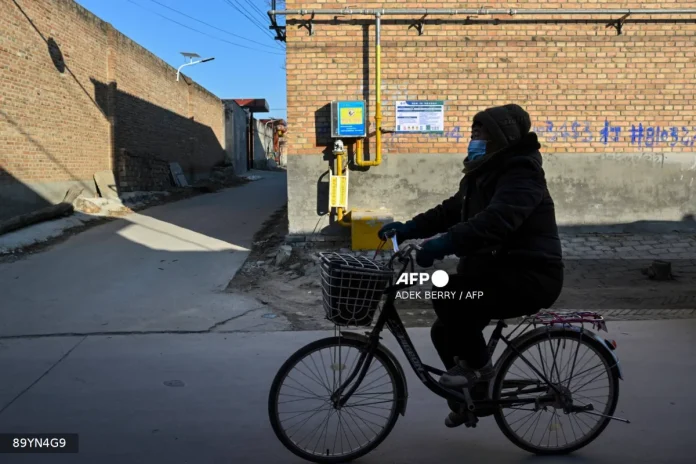
Villagers in China’s Hebei province face unaffordable heating bills after government gas subsidies were phased out, forcing many to endure the cold.
XUSHUI: Almost a decade after China began curbing coal burning to reduce winter smog, villagers in northern Hebei province are struggling to afford their heating bills. Most government subsidies for natural gas have now been phased out.
In 2017, Beijing mandated that dozens of northern areas replace coal-fired stoves with electric and natural gas-powered systems. Central government funds were allocated to refit stoves, but subsidies faded after three years and additional aid has drastically declined.
In Xushui, a district roughly 100 kilometres outside Beijing, villagers avoid turning on the heating because it drains their incomes. “Regular folks can’t afford it,” a resident in his 60s told AFP at a farmers’ market.
“Spending 1,000 yuan per month on heat — no one can stand that,” he said, asking not to be named. He added that while everyone likes the cleaner air, “the cost of clean (air) is high.”
Restaurant worker Yin Chunlan said her elderly in-laws pay up to 7,000 yuan per year to heat their six-room village home. Yin, who lives in a town apartment, says her annual bill is a third of that.
“They have to set their heating much higher, and the temperature still isn’t as warm, so it wastes gas and wastes money,” she explained. Her in-laws often pile on extra blankets to stay warm.
Reports of villagers layering up under quilts to avoid costly heating peppered Chinese social media recently. An article by Farmers’ Daily said natural gas costs up to 3.4 yuan per cubic metre in rural Hebei compared to 2.6 yuan in rural Beijing.
Villagers told AFP they felt the huge price gap was unfair. The original article was quickly taken down, with republications becoming inaccessible days later.
China’s Ministry of Finance said in 2021 that 13.2 billion yuan in funds had been distributed for clean heating across Hebei. However, subsidies for installing new systems and for gas bills, which lasted three years, would not be renewed.
A local Xushui government platform said in 2017 that some households would be eligible to receive 300 yuan in gas subsidies. For villager Zhang Yanjun, that amount hardly makes a dent in his bill of several thousand yuan per season.
The 55-year-old labourer said he had already spent more than 5,000 yuan on heating his home since October. “If you give 300 or 200 yuan or someth



