




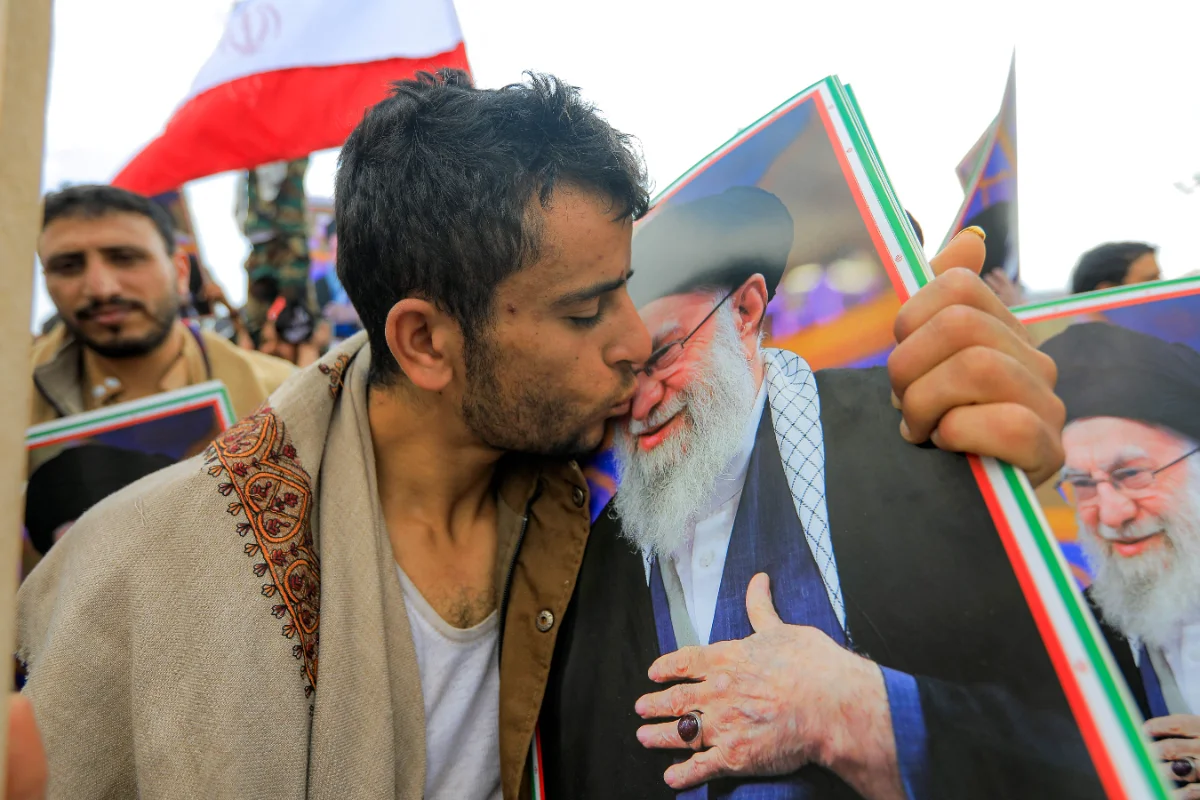
Iran’s political future is uncertain after the supreme leader’s death, with analysts weighing scenarios from regime continuity to a military takeover.
PARIS: The killing of Iran’s supreme leader Ayatollah Ali Khamenei has ushered in a period of profound uncertainty for the country’s leadership.
Analysts suggest the immediate priority for the establishment is maintaining strict control to prevent public unrest. “Everything is being done to prevent protests,” said Pierre Razoux of the Mediterranean Foundation for Strategic Studies.
He noted authorities have closed universities, deployed security forces, and cut internet access. The public is unlikely to mobilise while the vast repressive apparatus remains intact.
The political system has formal procedures for succession, and Khamenei’s removal does not automatically mean the system’s collapse. Razoux expects a scenario of regime continuity, albeit with potentially new rules that may sideline clerics while keeping the same core people in charge.
Researcher Theo Nencini said the entire direction of the regime will hinge on the choice of the new supreme leader. French-Iranian sociologist Azadeh Kian speculated that rivalries could emerge between the Revolutionary Guards and the civilian leadership.
She suggested the US might seek an understanding with a more moderate faction. For now, however, all power centres are reportedly working together to preserve the system.
A potential alternative is a takeover by the Islamic Revolutionary Guard Corps. The IRGC remains an extremely well-organised force with deep influence across Iranian society, politics, and the economy, despite the loss of its commander in recent strikes.
Nencini said a rebalancing of power in favour of the Guards has already occurred in recent years. A transition towards a more overtly militarised regime under their leadership is a distinct possibility, though he doubts they would completely abandon the religious framework.
The regular army, a 350,000-strong force, currently holds little political weight but could play a decisive future role. Razoux said the army’s positioning will be crucial in relation to the population, the leadership, and the Guards.
Its intentions remain unclear as it is currently stretched thin defending the country. The army could theoretically rally behind an alternative figure, but Nencini sees no credible political alternative emerging from the opposition.
The domestic opposition is severely repressed and imprisoned, exemplified by Nobel laureate Narges Mohammadi. Exiled opposition movements are long divided, with Reza Pahlavi, the son of the deposed shah, gaining Western media promotion but whose domestic credibility is uncertain.
Kian pointed to potential action from a spectrum of opponents, including demands from ethnic minorities like the Kurds and Baluchis. For any opposition to carry real weight, she stressed it would need to form a broad coalition, which currently appears unlikely.



