




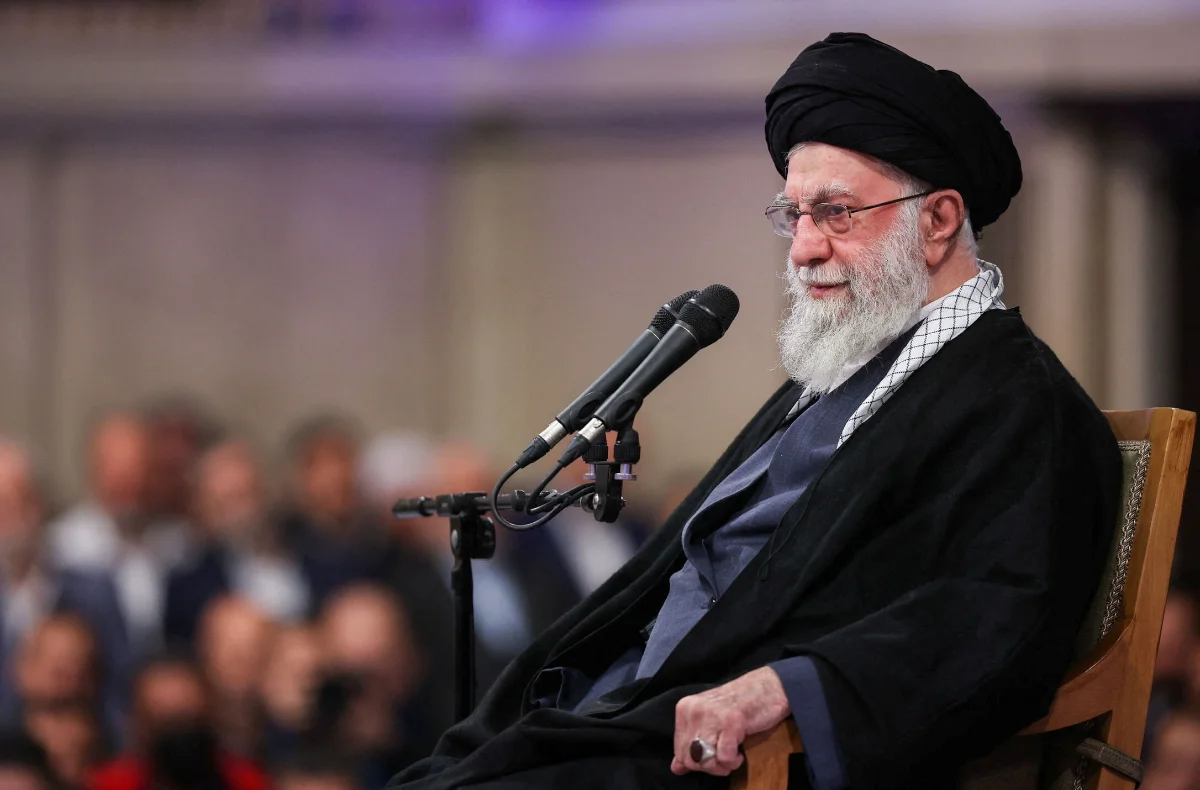
Iran’s supreme leader acknowledges economic grievances as protests spread but vows action against “rioters” after clashes leave at least eight dead.
TEHRAN: Supreme Leader Ayatollah Ali Khamenei acknowledged the economic grievances of protesters in Iran on Saturday while issuing a stern warning against those he labelled “rioters”.
In a speech marking a Shiite holiday, Khamenei said the economic demands of shopkeepers were “completely fair”.
He stated that the president and senior officials were working to resolve the country’s economic difficulties.
The supreme leader drew a sharp distinction between protesters and rioters, however.
“Authorities must have dialogue with protesters, but it is useless to have dialogue with rioters,” he said.
“Those must be put in their place.”
Protests that began on Sunday over high prices and economic stagnation have now spread to at least 25 cities.
The demonstrations have expanded to include political demands and have turned deadly.
Official figures report at least eight people killed so far, including members of the security services.
A member of the Basij paramilitary force was killed in the western city of Harsin on Saturday, according to the Mehr news agency.
The agency cited a Revolutionary Guards statement saying Ali Azizi was “martyred after being stabbed and shot” during a gathering.
Another man was killed in the holy city of Qom on Friday when a grenade exploded in his hands, Tasnim news agency reported.
Protests have been concentrated in mid-sized cities in Iran’s west and southwest.
In Darehshahr, around 300 people blocked streets and threw Molotov cocktails on Friday, Fars news agency reported.
The movement began with shopkeepers striking in Tehran and was later joined by university students.
In recent days, slogans have taken a more overtly political tone.
In Karaj, protesters burned the Iranian flag and chanted “Death to the dictator!” according to Fars.
Some also chanted support for the return of the pro-Western Pahlavi dynasty, overthrown in 1979.
Authorities have adopted a conciliatory tone on economic issues while warning against destabilisation.
The current protests are smaller than nationwide unrest in 2022 triggered by the death of Mahsa Amini.
That wave of anger left several hundred people dead, including security force members.
Iran also faced major protests in late 2019 over a sudden fuel price hike.



