



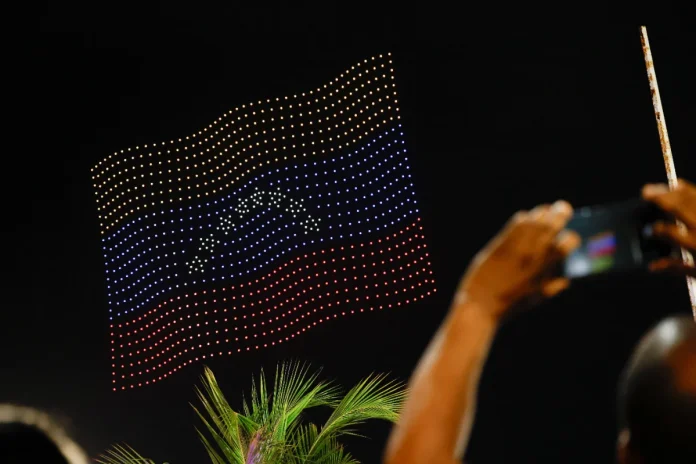
Venezuelans hail a new dawn as political prisoners are freed and a notorious detention centre closes, signalling a potential end to decades of state repression.
CARACAS: “We are free!” chanted relatives of political prisoners outside the Rodeo 1 prison near Caracas on Friday.
Their celebration followed the government’s announcement of a sweeping amnesty for all political prisoners detained since 1999.
The move by interim leader Delcy Rodriguez has bolstered hopes that a quarter-century of state repression is ending.
Zoraida Gonzalez, 64, whose son was imprisoned in 2019, was among those rejoicing at the news.
“I felt that I was free and that the whole country was free!” she told AFP.
Signs that the pervasive fear in Venezuelan society is dissipating have emerged in recent days.
Opposition activist Delsa Solorzano re-emerged from hiding after 17 months, telling AFP that the country feels it is in a “new phase”.
In scenes unthinkable just a month ago, student leader Miguelangel Suarez publicly upbraided Rodriguez over the slow pace of prisoner releases.
The government announced plans for large-scale releases on January 8 but has so far freed inmates at a trickle.
Opposition leader Maria Corina Machado also appeared live on pro-government television to criticise Rodriguez.
This followed Machado’s meeting in Washington with US Secretary of State Marco Rubio.
“Fear has been defeated,” said international relations graduate Maria Isabel Centeno, describing a definitive “before and after January 3”.
She credited students, civil society groups, and prisoners’ families with creating the change.
Opposition MP Tomas Guanipa, who has family members detained, expressed amazement at the bewildering pace of change.
US forces ousted former leader Nicolas Maduro on January 3, taking him to the United States to face trial.
“Who would have thought a month ago that we would be experiencing what we are experiencing today,” Guanipa told AFP.
He expressed hope the process would lead to a democratic transition.
Rodriguez has been walking a diplomatic tightrope, trying to meet US demands without alienating Maduro loyalists within her administration.
She has so far taken no steps toward calling new elections.
Political analyst Pablo Quintero said it was “premature” to speak of far-reaching change.
He noted, however, that US pressure means “the cost of silencing dissent through persecution and imprisonment is very high”.
The amnesty announcement and the closure of a notorious detention centre mark a stark shift.
The final years of Maduro’s rule were marked by worsening repression, peaking after the widely disputed July 2024 elections.
Outside the Zona 7 prison in Caracas, 65-year-old Alicia Rojas remained cautiously hopeful.
Her husband was detained on terrorism charges in November.
She said she remains fearful because “you never know when…the neighbour could” report you to the authorities.
A mural of the late socialist leader Hugo Chavez on the prison wall served as a stark reminder of the state’s former omnipotence.



