



A mother reflects on the enduring, messy and deeply Malaysian faith witnessed at Thaipusam, carrying a milk pot for her autistic daughter.
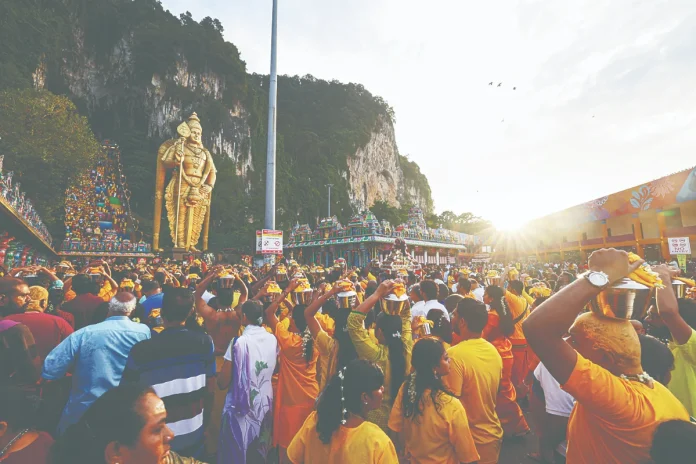
BEFORE sunrise, Batu Caves is already awake. Bare feet move slowly over cool stone, hands steadying milk pots as volunteers call out directions over the hum of traffic and prayer. The air carries incense, flowers and the low, familiar rhythm of devotional songs from loudspeakers.
Monkeys dart across the steps, snatching marigold petals or abandoned offerings – a mischievous reminder that the caves belong to both humans and nature.
Somewhere, a baby cries; somewhere else, a devotee sways gently in quiet focus, eyes half-closed, as if listening to something only he can hear.
I have attended Thaipusam in different versions of myself: as a barefoot girl clutching my mother’s hand; as a youngster pretending not to be impressed by the kavadi bearers; as a journalist assigned to write about faith with professional distance; and now, as a mother who packs wet wipes, snacks and emergency patience along with offerings to Lord Murugan.
I once thought I would come to Thaipusam only to light a lamp and whisper a short prayer. Instead, each year, my husband and I carry a milk pot – warm, heavy and careful in our hands – to fulfil a vow we made to Lord Murugan for our daughter, who is autistic. We do not pray for miracles, only for gentler days, steadier nights and a world that would learn to be kind to her.
Every year, the crowd grows thicker, yet there is a peculiar calm. Devotees move with purpose, children cling to parents and strangers exchange small nods of patience.
Men and women carry their vows on their backs – elaborate steel arches heavy with peacock feathers, milk pots balanced carefully on shaved heads, small barefoot children walking solemnly beside parents who have made promises in hospital corridors, kitchens and quiet corners of their lives.
Faith is often practised amid everyday chaos here. Devotion squeezes itself between Grab riders, police barricades and volunteers handing out mineral water from ice boxes.
We pray while worrying about parking. We fulfil our vows while navigating the bustling crowd. We apologise to strangers when we accidentally step on their toes during sacred moments.
It is messy and ordinary but deeply ours. There is a particular humility in walking barefoot on hot asphalt, past stalls selling sugarcane juice and phone accessories while trying to keep your mind focused on God. The body complains, the back aches, the feet burn and the queue does not move. And still, people wait – not because it is easy but because life here has never been.
Thaipusam does not belong only to the dramatic images of hooks and spears that dominate headlines; it belongs to the aunties who wake up at 3am to cook pongal (a rice porridge) for volunteers, the uncles who spend the night directing traffic for free, teenagers carrying bottled water in cardboard boxes bigger than their torsos and non-Hindus who stand patiently in nearby shops, watching human faith unfold like a slow procession.
It belongs to the mother pressing her forehead to the temple floor, whispering the name of a child who does not sleep through the night; to the father pretending not to cry when his son completes his first kavadi; to the young woman praying not for wealth or fame but for the courage to survive another year. It belongs to all of us who live between hope and fatigue.
When the day finally ends, the flowers are trampled into brown paste, the milk pots are empty and the devotees are exhausted into gentleness. The kavadi bearers look smaller without their burdens, volunteers collapse onto plastic chairs and children fall asleep mid-sentence. Faith, too, becomes quiet.
Tomorrow, Batu Caves will heave with bodies and prayers and the roads will turn briefly sacred with bare feet and trampled flowers. A few days later, the hill will return to being just another landmark and Malaysia will rush back to its usual arguments about prices, politics and parking.
But for one long day, we will remember how to kneel – not just for God but for endurance, for the community, for the stubborn decision to believe that pain can be meaningful and that ordinary lives are worthy of divine intervention.
That, to me, is Thaipusam – not perfect, not polished but painfully and beautifully Malaysian.
Hashini Kavishtri Kannan is the assistant news editor at theSun.
Comments: letters@thesundaily.com



