




The Social Work Profession Bill 2026 risks criminalising volunteers and exempting public officers, undermining its goal of professional care standards.
THE Social Work Profession Bill 2026 has been tabled in Parliament. First initiated in 2010, the Bill represents a significant step towards strengthening the social work profession in Malaysia. It seeks to establish clear standards of practice, strengthen professional accountability and introduce a code of ethics to guide social workers and safeguard the public.
However, the current draft of the Bill appears unlikely to achieve its intended objectives. It creates unequal regulatory standards, threatens to penalise civil society and risks compromising the quality of care provided to vulnerable individuals.
Key concerns that should be addressed:
Fails to distinguish professional social workers from volunteers and other service providers
The Bill does not make a meaningful distinction between qualified professional social workers and individuals who engage in social work or social service activities, including community workers, NGO staff, paid care workers and volunteers.
Clause 31 sets out offences under the Bill, including criminal penalties. Under Clause 31(b), only registered “social work practitioners” or “social work trainees” may provide “social work services”. Unregistered individuals who provide such services may face a fine of up to RM20,000, imprisonment for up to two years, or both, while employers may be fined up to RM50,000 under Clause 32.
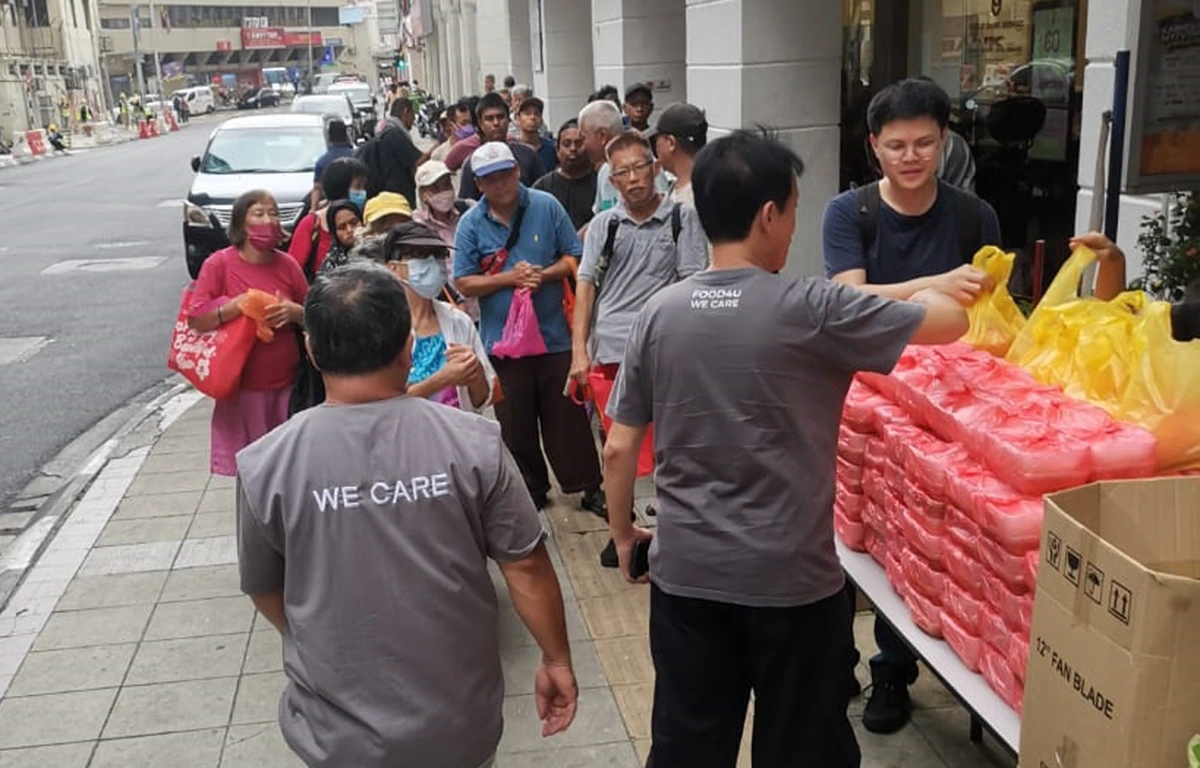
Because the definition of “social work services” in Clause 2 is so broad, the Bill could criminalise thousands of unregistered individuals who provide essential community support, including NGO volunteers, soup kitchen operators, faith-based counsellors, befrienders and crisis response workers.
An unregistered volunteer who provides crisis intervention or community support could face criminal penalties, as could the organisation that engages them.
Clause 2 should be refined to clearly distinguish professional social work from humanitarian aid and community volunteerism. The law should protect the title “social worker” from misuse, rather than criminalising the provision of community support.
Remove the exemption for public officers
Clause 19(8) creates a broad exemption for public officers, allowing them to provide social work services in the course of their duties without a practising certificate or the qualifications required of others. This undermines the Bill’s objective of establishing consistent professional standards.
This creates a double standard. Public officers in the Department of Social Welfare and other government agencies handle many of the country’s most complex child protection, domestic violence and welfare cases. Yet Clause 19(8) exempts them from the practising certificate and the professional standards, qualifications, continuing professional development and code of ethics required of practitioners in the private and NGO sectors.
Vulnerable individuals deserve the same standard of professional care, regardless of whether they receive services from the public, private or NGO sector.
The Department of Social Welfare should be staffed by qualified professional social workers to ensure those handling complex cases meet the same standards expected across the profession.
The blanket exemption should be replaced with a transparent, time-bound transition period (for example, three to five years) to enable existing public officers to meet accredited competency standards. All new appointments should require recognised professional social work qualifications.
Restore professional independence from bureaucratic control
Unlike comparable bodies such as the Malaysian Medical Council, Malaysian Bar, and Nursing Board, the proposed Malaysian Social Work Profession Council (Clause 3) lacks an election mechanism for the profession to choose its representatives.
A council responsible for regulating professional ethics and standards should not be dominated by government appointments. With the chairperson and deputy chairperson held by senior civil servants and all other members appointed by the minister, the structure risks functioning more like a government agency than an independent professional council.
Parliament should consider a governance model where at least half of council members are elected by registered practitioners.
The power to remove members under Clause 10 should also be subject to clear statutory grounds, rather than allowing appointments to be revoked without stated reasons.
Malaysia has waited more than 15 years for this Bill, and we cannot afford further delay. However, passing the Bill must not come at the expense of creating a weak regulatory framework.
Strong professional standards are essential to improving child protection and welfare services, which require a workforce led by qualified social workers.
We urge MPs to put public interest above political differences, listen to practitioners on the ground and strengthen these critical provisions before passing the Social Work Profession Bill 2026.
This is a landmark opportunity to build a professional social work system that protects vulnerable individuals and serves future generations.
Datuk Dr Amar-Singh HSS
Consultant Paediatrician
Child-Disability Activist



