




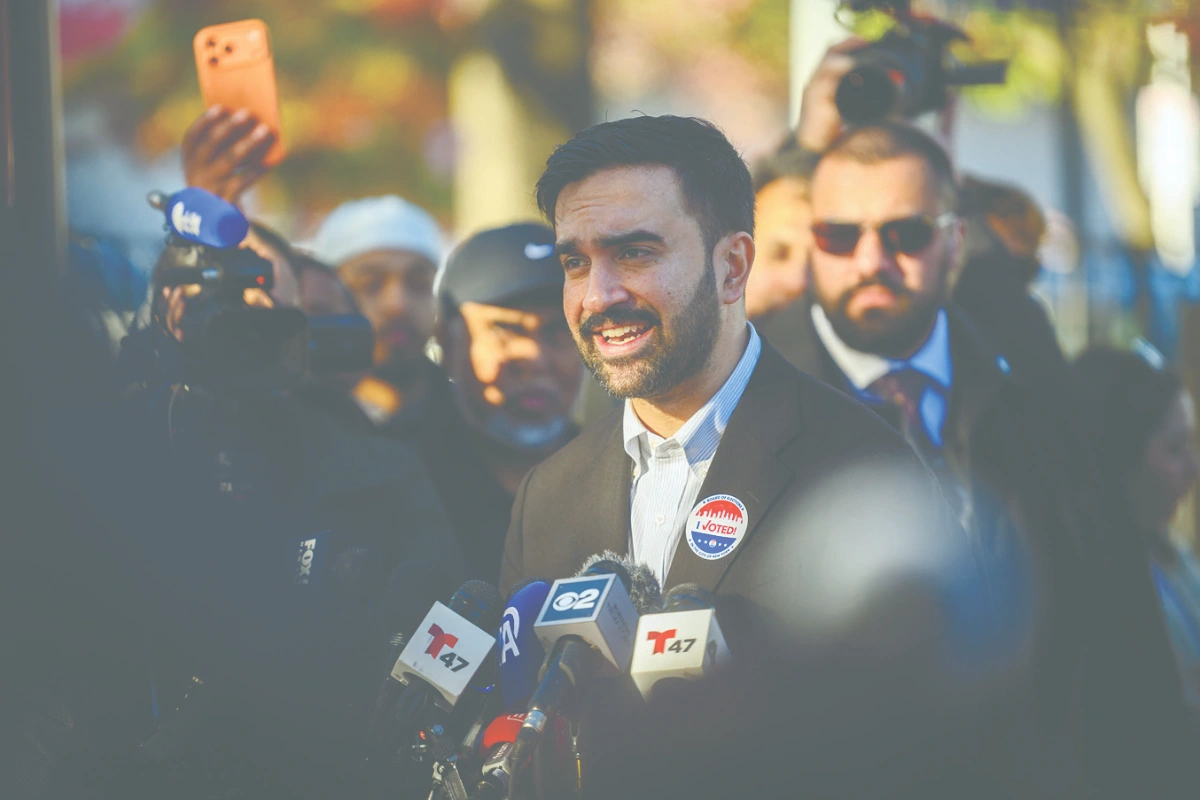
THE latest remarks by New York mayor Zohran Mamdani have once again exposed a fundamental contradiction in Western foreign policy.
Asked whether Israeli Prime Minister Benjamin Netanyahu should be arrested if he entered New York, Zohran replied that the United States should respect its international obligations and that Netanyahu should face justice before the International Criminal Court in The Hague.
His statement was immediately denounced by pro-Israel politicians and commentators. Yet, the real controversy should not be what Zohran said.
The real controversy is why insisting that alleged war criminals face justice has become a more outrageous proposition than the alleged crimes themselves – the genocide of Palestinians in Gaza.
Zohran’s position is neither radical nor anti-Israel. It is a simple affirmation of the rule of law. If international law means anything, then it must apply equally to powerful leaders and weak ones, to allies as well as adversaries.
Malaysia has been consistent
Malaysia has also recently been criticised by US lawmakers for its long-standing restrictions on Israeli nationals.
These criticisms portray Malaysia as acting out of prejudice or political opportunism. The facts suggest otherwise. For decades, successive Malaysian governments – regardless of political party – have maintained that Israel’s continued occupation of Palestinian territories, settlement expansion and repeated military assaults violate international law.
Malaysia’s diplomatic position has remained largely unchanged despite changes in prime ministers and governments.
Critics frequently ask why Malaysia bars Israeli citizens while maintaining relations with many other countries accused of human rights abuses.
The answer lies in Malaysia’s consistent refusal to recognise Israel until there is a just resolution of the Palestinian question, based on international law and United Nations resolutions.
Malaysia has not suddenly invented this position because of recent events. It has maintained it for decades. Indeed, when Israeli athletes have been denied entry into Malaysia, Western media routinely portray this as discrimination.
Rarely do they acknowledge that these decisions arise from a long-standing diplomatic policy rather than hostility towards individuals as such.
The US’s double standards
Contrast this with Washington’s position. The United States frequently describes itself as the world’s leading defender of democracy, human rights and the rule of law.
American leaders regularly condemn countries that ignore the “rules-based order” or violate international norms. Yet when it comes to Israel, these principles appear to become optional.
The US has rejected the legitimacy of ICC investigations involving Israel while enthusiastically supporting international prosecutions against leaders of countries such as Russia and Sudan.
It has even threatened sanctions against ICC officials investigating alleged crimes involving American or Israeli personnel. The inconsistency could hardly be more obvious.
When Russian leaders are investigated, international justice is celebrated. When Israeli leaders are investigated, international justice is denounced. The principle has not changed. Only the defendant has.
Equality before the law
The cornerstone of justice is equality before the law. International law loses all moral authority if it is applied selectively according to geopolitical alliances.
Courts cannot simultaneously be presented as guardians of civilisation and dismissed as illegitimate whenever they investigate powerful friends.
If evidence exists that Netanyahu has committed war crimes, then the evidence should be tested in court. If the evidence is insufficient, he should be acquitted. That is precisely how the rule of law operates.
Those demanding immunity before any legal process has even begun are not defending justice; they are defending exceptionalism.
Why Zohran ’s statement matters
Zohran’s comments are important because they challenge an increasingly dangerous assumption – that some governments enjoy permanent exemption from international accountability.
One need not support Zohran politically to recognise the significance of his position. He simply argued that international law should be applied consistently. That should never have been controversial.
Western governments often ask other nations to respect a rules-based international order. For years, Malaysian NGOs have been looking up to the US for funding and inspiration as if it was the fount of democracy and human rights. But rules command respect only when they apply equally.
Countries like Malaysia may disagree with Western powers on many issues but on Palestine, its position has displayed remarkable consistency over many decades.
Whether under different coalitions or prime ministers, Malaysia has maintained that lasting peace requires justice for Palestinians and accountability for violations of international law.
The US, by contrast, has championed international justice when prosecuting its rivals while undermining the same institutions when they scrutinise its allies.
This selective commitment weakens not only the credibility of American foreign policy but also the legitimacy of international law itself.
The issue is, therefore, much larger than Netanyahu, Israel or Palestine. It is whether international law is genuinely universal or merely another instrument of great-power politics.
If the law is binding only on the weak, then it is not law at all; it is power masquerading as justice.
Kua Kia Soong is former MP and director of Suaram. Comments: [email protected]



