




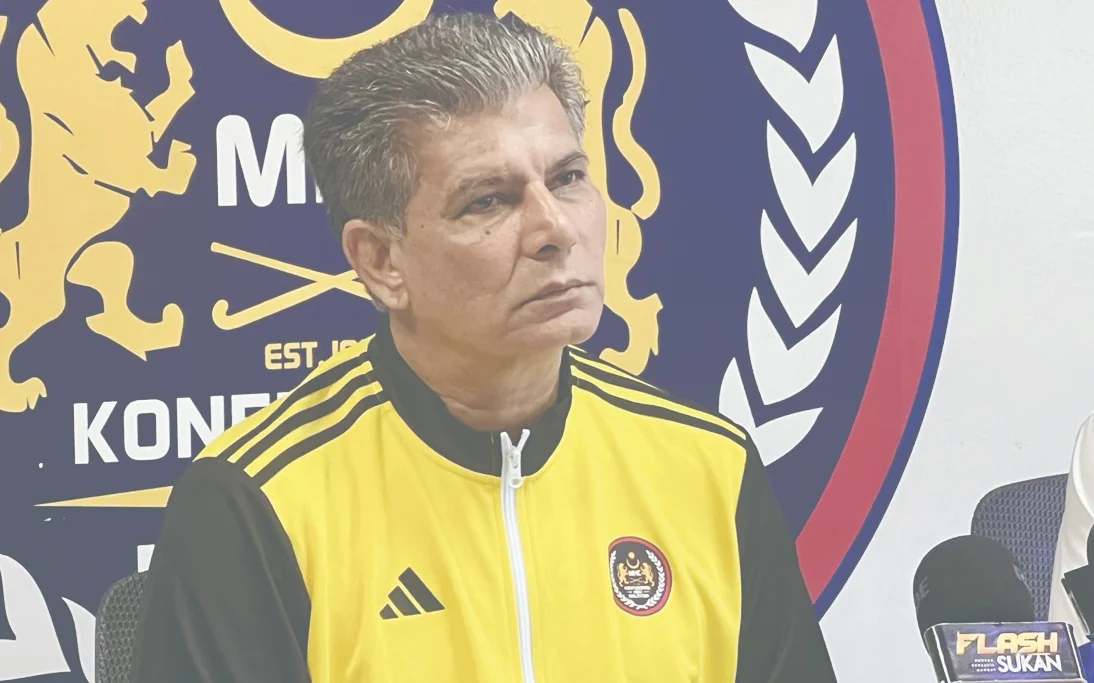
National hockey coach sacked despite securing World Cup berth
THE call came late on a Sunday night. By Monday, Sarjit Singh was told his time as national men’s hockey coach was over.
No warning. No review. No chance to present his report just weeks after guiding Malaysia to the World Cup.
“It came as a shock,” Sarjit, 63, said. “I couldn’t believe it.”
Sarjit said he first heard of his fate from coaching and development committee chairman Majid Manjit Abdullah, who asked to meet him the following day.
“I met him and he told me my contract was not extended,” Sarjit said.
“I asked him why. He said the decision had already been made.”
According to Sarjit, Manjit did not provide a reason, instead indicating that the move came from the president, Subahan Kamal, and the executive board of the Malaysian Hockey Confederation (MHC).
“He told me the president would see me the next day,” Sarjit said. That meeting came on Tuesday morning.
When Sarjit met Subahan, the explanation was clearer, but no less contentious.
“He told me he was not happy with the world ranking,” Sarjit said.
Sarjit said the conversation also turned to a remark he had made about the need for a larger player pool. He told me he took issue with my remark that we needed more players,” he said.
Sarjit insisted his comment was taken out of context.
“We have so many tournaments coming, the Nations Cup, World Cup, Asian Games, Sultan Azlan Shah Cup, Asian Champions Trophy. We need more players so we can rotate,” he said.
“I said it in a good way.”
The disagreement hinted at a deeper divide between the demands of international hockey and expectations at the administrative level.
Subahan, however, remained focused on Malaysia’s slide in the world rankings following defeats at the World Cup qualifier in Ismailia, Egypt. But Sarjit pointed to what he believed should have carried greater weight.
“I told him I had already said we would qualify for the World Cup, and we did,” he said. “So I think it’s not fair.”
For Sarjit, the issue was not just the decision, but the timing.
“I think I am the first coach to take a team to the World Cup and not go with them,” he said. “You must understand, I had just come back. They had not even seen my report,” he said.
The post-tournament report, he argued, should have been central to any evaluation.
“I have all the data on penalty corners, goals conceded, everything. But I got the boot before anyone read it,” he said.
He also raised concerns over the lack of notice.
“They should give adequate notice, not just remove me like this,” he said.
Sarjit further claimed the coaching and development committee was not part of the decision-making process.
He said it had already been finalised, and Manjit told him he could not intervene.
Pressed on whether this reflected a breakdown in governance, Sarjit stopped short of direct criticism.
“I don’t want to comment on that,” he said. “But the coaching committee plays a very important role.”
At the heart of Sarjit’s frustration is a simple argument – he met the target set for him.
“When I took the job, I said give me two years. If I don’t qualify for the World Cup, I will resign,” he said.
“I kept my word.”
Malaysia secured their place at the 16-team World Cup in the Netherlands and Belgium this August through the world rankings. They won two matches, lost three and finished fourth in the tournament.
Ranked No. 15, they edged ahead of Poland, who finished fourth in the other qualifying event in Chile but sit lower in the rankings.
“Suppose you are told to qualify and you do it, will you be removed?” he asked. “I was made a scapegoat.”
Sarjit said the manner and timing of his dismissal, less than five months before the World Cup, made it difficult to accept.
“I am very hurt,” he said. “When they want you, they tell you all sorts of things. When they don’t need you, they just chuck you out. What happened to me should not happen to any coach in any sport,” he said.
He also pointed to the need for stronger leadership within Malaysian hockey.
“We need the right people in sports, people who know the game, who understand high performance and development,” he said. “We need administrators with vision.”
He acknowledged that his exit may overshadow his past contributions.
“It is sad some people will remember me for this instead of my playing days,” said the two-time Olympian, who represented Malaysia for 12 years and was the national captain for seven years.
Sarjit says he bears no ill will toward his players.
“I have no problems with the players. I wish them all the best,” he said.
But the sense of unfinished business lingers and with the World Cup approaching, Malaysia move forward without the coach who got them there. – FMT



