




When you first meet someone, what’s the first thing you notice about them? Is it the way they talk, the way they dress, their accent – or is it the way they smell? People have been using perfume since ancient times and our culture has tied scents to godliness, to religions, and even used it for medicinal purposes.
The idea of Covid looms over our heads like a forgotten foe as we trudge through the endemic phase. I experienced the nightmare of fearing that I would lose my sense of smell forever after testing positive. Fortunately my nose is now on the road to recovery (I’m at around 75% now).
My latest obsession has been the world of perfumery, so I decided to seek out a perfumer to ask him some questions.
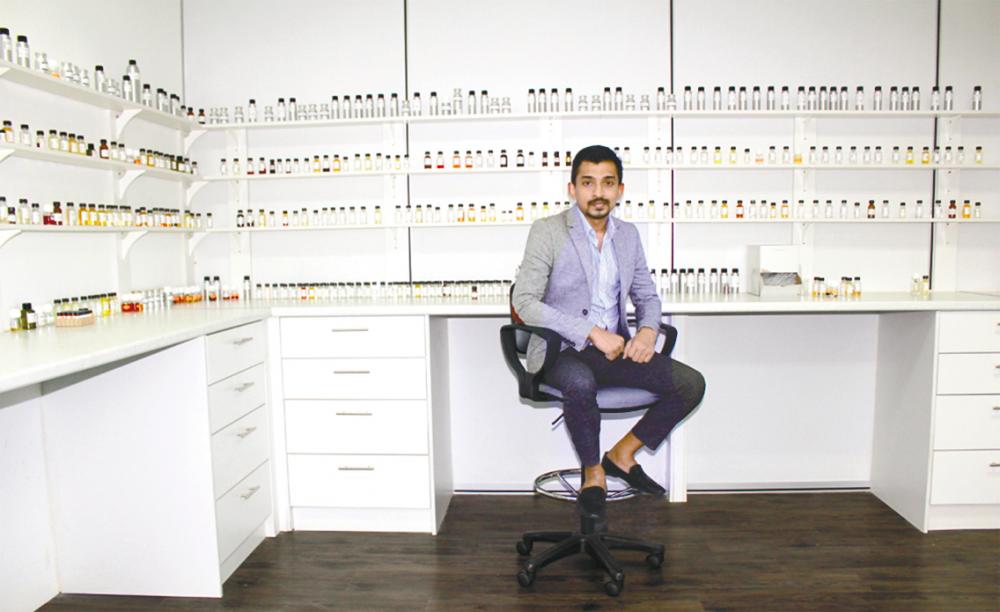
Perfumer’s Lab & Academy (PLA) is located in UKM-MTDC Technology Centre in Bangi, in a quiet and secluded block with greenery all around.
There are reportedly more astronauts than perfumers in the world, and Md Abdullah Al Roman, an NPA Qualified Professional Natural Perfumer, is one of them.
Just like how different people are attracted to different styles, food, and people, it is the same for scents. We usually forget most of the visual information we are bombarded with day in and day out, but our memory and our sense of smell are intertwined because of our brain’s anatomy, and this is why smells can trigger vivid memories.
Before a baby is born, fetuses have already learned about their mother’s preferences and even emotions through the amniotic fluid as the brain’s olfactory (smell) centre forms very early in fetal development.
For Abdullah, his path to perfumery was by chance. Coming from a family who owned an oud distillation plant, he has always been around raw materials, and that was the perfect environment to let his love for perfumery grow.
He said: “Before PLA was founded, I was in Malaysia trying to find raw materials and trying to understand the industry here, when I realized most of the raw material sellers in Malaysia didn’t have much knowledge about the industry. I knew that a lot of them were interested to learn more, so when I saw the need for perfumery education, I decided to start PLA with [co-founder Charmaine Lai].
“Although most of the raw materials of the perfumery industry actually come from ASEAN countries, the industry didn’t grow in these countries (including Malaysia) due to a lack of knowledge. Before PLA was established, you’d have to travel all the way to Bangkok just to learn about perfumery.
“In order to become a perfumer, you will need to familiarise yourself with thousands of natural oils and aroma molecules. In total, that can total up to 4000 something raw materials that are combined into 100-300 scents.



