




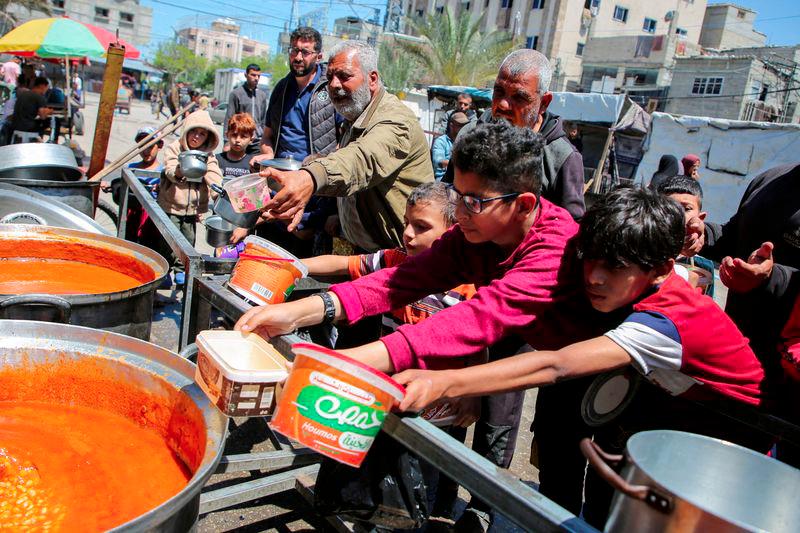
RAMALLAH (West Bank): The Israeli military has lifted a ban on the sale of food to Gaza from Israel and the occupied West Bank as its battlefield offensive chokes international aid, according to Palestinian officials, businessmen and international aid workers.
Army authorities gave Gazan traders the green light to resume their purchases from Israeli and Palestinian suppliers of food such as fresh fruit, vegetables and dairy goods this month, days after Israeli forces launched an assault on the enclave’s southernmost city of Rafah, the people said.
The offensive against Rafah, a key gateway into Gaza from Egypt, has effectively halted the flow of U.N. aid to the devastated Palestinian territory. Israel is coming under mounting global pressure to ease the crisis as humanitarian agencies warn of looming famine.
“Israel phoned Gazan distributors who had been purchasing goods from the West Bank and Israel before the war,“ said Ayed Abu Ramadan, chair of the Gaza Chamber of Commerce. “It told them it was ready to coordinate the pick-up of goods.”
Reuters, which interviewed more than a dozen people familiar with the development, is the first news outlet to report on the details and impact of this resumption of commercial food deliveries bound for sale in Gazan markets and stores.
ALSO READ: Egypt medial: Israel using tunnel claims to ‘justify’ Rafah offensive: Egypt media
The shift marks the first time any goods produced inside Israel or the West Bank, an Israeli-occupied Palestinian territory, have been allowed into Gaza since war erupted in October last year, according to the Palestinian officials, traders and residents.
Asked by Reuters about the resumption of deliveries, COGAT, the branch of the Israeli military responsible for aid transfers, said it was looking at ways to boost humanitarian aid and increase the amount of food for sale in Gaza.
“Allowing for the private sector to bring some food into the Gaza Strip is part of those efforts to increase the amount of food that’s coming in,“ spokesperson Shimon Freedman added.
Aid workers have urged Israel for months to allow more commercial deliveries to enter Gaza so fresh food can supplement international aid, which mostly contains non-perishables like flour and tinned food.
The reopening is no panacea, though.
ALSO READ: Israel seizes Gaza’s entire border with Egypt, presses with raids into Rafah
The flow of deliveries, conducted via the Kerem Shalom border crossing between southern Gaza and Israel, has been erratic, according to Palestinian officials who said anywhere between 20 and 150 trucks – each carrying up to 20 tonnes of food – have entered per day depending on how many Israel allows in.
That is well short of the 600 trucks a day that the U.S. Agency for International Development says is required to address the threat of famine, even when adding the roughly 4,200 trucks of food aid – about 190 a day – that Israeli officials say have entered Gaza since the beginning of the Rafah assault on May 7.
Before the war began on Oct. 7, when Palestinian group Hamas attacked southern Israel, an average of 500 aid and commercial trucks entered Gaza each day carrying all the goods needed in the enclave from food and medical supplies to farming equipment, according to U.N. figures.
The average number since then is below 140 trucks a day, according to a Reuters tally of Israeli military statistics, even as Israel has laid waste to the enclave in it mission to eradicate Hamas, sending aid needs through the roof.
The food coming in is also expensive, and scant replacement for international aid that has already been paid for by donor countries and organizations, said four aid workers involved in coordinating deliveries to Gaza. They requested anonymity to speak freely about sensitive matters.
ALSO READ: Israel says Gaza war likely to last another seven months as tanks probe Rafah
Three Gazan residents interviewed said they had seen Hebrew-labelled produce in markets, including watermelons from an Israeli settlement, but that it was often being sold at prices too high for cash-strapped and displaced families.
“I bought two eggs for 16 shekels ($5), just because my kid, three years old, cried for eggs,“ said Abed Abu Mustafa, a father-of-five in Gaza City.
“Normally I could have bought 30 eggs for less.”
VETTED BY ISRAELI MILITARY
Israel launched its assault on Rafah on May 7, defying warnings from its closest ally the United States that the offensive would cause more civilian casualties and from aid agencies who said it could upend efforts to deliver food to Gazans.
A week later, said Abu Ramadan of the Chamber of Commerce, the Israeli military began contacting traders in Gaza saying they could resume taking deliveries of food from Israel and the West Bank.
Under the arrangement, all suppliers and goods have to be vetted by the Israeli military, according to Wassim Al-Jaabari, head of the West Bank food and industry union.
The Gaza distributors meet the trucks sent by suppliers at the Kerem Shalom crossing on Gaza’s southern border where the military examines the goods before allowing the distributors to take them into the enclave, the two Palestinian officials said.
A copy of a COGAT list seen by Reuters showed that on May 22, 127 trucks carrying watermelons, lemons, eggs and milk as well as spices, rice, pasta, sugar and other items had been ordered by Gazan distributors. The list showed that most of the supplies came from the West Bank, though Reuters couldn’t determine if that was representative of deliveries more broadly.
ALSO READ: Civil defence says 21 dead in new strike on Gaza camp that Israel denies
Jaabari and Abu Ramadan said no free goods or charitable donations were allowed in from the West Bank or Israel, only products for sale.
None of the five interviewed businessmen involved in the trade would disclose exactly what they charge for a full shipment, but said their prices were what it normally cost to sell in the West Bank. Transport prices, however, push the cost up as trucks often have to spend a long time on the road near Kerem Shalom waiting for inspection and are sometimes ransacked by Israelis protesting the entry of goods to Gaza, they said.
Two distributors inside Gaza declined to say how much they bought and sold goods for. They pay the West Bank suppliers by bank transfer and take cash from sellers in local markets.
The goods have also been distributed unevenly, with few of them making it to northern Gaza where fears of famine are most acute.
“There is plenty of flour here but little else,“ lamented Abu Mustafa, the father-of-five in Gaza City. “And whatever else there is, most people can’t afford.”



