




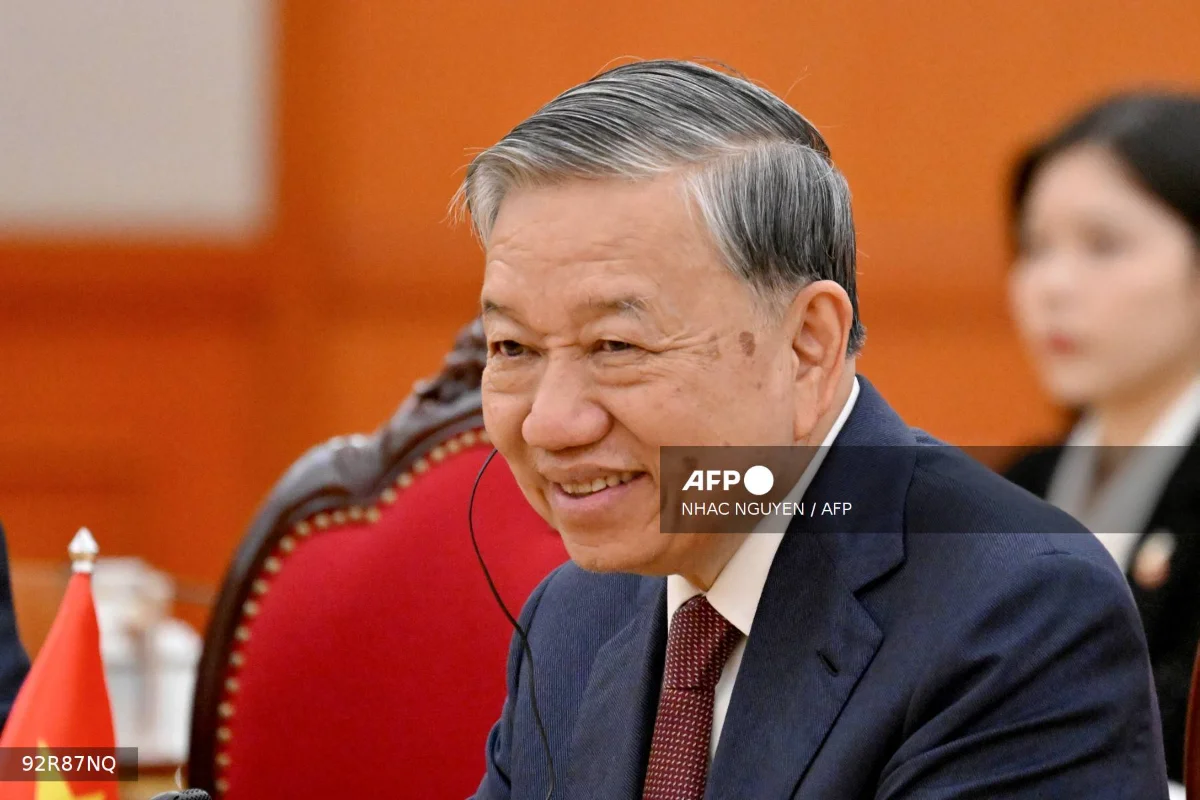
Vietnam’s ruling Communist Party begins its five-yearly congress to finalise leadership and set economic goals, with General Secretary To Lam poised to consolidate power.
HANOI: Vietnam’s ruling Communist Party opens its twice-a-decade congress on Monday.
The week-long event will finalise the leadership roster for the next five years and outline plans for the fast-growing Southeast Asian manufacturing hub.
Roughly 1,600 delegates representing the party’s five million members will assemble in Hanoi for closed-door meetings.
They will vote around 200 members onto the Central Committee, which in turn selects the powerful politburo.
The politburo selects the general secretary, president, prime minister, and chairman of the National Assembly.
General Secretary To Lam is set to retain his post as the country’s top leader, according to sources briefed on party deliberations.
He is challenging the party’s consensus-based model by seeking to also become president.
Analysts say the politburo’s final makeup will be the best measure of Lam’s dominance within the collective leadership.
“If there is a balance of power between the two factions, then Lam would be ‘first among equals but that doesn’t mean he has the power to do what he wants’,” said Nguyen Khac Giang of Singapore’s ISEAS-Yusof Ishak Institute.
The party has set an ambitious 10% annual economic growth target for the next five years.
Experts say Lam will focus on spurring private sector growth and digital progress, having previously pruned the administrative state.
The party is unlikely to relax its tight control of the media or harsh treatment of dissidents.
More than 160 dissidents are in jail, according to Human Rights Watch.
Lam’s leadership “heavily draws upon his tenure as security minister, suggesting that crackdowns on political dissent could become more common”, said Derek Grossman of the University of Southern California.
On foreign policy, Lam has maintained his predecessor’s “bamboo diplomacy” approach.
This seeks to stay on good terms with the world’s major powers, including top trading partners the United States and China.
Senior cadres identified US-China rivalry as a major impediment to reaching the 2026 growth target.
They are expected to pass a resolution elevating foreign affairs to a “core” national function alongside defence and internal security.
“Diplomatic diversification is the key method of achieving growth goals,” said Khang Vu, a Vietnam expert at Boston College.x



