




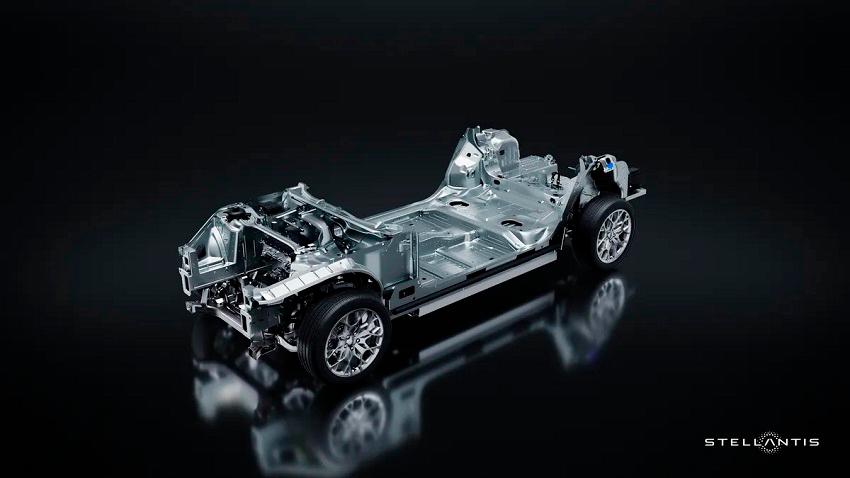
THE automotive industry frequently sees claims of revolutionary advancements in EV battery technology, but Stellantis appears to have made a significant breakthrough. The company is developing lithium-sulphur (Li-S) batteries that promise to cut costs by half, improve rapid-charging speeds by 50%, and significantly reduce weight. Stellantis aims to integrate this technology into its vehicles by 2030.
The Li-S batteries are being developed in partnership with Texas-based Zeta Energy, a company that has been working on this technology since its founding in 2014. The key advantage of lithium sulphur lies in its gravimetric energy density—the amount of energy stored per unit of weight—which is crucial for improving EV efficiency.
A Game-Changer for EV Batteries
Currently, most EVs use lithium-ion batteries, with two dominant chemistries: nickel-manganese-cobalt (NMC) and lithium-iron-phosphate (LFP).
NMC batteries offer higher energy density but rely on expensive and environmentally sensitive materials.
LFP batteries are safer, longer-lasting, and more affordable but have lower energy density.
Lithium-sulphur technology has the potential to deliver the best of both worlds—high energy density and cost-effectiveness—while eliminating the need for nickel, manganese, cobalt, and graphite, making it a more sustainable solution.
How It Works: The Key Innovations
Unlike traditional lithium-ion batteries, which use graphite-based anodes and metal-based cathodes, Zeta Energy’s lithium-sulphur batteries feature a sulphurised carbon cathode and a carbon nanotube anode.
Why This Matters:
No Dendrites – Traditional lithium metal anodes can form dendrites (needle-like structures) that cause short circuits and battery failure. Zeta Energy’s solution uses vertically aligned carbon nanotubes, which prevent dendrite formation.
Ultra-Fast Charging – Lithium metal anodes allow for significantly faster charging times compared to conventional graphite anodes.
Lower Costs & Sustainability – Removing rare and expensive metals like cobalt and nickel reduces production costs and improves sustainability.
Given that battery packs account for up to 40% of an EV’s total cost, this innovation could make electric vehicles significantly more affordable.
Stellantis’ Broader EV Battery Strategy
While developing Li-S batteries, Stellantis is also expanding its lithium-iron-phosphate (LFP) battery production. The company recently announced a £3.4 billion joint venture with CATL to establish an LFP battery plant in Zaragoza, Spain.
This move supports Stellantis’ “dual chemistry” strategy, where it offers both LFP and NMC battery options across its lineup to balance performance, affordability, and sustainability.
The Road Ahead
Although lithium-sulphur technology is still in development, its potential to transform the EV industry is significant. With Stellantis targeting commercialization by 2030, these advancements could reshape how electric vehicles are powered—offering lighter, faster-charging, and more cost-effective battery solutions for the future.



