




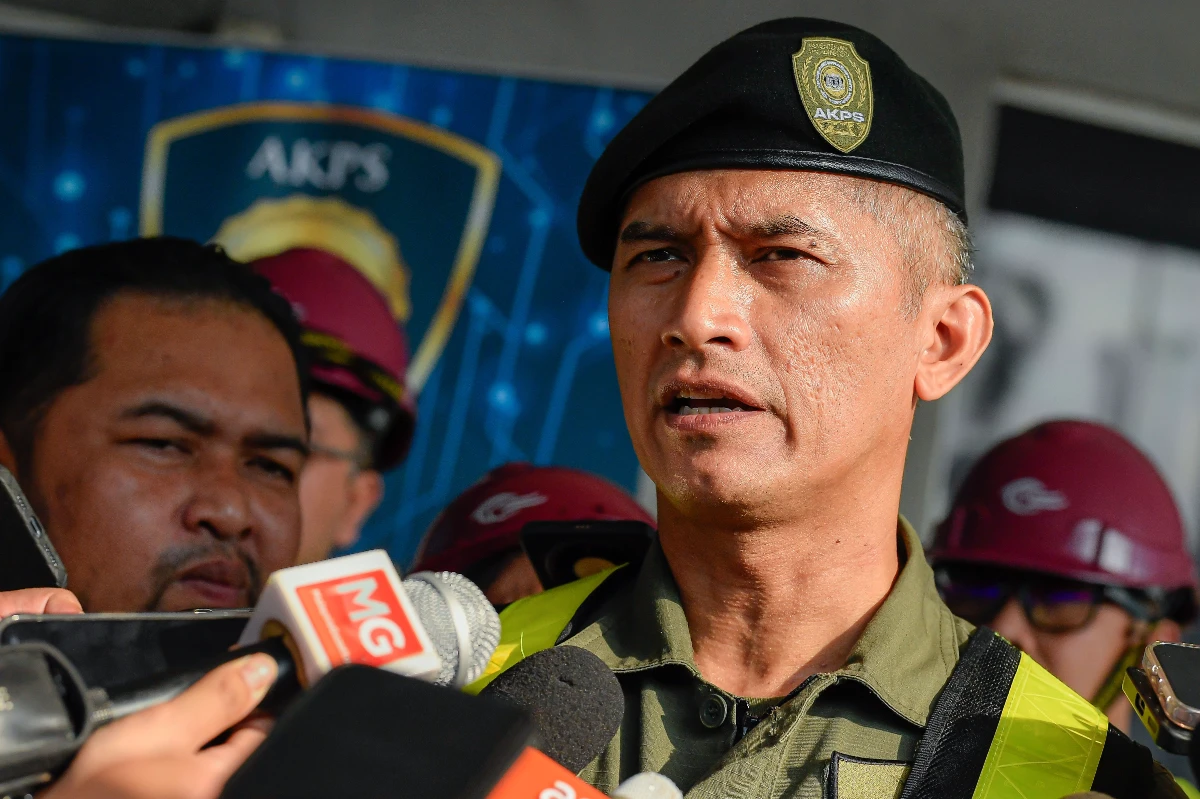
Director-general says fragmented reporting lines prevent uniform discipline and effective enforcement at entry points
PUTRAJAYA: Malaysia’s border control chief has proposed giving the Malaysian Border Control and Protection Agency (MCBA) full command authority and security-force discipline to strengthen enforcement reforms.
Speaking to theSun recently, director-general Datuk Seri Mohd Shuhaily Mohd Zain said the agency’s biggest hurdle is a fragmented command culture, stressing that enforcement credibility cannot improve unless MCBA operates under a unified, disciplined system with clear authority and consequences.
“Immigration is law enforcement. Customs is law enforcement. But the discipline is not the same as the police or the military. In enforcement work, discipline must come together with authority.
“If there is no change in command culture, people don’t care. You can give instructions, but without discipline and consequences, it doesn’t work,” he told theSun on the sidelines of his new year address to MCBA personnel at its Putrajaya headquarters last week.
Shuhaily said MCBA currently draws most of its manpower from the Immigration Department, with about 4,000 officers seconded to the agency, while personnel from Customs, Malaysian Quarantine and Inspection Services (Maqis) and other enforcement bodies are still being integrated.
However, many remain administratively tied to their parent agencies, limiting MCBA’s ability to enforce uniform disciplinary standards.
“They still report back to their own agencies. So I can’t fully impose our system. That is why the command structure must change.”
Shuhaily has proposed transforming MCBA into a full security enforcement force with structured discipline, firearms capability and unified command.
“All six agencies have different cultures. We must unite them as one pasukan keselamatan (security force) with proper discipline. Then only respect comes. Then fear of breaking the rules comes.”
Since taking the helm of MCBA, Shuhaily has overhauled the country’s border security. He merged multiple enforcement units under a single command, reinforced officer discipline, expanded manpower and launched a crackdown on human trafficking, smuggling and corruption.
The agency’s long-term plan would centralise operational enforcement at entry points while allowing parent ministries to retain specialised policy and professional roles.
Under the proposal, Maqis enforcement duties at entry points would eventually be absorbed into MCBA, while Immigration would continue handling passports and travel documentation.
“There’s still Immigration, Customs and Maqis. Maqis will eventually be absorbed by us totally (for border enforcement). Immigration will remain, but it will create a base and will also involve the issuance of passports and travel documents. For us, it’s inspection at the entry point.”
Shuhaily said the Public Service Department is reviewing the formal transfer of personnel into MCBA command, with a proposal expected to be presented to Prime Minister Datuk Seri Anwar Ibrahim soon.



