




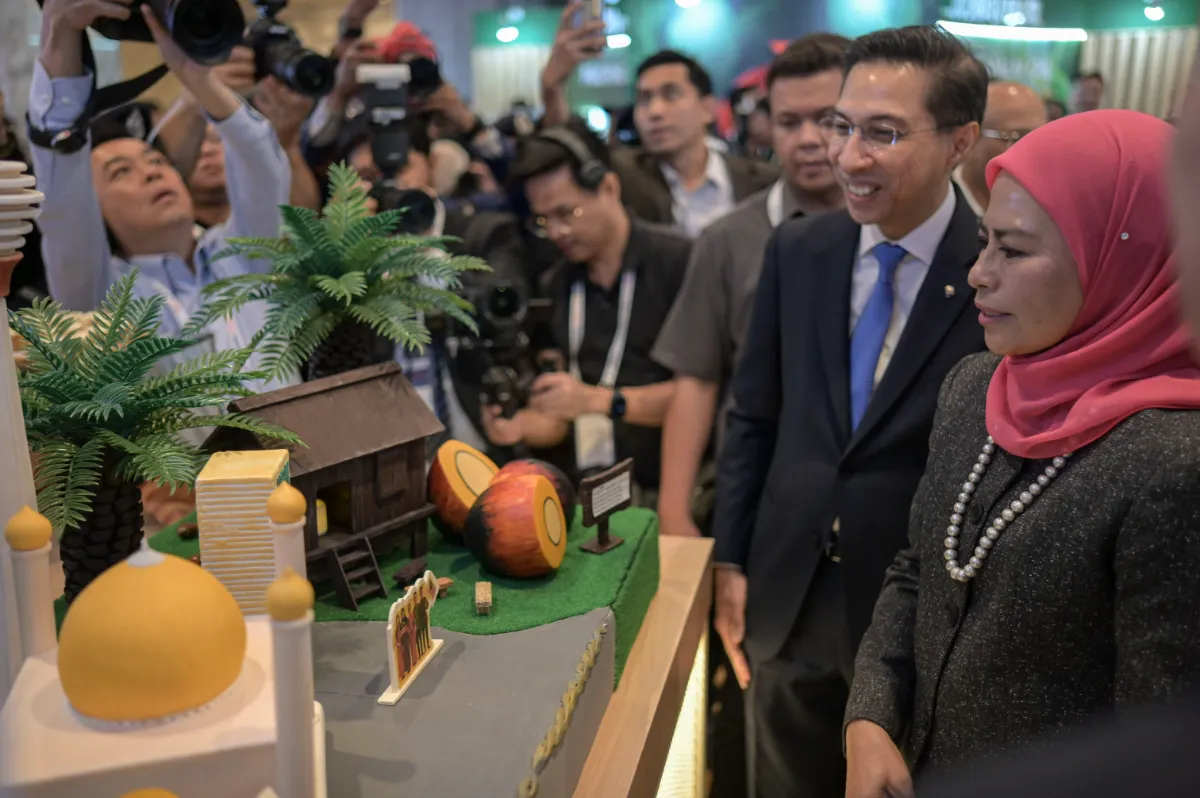
PETALING JAYA: Malaysia remains confident that 2026 will bring greater growth opportunities across the global palm oil industry, driven by stronger international cooperation, improved trade conditions and collaborative efforts to enhance sustainability and resilience.
Plantation and Commodities Minister Datuk Seri Dr Noraini Ahmad said that, despite ongoing global uncertainties, the outlook hinges on last year’s growth, which reflects strong international confidence in Malaysia as a stable and responsible supplier.
She said the total export value of palm oil and palm-based products increased to RM112.51 billion, compared with RM109.39 billion in 2024, reflecting steady global demand and Malaysia’s continued focus on reliability, quality and value-added products.
She added, “2025 marked an important milestone for Malaysia’s palm oil industry despite geopolitical tensions continuing to disrupt trade flows, logistics, and energy markets, with conflicts, supply chain adjustments, and policy-driven trade measures increasing uncertainty across agricultural and commodity sectors.
“For vegetable oils, these pressures are intensified by climate risks, stricter environmental regulations, and shifting demand patterns, while weather-related disruptions and biodiesel policies have tightened supply-demand balances and heightened price sensitivity for palm, soybean, and sunflower oils,“ Noraini told delegates at the 37th Palm and Lauric Oils Price Outlook Conference and Exhibition (POC 2026) in Kuala Lumpur today.
She said sustainability and traceability requirements are becoming critical for market access, with regulations such as the European Union Deforestation Regulation marking a major shift in how agricultural commodities are sourced, verified, and traded globally.
Despite these challenges, the domestic crude palm oil production reached 20.28 million tonnes – the highest level on record and the first time production exceeded 20 million tonnes.
Further, Noraini said, throughout 2025, the domestic palm oil industry stepped up efforts in certification, traceability and data readiness, helping to strengthen confidence among global buyers and consumers.
“As we move into 2026, cooperation across the entire value chain will be crucial. Producers, traders, policymakers and end-users must work together to manage market volatility, regulatory changes and shifting demand,” she added.
Meanwhile, Bursa Malaysia CEO Datuk Fad’l Mohamed said trading volume of the exchange’s crude palm oil futures (FCPO) grew by 4% to 19.62 million contracts in 2025, as more domestic and international traders are actively and regularly participating in the market.
He said the FCPO served as the global benchmark for CPO pricing, providing a reference point for physical trade and hedging activities across the industry.
“Beyond having a benchmark, what truly matters is market depth. Effective price discovery and hedging depend on consistent participation and sufficient liquidity. This is so that risks can be transferred efficiently when market conditions shift. Without that depth, price signals become less reliable, and the cost of managing risk increases for everyone.”
Across the broader derivatives market, Fad’l said Bursa Malaysia’s total trading volume reached an all-time high of 23.30 million contracts for two consecutive years, with a record daily volume of 197,458 contracts achieved in October last year.
“These are positive signs that exchange-based markets are becoming more embedded in how the industry manages risk and plans for the future.”
Fad’l noted that palm oil is priced in a global vegetable oil basket; as such, other major oils can influence how buyers switch, how demand shifts, and how prices move. At the same time, energy policies and sustainability requirements are creating additional pressure points, which can drive prices to move faster and be harder to manage.
“So managing risk today means looking beyond palm oil tools alone. Alongside FCPO, Bursa Malaysia has introduced additional contracts to help participants manage related price exposures. For example, Bursa Malaysia DCE Soybean Oil Futures provides an alternative way to reference and hedge against movements in China’s soybean oil market.
“Meanwhile, USD Used Cooking Oil FOB Straits (Platts) reflects price risks linked to used cooking oil that is tied to renewable fuels. Together, they broaden the risk-management toolkit for the edible oils market,” he said.
Fad’l said the real challenge is not the lack of tools – it is having the confidence to use them.
“Innovation only helps if companies trust and use the tools. In this environment, future‐ready markets require tools that truly match the new risks, and the confidence for businesses to use them,” he added.



