




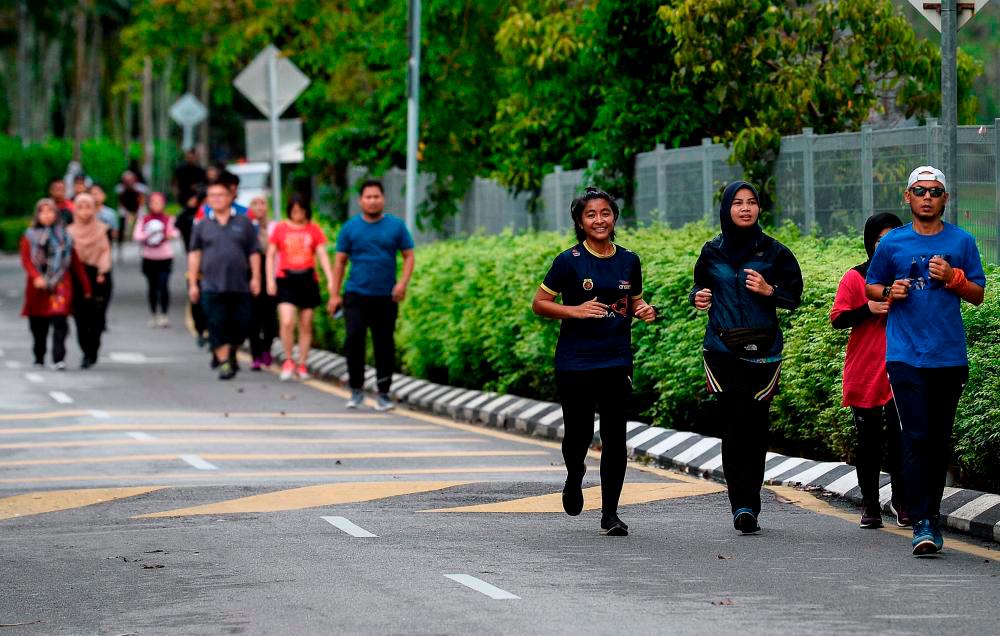
THE paradigm shift from a sick to a sick-free society requires all stakeholders to be persuasive advocates to elevate Malaysia’s status to a healthy nation.
For decades, healthcare support was about curing an ailing society and not about effectively keeping people out of hospitals.
This is the right time for healthcare reforms, to fix what is broken and build on what works.
Preventive care is not a magic bullet and is not the Health Ministry’s responsibility alone.
It will only become sustainable with an ongoing routine of prevention modules, programmes and long-term policies from all related agencies, the community and the citizenry.
“The White Paper on Health will be an exercise for our existential reform, with a fundamental shift from a curative model to a preventive one. We will focus on public health surveillance, policy development, research, regulation, monitoring and evaluation,” said Health Minister Khairy Jamaluddin at the Health Policy Summit 2022 last week.
The management costs for cancer, cardiovascular disease and diabetes exceed RM9.65 billion yearly.
Some of these diseases can be prevented with successful intervention through early detection and investments in prevention and wellness programmes.
Indeed, it is going to be a long road when you consider that even hospitals have fast food, and junk food outlets as cheap easy options, which also indicates what fuels a ballooning epidemic of obesity, diabetes and various other health issues.
According to the National Health and Morbidity Survey 2019, one in two Malaysian adults are overweight or obese, three in 10 adults have hypertension and four in 10 adults have elevated cholesterol levels.
In 2020 the WHO reported that coronary heart deaths in Malaysia reached 36,729 or 21.86% of total deaths. Heart disease kills about 17.9 million people around the world annually and Malaysia ranks 61st.
For starters, food quality regulators, advertisers and schools should be mindful of the pervasive marketing scheme of school sports events that are sponsored by junk food, fizzy drinks and sweets.
Exercise as a medicine or therapy has been prescribed for mental and chronic diseases.
Town planners should designate parks for children within every housing estate.
The present trend of cutting down trees to approve high-rise condominiums in every nook and corner should be monitored.
There ought to be well-designed and equipped playgrounds, football fields and safe cycling lanes.
Such facilities should be attractive enough to attract and sway children from their smartphones.
Schools should delegate more hours for sports and physical activities to ease the “pressure cooker” of a stressful environment due to examinations.
Essentially, it will be up to the Sports, Education, Agriculture and Food Industries, Housing and Development Ministries and the institutionalisation of all agencies to push the prevention agenda.
For workers, there should be schemes to assess their health risk through the Employees Provident Fund, Social Security Organisation and Employment Insurance System, which are covered by employers.
“The Health Ministry will screen about 1.5 million people who have never undergone a health screening, including tests for colorectal cancer and breast cancer at public and private clinics,” said Khairy.
The National Health Service in the UK offers free testing once every five years for the 40 to 74-year-old age group without a pre-existing condition and a discussion with a healthcare professional.
Health risk assessments can help people get the care they need before problems escalate.
A hallmark of Malaysia’s health care system should be subsidised affordable check-ups for preventable ailments for the poor.
No one should be denied a medical test or examination that can prevent or detect diseases at an early stage.
It is more effective to have a preventive model than to inject money to maintain curing the sick.
The “curative” model is becoming increasingly expensive for the majority of the population. It is not financially viable and is never-ending.
Prime Minister Datuk Seri Ismail Sabri Yaakob has assured that the government is prepared to increase the Health Ministry’s allocation in the 2023 budget, which is expected to be tabled in October.
“We need to increase the annual budgetary allocation for public healthcare to 5% of the gross domestic product (GDP) over the next few years. And that increase must be ring-fenced in every subsequent budget,” said Khairy.
However, healthcare allocation as a percentage of GDP has not moved much over the last decade.
In 2011, the healthcare allocation, which comprised both development and operating expenditure, worked out to be 2.4% of GDP. By 2022, healthcare made up only 2.59% of GDP.
The White Paper on Healthcare Reform will be tabled in November on wide-ranging proposed changes to health care financing, among other issues, spanning over 15 years.
It is recommended that a Health Reform Commission supervises the reform.
Finally, it is about the people. We cannot re-imagine a new world of good health unless we play a major role in the prevention process.
As consumers, we need to get to know the different types of products that are available in the market, whatever the marketing strategies. Market logic cannot be all legitimate when profit is the bottom line.
A simple measure is to read the labels on how much fat, salt or sugar there is in each supermarket product and how do we process this information.
Most importantly, getting an annual health check-up for everyone above 40 is our most reliable health test.
Comments: [email protected]



