




FRANKFURT AM MAIN: The European Central Bank (ECB) said on Thursday it would significantly ramp up the pace of its pandemic emergency bond buys, in a bid to soothe market jitters about a rise in government borrowing costs.
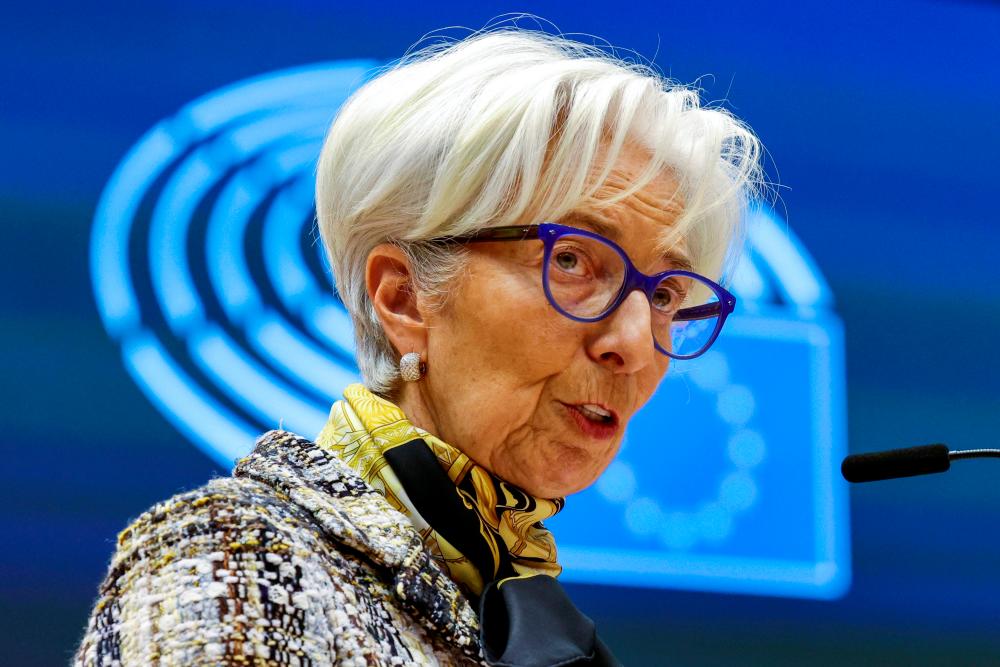
The move over the coming months is aimed at preventing an âundesirableâ early end to cheap money when the eurozone economy still needs ample support to recover from the pandemic, ECB chief Christine Lagarde said (pix).
Although risks to the 19-nation currency club have become âmore balancedâ, Lagarde said ongoing Covid shutdowns were weighing on the economy in the short term. Uncertainty also remained over the speed of vaccinations and the threats posed by virus variants, she added.
âIn these conditions, preserving favourable financing conditions over the pandemic period remain essential,â Lagarde told a press conference in Frankfurt.
Global markets have been roiled recently by a rapid rise in bond yields, triggered by signs of higher inflation on the horizon.
Investors fear faster price growth could force a hike in interest rates that would make borrowing more expensive, hampering recovery in the virus-stricken eurozone.
In response, the ECBâs 25-member governing council decided on Thursday that the pace of its purchases under the pandemic emergency bond-buying scheme known as PEPP would be âsignificantly higherâ over the next quarter.
The â¬1.85 trillion (RM7.7 trillion) scheme is the ECBâs main crisis-fighting tool and observers had widely predicted that the ECB would âfrontloadâ PEPP purchases to counter the recent market turmoil.
Lagarde also stressed the flexibility of the PEPP scheme, which is set to run until March 2022 but can be adjusted or extended as the ECB sees fit.
The massive debt purchases are aimed at keeping credit flowing in the eurozone to encourage spending and investment. The ECB has also for years kept interest rates at record lows and offered ultra-cheap loans to banks to boost growth and push up stubbornly low inflation.
LBBW analyst Jens-Oliver Niklasch said âit will now be exciting to see how the market reactsâ to the ECBâs move.
âIt could be that some players want to test the ECBâs resolve, so we will see another rise in yields,â he said. âBut in the end, the central bank is in the driverâs seat because it has unlimited ammunition.â
European bond yields haven’t seen quite the same surge as US Treasury notes, which reflects optimism about the US economy as well as anxiety about higher inflation from Washington’s $1.9 trillion stimulus plan.
Nevertheless, Germany’s benchmark 10-year bond yield has risen by around 0.30 percentage points since the start of the year. French and Italian bond yields are also up.
Yields are closely watched because they serve as a guide for bank lending rates.
Lagarde however underlined that the bank was not in the business of managing bond yield movements, in an apparent attempt to ward off criticism that the ECB might be straying from its mandate.
The ECBâs mandate is to keep inflation at âclose to, but belowâ 2.0%, a target that has been out of reach for years.
In the latest quarterly forecasts unveiled by Lagarde, the ECB sees inflation jumping to 1.5% this year, up from an earlier estimate of 1.0%.
Next year, inflation is predict to run at 1.2%, up from a previous forecast of 1.1%.
But Lagarde stressed that the increases were driven by higher energy prices and âtemporary factorsâ such as pent-up consumer demand as virus curbs are relaxed.
âWe will see through that,â she said. For 2023, the inflation outlook remained unchanged at 1.4%, still far off the ECBâs goal of just under 2%.
Many curbs on public life remain in place as eurozone countries struggle to bring down coronavirus infections, while the EU’s much-criticised vaccination drive lags behind countries like the United States or Britain.
Nevertheless, the ECB defied observers by slightly raising its 2021 growth forecast from 3.9% to 4.0%.
Lagarde also repeated her plea for governments to help reboot the economy through fiscal stimulus.
The European Unionâs landmark â¬750 billion virus recovery fund will play a âkey roleâ in the recovery, Lagarde said, calling for it to become operational âwithout delayâ. â AFP



