




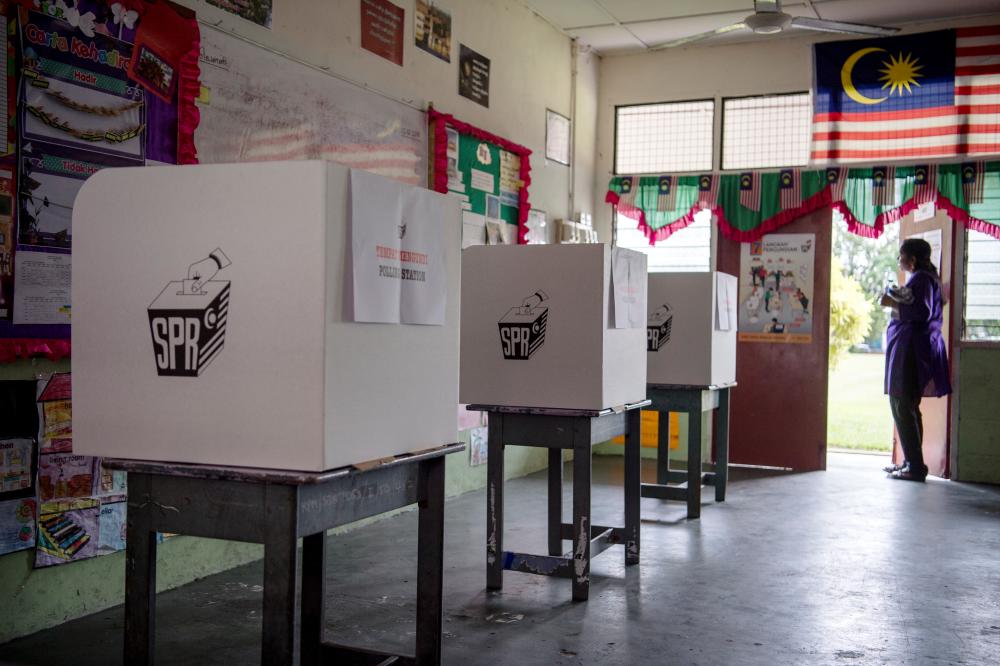
PETALING JAYA: Malaysia is on the cusp of a new political reality. When those aged 18 to 21 begin to cast their votes, the competition for political supremacy is expected to be thrown wide open.
However, their impact as power brokers remains unclear. While some see them as kingmakers, others believe there is little likelihood that they will make a big dent in the support for one party or another.
Undi18 co-founder Tharma Pillai has no doubt that things would be very different.
âYoung voters donât think the same way (as their elders),â he told theSun.
He said the idea that those in Kelantan will vote for PAS, those in Pahang prefer Umno and those in Selangor will continue to support Pakatan Harapan may no longer be valid.
âThe political dynamics will change. Factors such race and religion may continue to be a determining factor, but in a different way than it did for the older voters.â
The government recently announced that it will no longer pursue a reversal of a High Court decision that those aged 18 to 21 should be allowed to vote.
In line with that decision, automatic voter registration has begun.
Tharma said for a start, a permanent or long-term grip on power by any party or coalition would no longer be possible.
He expects all political parties to face the same risks and reap the same benefits with the entry of younger voters.
âNo one will be ahead or behind in this.â
Tharma pointed out that by 2023, when the next general election is due, there will be 3.8 million new voters in addition to the 14.9 million in the 14th general election in 2018.
The majority of the new voters are expected to be aged under 40.
âThey will be the kingmakers,â he said, adding that there would also be a lot of pressure on political parties to assemble a younger team and field younger candidates to gain support from a changing electorate.
âPolitical parties would also be forced to seek diversity and greater (youth) representation.â
He said this was reflected in the return of Umnoâs youth wing after a long hiatus and the setting up of the Malaysian United Democratic Alliance, aptly abbreviated to âMudaâ for its focus on the under 40s.
The man behind the multi-racial party is Muar MP Syed Saddiq Syed Abdul Rahman, who became the countryâs youngest Cabinet member ever when he was picked to head the Youth and Sports portfolio at age 25 in 2018.
Electoral watchdog group Bersih 2.0 chairman Thomas Fann agreed that political parties can no longer ignore the young if they wish to stay relevant. He cited Syed Saddiq and several DAP elected representatives as young leaders who will lead the charge.
âWith those under 40 becoming the largest bloc of voters, the pressure to win them over will be immense,â Fann said.
However, non-partisan youth-led initiative Ypolitics managing director Loh Kar Mun holds a different view.
She believes it is still unclear whether the prevailing negative perception of political institutions will push the youth towards the frontline or deter them from taking up the challenge.
Loh agreed that in the aftermath of the Sheraton Move, several new youth organisations have been formed to take up broad policy issues. On the other hand, she said an equally strong following of young people have also chosen to detach themselves from politics.
âFor them, the political culture has become too overwhelming. Whether more young people will engage in politics is yet to be seen.â



