




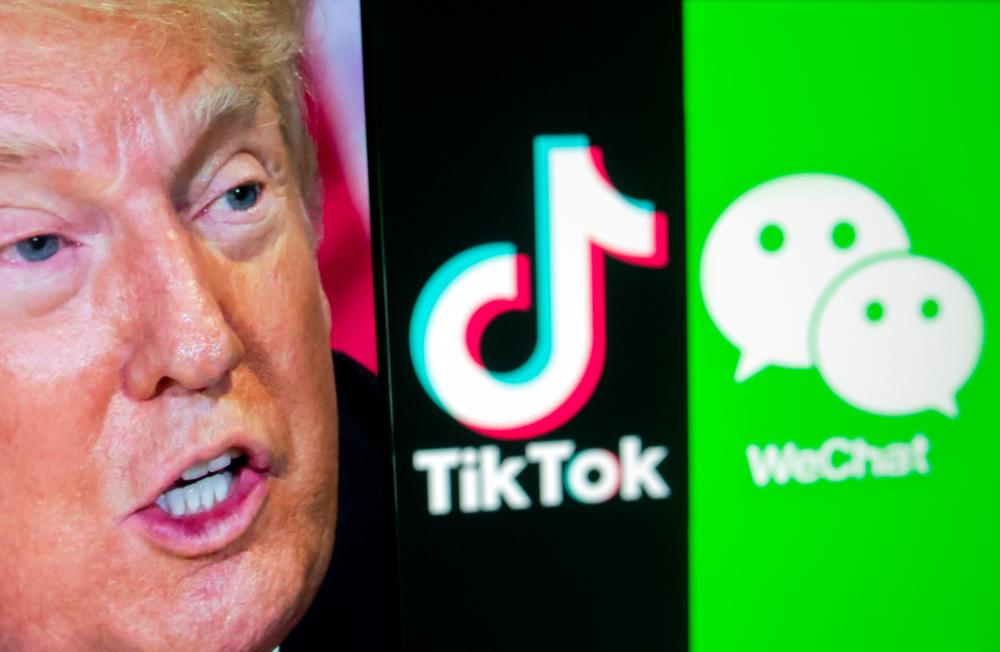
WASHINGTON: Popular video app TikTok announced Saturday it has proposed an agreement with Oracle as its U.S technology provider and Walmart as a commercial partner, a potential deal U.S President Donald Trump touted as âfantastic.â
âWe are pleased that the proposal by TikTok, Oracle, and Walmart will resolve the security concerns of the U.S Administration and settle questions around TikTokâs future in the U.S,â a spokeswoman for TikTok, owned by Chinaâs ByteDance, told AFP.
Oracle will become the âtrusted technology provider, responsible for hosting all U.S user data and securing associated computer systems to ensure U.S national security requirements are fully satisfied,â the spokeswoman said. âWe are currently working with Walmart on a commercial partnership as well.â
She gave few further details about the deal, other than saying that the companies will âmaintain and expandâ TikTokâs global headquarters in the U.S and create 25,000 new jobs.
Trump had earlier praised the deal as âfantastic.â
âI have given the deal my blessing,â he said. âIf they get it done, thatâs great, if they donât, thatâs OK too.â
Trump has claimed for weeks that TikTok is collecting user data for Beijing, without ever providing evidence for his allegations.
In early August, he gave ByteDance until Sept 20 to hand over TikTokâs U.S operations to an American company.
And on Friday the Trump administration ordered a ban on downloads of the video-sharing app, as well as Chinese-owned messaging platform WeChat, escalating a fight with Beijing over technology.
Following TikTokâs announcement, the U.S delayed the ban on downloading the app until Sept 27.
Trump said the âsecurity will be 100 percentâ and that the companies will use separate cloud servers.
The deal will lead to the creation of a new company, headquartered in Texas, that will have ânothing to do with Chinaâ but will still be called TikTok, according to the president.
Trump also said that the companies involved will make a US$5 billion (RM20.5 billion) contribution toward âthe education of American youth.â He had previously said that the federal government deserved a cut of the deal for authorizing it.
TikTokâs spokeswoman only confirmed the creation of the new jobs and that the companyâs global headquarters would remain in the U.S.
Oracle confirmed its part in the deal in a statement, saying TikTokâs decision was âwas heavily influenced by Zoomâs recent success in moving a large portion of its video conferencing capacity to the Oracle Public Cloud.â
Walmart did not immediately respond to AFPâs request for comment.
âBullyingâ
Under Fridayâs U.S order against the Chinese apps, Tencent-owned WeChat would lose functionality in the United States from Sunday.
Following the TikTok-Oracle-Walmart dealâs announcement, TikTok users will be banned from installing updates starting on September 27, but they could keep accessing the service through Nov 12.
That timeframe potentially allows for the deal with Walmart and Oracle to get tied up, to safeguard data for the wildly popular app to allay Washingtonâs security concerns.
TikTokâs brand of brief, quirky phone videos has become hugely popular, especially among young people, with 100 million users in the United States alone.
With Trump facing a tough reelection campaign, U.S officials have described the measures as essential to safeguard against potential Chinese espionage through the platforms.
But in response, Chinaâs Commerce Ministry on Saturday condemned what it called U.S âbullying,â saying it violated international trade norms and that there was no evidence of any security threat, shortly before launching a mechanism that would allow it to sanction foreign companies.
Chinaâs long-expected âunreliable entities listâ is seen as a weapon for Beijing to retaliate against the United States, which has used its own âentity listâ to shut Chinese telecom giant Huawei out of the U.S market, in addition to the recent moves against TikTok and WeChat.
Trump critics have said that while TikTokâs security risks were unclear, the sweeping ban raises concerns about the governmentâs ability to regulate free expression.
The ban ramps up the battle with Beijing over technology, which some analysts say is based more on competitive than security concerns. â AFP



