




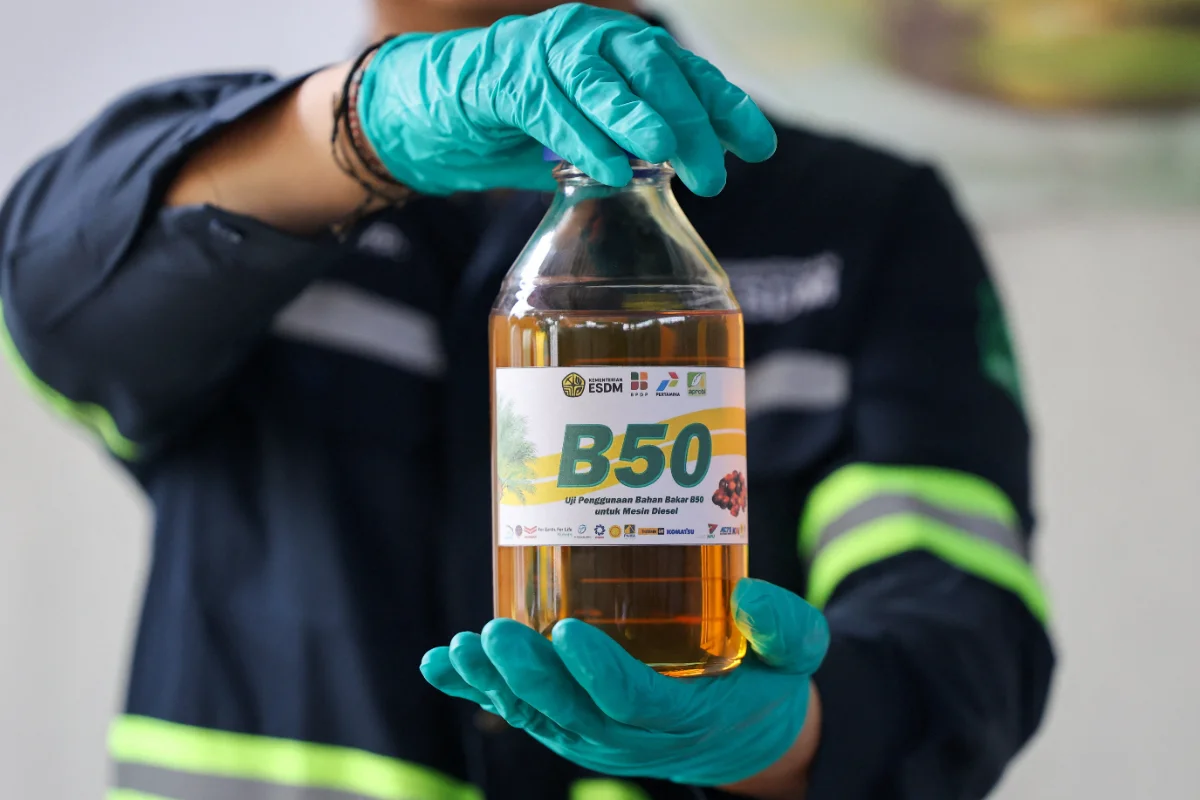
Indonesia’s palm biodiesel consumption reaches 3.9 million kilolitres, with plans to increase the mandatory blend to 50% starting July 1 after successful testing
LEMBANG: Indonesia consumed 3.9 million kilolitres of palm-based biodiesel up to April 13 under its national blending mandate. The energy ministry confirmed the figures as the country prepares to increase the mandatory blend.
Starting July 1, the palm oil-based biodiesel content will rise from 40% to 50%. This B50 programme aims to reduce costly fuel imports and mitigate supply risks.
A three-month transition period for the new blend will begin on the same date. The fuel is currently undergoing comprehensive testing on various vehicles and machinery.
Senior energy ministry official Eniya Listiani Dewi confirmed the testing covers passenger cars, trucks, farming equipment, mining machinery, and ships. Road tests for nine vehicles were conducted in Bandung, West Java.
“God willing, as instructed, it can be implemented on July 1,” Eniya told reporters during the testing event. The test vehicles, including a bus, SUVs, and trucks, were driven around 300 km using the new blend.
Eniya stated the B50 fuel specifications will be improved compared to B40, with lower water and monoglyceride content. She emphasised that lower water content is crucial for maintaining engine performance.
A water content test during the event showed the B50 contained 208.81 parts per million of water. This result is below the ministry’s 300 PPM standard.
The energy ministry said tests have shown fuel consumption remains within manufacturers’ standard ranges. Officials reported no significant decrease in vehicle performance.
The government has not yet decided the additional biodiesel quota required for the B50 programme’s second-semester implementation. Indonesia initially allocated 15.65 million kilolitres of biodiesel for 2026 under the previous B40 mandate.



