




I DON’T remember having such keenness on reading about geopolitics until the recent war in the Middle East. Before that, it was background noise, the static of a world I assumed operated on some logic I simply did not need to understand.
I would glance at headlines the way one glances at passing traffic, acknowledging movement without absorbing detail. The business of think-tanks and foreign correspondents felt abstract, almost fictional. A policy shift here, a peace treaty there – interesting, perhaps, but entirely separate from my own atmosphere.
Then came the rupture.
It has since become a ritual for me – solemn and unshakeable. Every day is a wait with exasperation. I don’t begin my morning with coffee or sunlight anymore. I begin with a silent, anxious communion with my phone.
The glow of the screen is my new dawn. I scroll through briefs, parse statements, trace troop movements on interactive maps with fingers that tremble slightly.
In the evening, I trade silent text for the urgent cadence of podcasts, letting analysts’ voices fill the room, their words painting pictures of a world I cannot see but feel in my bones.
The war began with a rationale stated so forcefully that nobody questioned whether it made structural sense. A massacre of civilians, yes. An act of terror, yes. But the response was not proportionate. It was not surgical; it was a sledgehammer deployed against a swarm of flies, and everyone watching knew it.
Four months later, the threat remains, the hostages remain and the bombed neighbourhoods remain rubble. The only thing that has been eliminated is the original justification. It has not been replaced with a new one; it has simply been allowed to dissolve, like sugar in hot tea, leaving behind only the bitter taste of inertia.
I watch the man now. The one who initiated this. He appears on screen with the regularity of a weatherman, delivering updates that shift between triumphalism and vague regret.
One week he speaks of total victory. The next he acknowledges that victory is “complex”. One month he suggests a ceasefire, the next he escalates. There is no pattern to discern because there is no plan to follow; he improvises.
We are all watching a man improvise with live ammunition. What I find most remarkable is the way his pronouncements are treated by the media. Each new statement is analysed as if it contains hidden meaning. Each contradiction is explained away as “shifting strategy”.
But there is no strategy; there is only reaction. The man wakes up, consults his advisors and chooses a tone for the day.
I remember a specific Tuesday. The news broke that a deal was imminent, hostages would be released, fighting would pause and the region would exhale. I allowed myself, for approximately four hours, to feel something resembling hope.
Then the deal collapsed. The reason given was that one side had “moved the goalposts”. The truth is that the goalposts were never anchored to anything solid. They were painted on cardboard and carried by the wind.
This has happened several times in the past months. The war has become a ritual without meaning. We wake, we check the news and see that nothing has changed except the body count. We go to work, we return home and we do it again. The conflict has settled into a rhythm that is almost comfortable in its predictability.
The only disruption is when the man makes another of his “surprising” announcements and for a brief moment we are jerked out of our stupor, only to settle back into it when the announcement proves to be meaningless.
I have stopped watching the news first thing in the morning and do so much later in the day. This is not a political statement; it is a survival mechanism.
I have realised that paying attention does not grant me reprieve. Understanding does not grant me power. The war will continue regardless of whether I track its progress or ignore it entirely. My earnestness was never going to save anyone.
The man behind the war claims to have what he calls “insights”. These are moments when he declares that the end is near, that peace is possible and that the fighting has achieved its objectives.
Each insight is followed by a continuation of the fighting. Each declaration of victory is followed by a retreat to a new defensive line. The insights are not insights at all; they are performances. They are designed to reassure his domestic audience while signalling nothing of substance to anyone else. I am tired of asking what the point is. The point is that wars, once started, acquire a momentum that outstrips any original intention. They become their own justification.
They persist because stopping them would require admitting that they were mistakes, and mistakes are not something that this particular man is capable of acknowledging.
I still read the news. I still listen to the podcasts. The ritual persists, though the hope has drained out of it. Now, I do it not to understand but to bear witness. Not to find meaning but to acknowledge that meaning has fled.
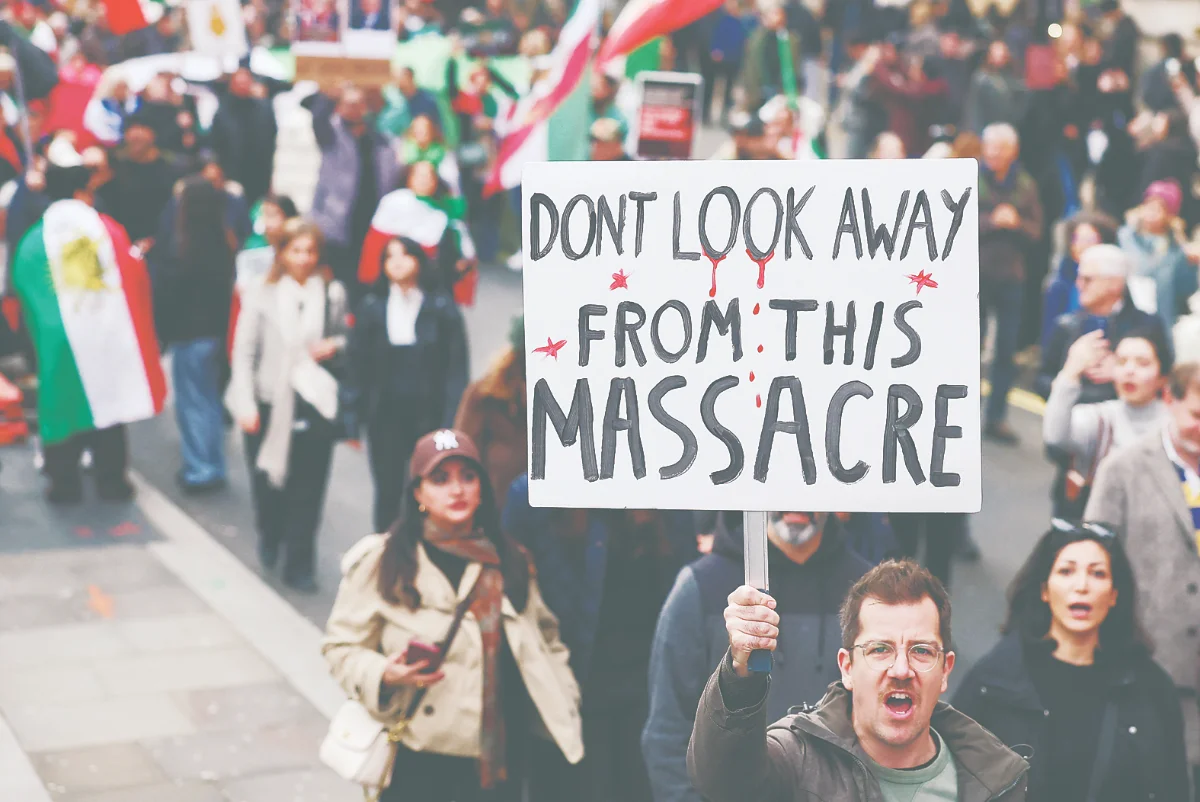
The war continues and so do I, not because I believe my attention matters but because I cannot bring myself to look away. That, perhaps, is the cruelest irony of all. I am exhausted by the war but I am more exhausted by the thought of ignoring it. So, I wait – we all wait – for what, I no longer know, as the world moves on.
Happy Father’s Day.
Dr Bhavani Krishna Iyer holds a doctorate in English literature. Her professional background encompasses teaching, journalism and public relations. She is currently pursuing a second master’s degree in counselling. Comments: [email protected]



