




Dutch football’s greatest strength was never just winning
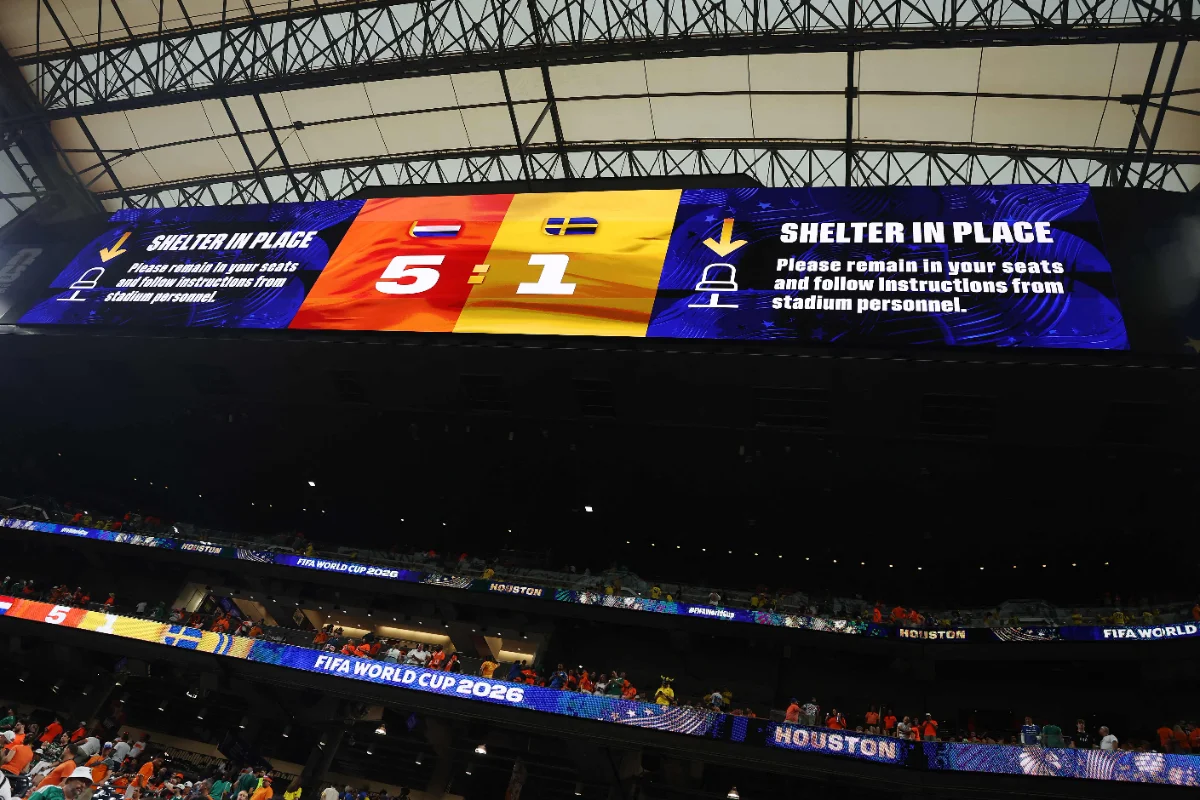
THE ORANGE jersey worn on Sunday is in the washing machine today after being worn on Father’s Day weekend. From the celebratory lunch on Sunday, to Monday blues today, the atmosphere is beginning to sag, and with it, the artificial high of Saturday’s football. Looking back at the Netherlands’ 5-1 dismantling of Sweden at Houston Stadium, a distinct sense of relief has settled into a lingering skepticism among the Dutch fans.
To glance at the scoreline more than 24 hours later is to tempt oneself into believing that a historic footballing superpower has been beautifully restored. We saw Brian Brobbey striking twice within the opening seventeen minutes, Cody Gakpo turning the second half into his personal project with a ruthless double, and Crysencio Summerville arriving off the bench to add a fifth in the 89th minute. Yet, as the weekend celebrations give way to the cold reality of the working week, an uncomfortable truth has filled in the air. This was undeniably a convincing victory, but it completely lacked the spiritual resonance of the real Dutch greatness I have witnessed since 1997. It was a comfortable cruise, but it still didn’t leave the impression of a true World Cup champion.
READ MORE: Mexican fans rally behind Iran as ‘our second team’ at World Cup
Saturday’s performance was undeniably efficient, but when held against the light of what the Oranje used to represent, it felt hollow.
For those of us who grew up as the handful of Dutch fans in our neighbourhoods, watching them play was always an exercise in artistic rebellion. To compare this modern variation with the transcendent squads of the past is to realise how much has been bartered away for mechanical efficiency. Some may argue that this rigid, high-pressure transition game is the inevitable byproduct of a team built under a former Barcelona coach’s shadow, but it is what it is.
Recalling the 1998 World Cup, when Dennis Bergkamp brought a ball falling out of the Marseille sky with three touches that felt like a spiritual awakening, or looking back at the majestic midfields of 1974 and 1988, I remember teams that did not merely win football matches. They altered the entire perception of space and geometry. Against Sweden, we watched a highly polished transition machine take advantage of a thoroughly disorganised opposition. It was effective, but it was corporate. It was football re-imagined as a highly optimised tech startup. It is scalable and predictable, but it lacks a soul.
Watching the game was like going to see the band Zarsadias Brothers play in a local bar, only to find out that only one of the brothers actually showed up. Sure, the new lineup hit every note perfectly, but when you look at the stage, that’s when you realise there’s no charisma. The result was great, and thankfully, I didn’t end up throwing my television set out onto the balcony like I wanted to after the Japan game. However, this 5-1 win feels less like a footballing masterclass and more like a highly successful, yet rigid corporate marketing campaign designed to appease the fans.
That said, the relentless, constant high pressure orchestrated by Ronald Koeman’s side in the first half did genuinely evoke the ghost of what the Dutch invented – Total Football.
Pushing their defensive line high enough to make the Swedish midfield choke, they forced crucial errors, with Gakpo exploiting the wide areas to feed Brobbey for the clinical opening stabs. For a brief moment, it reminded me precisely why I fell in love with this team in the first place. It felt like a faint echo of 1998, back when a young, vibrant generation played with an organic, joyful arrogance that refused to compromise. As a young 9-year-old football fan, when everyone at SJKC Lee Rubber was picking Brazil, I told my late dad, a Brazil fan, that the Netherlands is my team.
But underneath the five-goal gloss, the structural flaws are screaming to be noticed as we look ahead.
What Koeman needs to acknowledge before the knockout rounds start is the blindingly obvious. In the 59th minute, Newcastle’s Anthony Elanga came off the Swedish bench and completely tore through the backline to score. The cold truth is that raw, blistering pace absolutely screwed the Dutch defence. When forced to turn and chase a runner, our massive defenders looked like cargo ships trying to navigate a small pond filled with ducks.
And then, of course, we must address the persistent, baffling comedy of the substitutions. Why, in the name of everything that loves football, is Memphis Depay still coming onto the pitch? Koeman actually made the right tactical substitutions in this game, continuing the pursuit of more goals. However, with the game already won and Brobbey resting on his laurels, Koeman chooses to sub on a man who operates at the speed of a dial-up modem. Much like Cristiano Ronaldo’s static display against DR Congo, Memphis brought absolutely nothing to the pitch other than a complete dissipation of our attacking energy. To be perfectly honest, the Netherlands could have had a player sent off and played out the final twenty minutes with ten men instead. That would have genuinely been better for our structural shape.
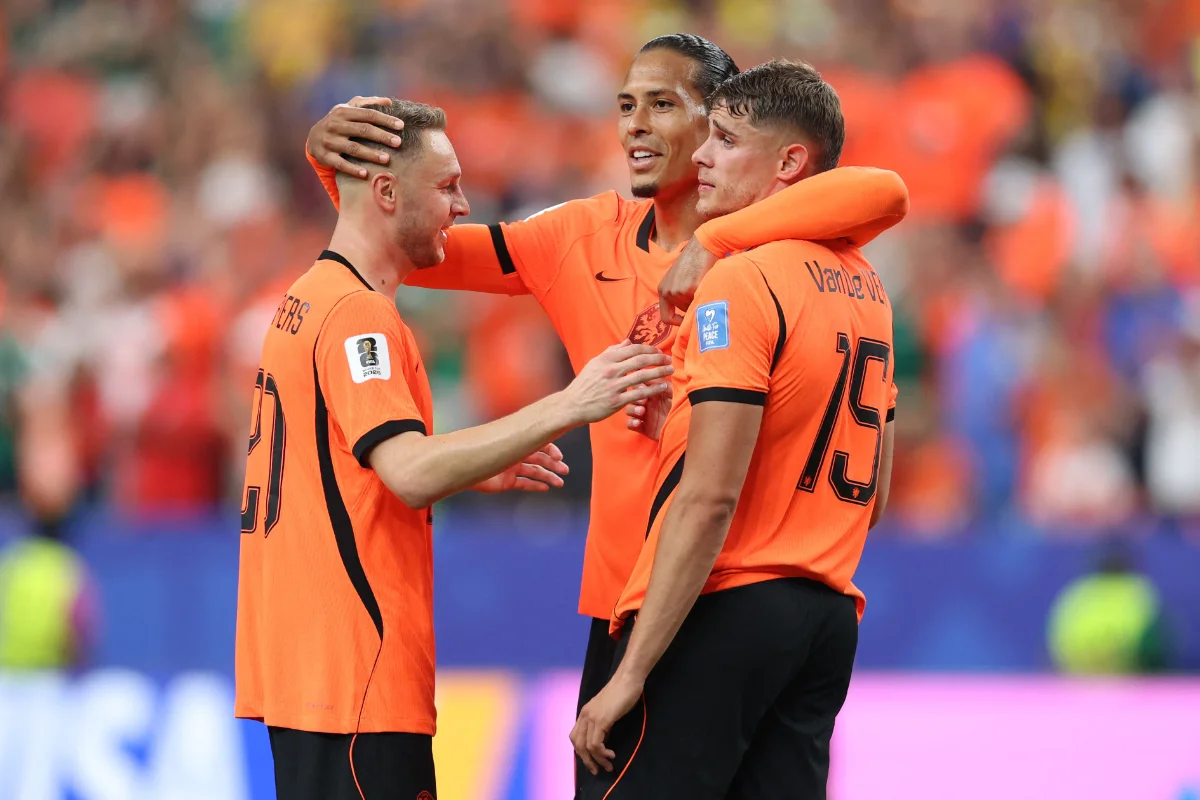
To be fair, the midfield trio of Tijjani Reijnders, Ryan Gravenberch, and Frenkie de Jong did look absolutely magnificent in the engine room, recycling possession so cleanly that it completely starved the Swedes of oxygen. Yet, as a purist, it is simply not the same as the eras I truly loved to watch. It lacked the predatory combativeness of Edgar Davids, the calculated, fluid distribution of my all-time favourite Dutch player, Philippe Cocu, or the majestic swagger of Clarence Seedorf.
More than anything, it lacked the tactical volatility of the legendary midfields from the 2010 and 2014 World Cup campaigns. I remember watching in absolute awe during the 2010 final at the Sarawak Rainforest World Music Festival. Back then, the spine was forged in absolute fire. In 2010, you had the merciless, steel-wrapped double pivot of Nigel de Jong and Mark van Bommel, allowing Wesley Sneijder the absolute creative license to shred defences at will. By 2014, Louis van Gaal adapted the template, blending de Jong’s relentless enforcement with the tactical intelligence of Georginio Wijnaldum, all while Sneijder continued to pull the strings. Those very midfielders brought me the pure, unadulterated joy of watching the game all over again.
Unlike the past, the modern Dutch player is an athlete first, and a philosopher second. In the golden eras, the midfielders didn’t just cover ground; they dictated the structural knowledge of the game. The strikers didn’t just wait for low, driven crosses from the wingbacks; they dropped deep to reinvent their positions entirely.
Saturday in Houston, the Netherlands proved they have the physical capacity to thoroughly dismantle European opposition and storm to the summit of Group F. They have the goals, they have (some of) the pace, and they have the points. But as they march toward the knockout rounds, I can’t help but wonder if they can find that missing magic that transforms a highly successful football team into a true masterpiece.



