




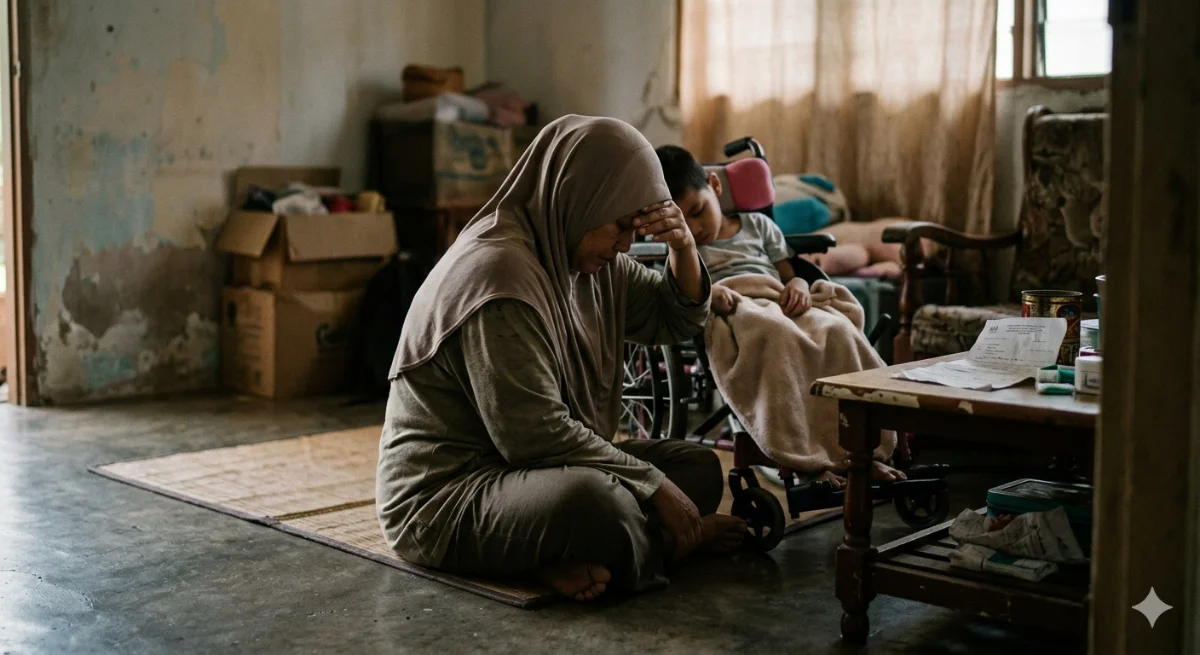
A RECENT case involving a family in Pahang has once again highlighted a painful reality that many Malaysians choose not to see.
The family reportedly appealed for urgent assistance after the child’s mother allegedly abandoned a special needs child.
Adding to their hardship, they claimed that their application for aid through the Department of Social Welfare was apparently unsuccessful, leaving them struggling to meet basic daily needs.
When I first came across the story, I could not help but wonder how many other families are facing similar situations. While this particular case has gained traction on social media, countless others remain hidden behind closed doors.
Families caring for children with disabilities often face enormous emotional, physical and financial challenges. Many caregivers sacrifice their careers, personal lives and financial stability simply to ensure that their children receive the care they need.
What makes this case especially heartbreaking is that a vulnerable child is caught in the middle of circumstances beyond their control.
Children with special needs require consistent support, medical care, therapy and a stable environment. When a family is already struggling financially, the burden becomes even heavier.
For some, every ringgit matters. A rejected aid application can mean the difference between accessing essential support and going without it. This is why stories like this should not be treated as temporary social media trends; they should serve as a wake-up call for all of us.
Too often, public attention shifts away after a few days while the families involved continue facing the same difficulties long after the headlines disappear.
The reality is that many Malaysians caring for disabled children, elderly relatives or family members with serious health conditions are quietly struggling every day.
More importantly, these cases need to be brought to light because they reveal gaps in our support systems.
While assistance programmes exist, there are clearly families who still fall through the cracks. Whether it is due to strict eligibility requirements, administrative challenges or other factors, the end result remains the same.
Families who desperately need help are left feeling abandoned and unheard. As a society, we cannot continue waiting for cases to go viral before taking notice.
Greater awareness can encourage more support from communities, charitable organisations and relevant authorities. It can also create important conversations about how vulnerable families can be better protected and supported.
No child should suffer because of circumstances they did not choose. No caregiver should feel alone while carrying such a heavy responsibility.
The Pahang family’s story is not just about one household seeking help; it represents many families across Malaysia who are facing similar struggles in silence. Their stories deserve to be heard, and more importantly, they deserve action.
Daninas Hezry
City University Malaysia
Cyberjaya



