




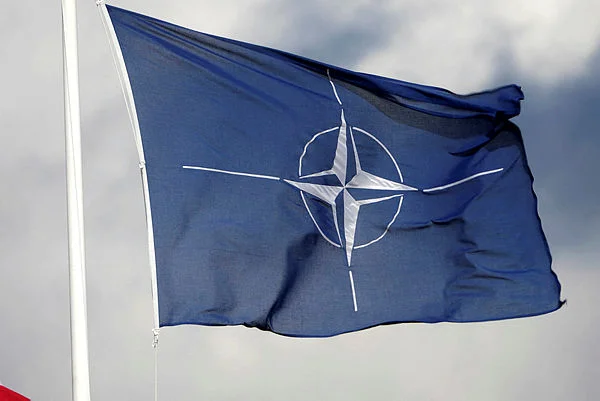
NATO leaders gather in Ankara to tackle industrial shortfalls as Europe struggles to turn defence budgets into combat-ready firepower.
BRUSSELS: A year on from their historic pledge to ramp up defence spending, NATO leaders gathering in Ankara next week will reckon with another challenge: getting industry to produce enough weapons.
As money flows into defence budgets — up $90 billion in Europe and Canada last year alone — the 32-nation alliance is struggling to transform the funds into firepower.
“Cash is crucial, but you can’t stop a missile or a tank with a dollar or a euro,” NATO chief Mark Rutte said.
“We need to turn the cash into combat-ready capabilities, and fast. This is our shared priority.”
In Ankara, the issue will be in the spotlight as leaders are expected to ink deals worth billions of dollars at a special industry forum on the sidelines of the summit.
The struggle getting industry to churn out enough weapons fast enough does not come as a surprise.
Russia’s invasion of Ukraine has long highlighted Europe’s limitations to produce enough — wait times are long and crucial capabilities are lacking.
Meanwhile President Donald Trump’s war on Iran has sapped US stockpiles and shown off the strains for firms to refill them.
For Europe, the need to step up is of fundamental importance as it looks to become less reliant on Washington in the face of growing doubts about US reliability and warnings Russia could attack in the coming years.
“We’ve learned how to raise additional funds. We still need to learn how to spend them in an effective way in order to outproduce, out-innovate, outgun Russia,” said EU defence commissioner Andrius Kubilius.
Industry insists that a change is already underway after several decades of underinvestment across the board in defence.
“Many manufacturers are investing in significantly greater production capacity,” Camille Grand, secretary general of the European defence industry association ASD, told AFP.
“But does that mean we’re exactly where we should be? Probably not.”
‘Overwhelmed’
Analysts warn that if war broke out now Europe would quickly run out of key weaponry such as air defence missiles.
“In some critical areas, Europe’s current production capacity would be overwhelmed within days,” analysts from the European Council of Foreign Relations wrote.
“Ammunition production has grown from 300,000 shells annually in 2022 to a target of two million, but this is still not enough for a protracted conflict.”
Some of the issues facing Europe are deeply entrenched.
The EU has launched a raft of efforts to reform its defence market — but the sector remains deeply fragmented as countries such as France are fiercely protective of their own companies.
“In the European Union we have 27 defence markets, 27 sets of rules — and so the defence industry still has many obstacles,” Kubilius, who oversees EU efforts to bolster production, complained in a recent speech.
But the push for a single defence market on the continent — and getting countries to work more together — faces major hurdles.
Large companies in the sector have no incentive to invest because they know they will be given preferential treatment by their governments, Guntram Wolff, a defence economics expert at the Bruegel Institute in Brussels, told AFP.
“The German purchases going to domestic firms have increased from something like 30% in 2020-2021, to now 60% in 2025-2026,” he said.
Learn from Ukraine
Europe does not have to look far if it wants an example of a nimble defence industry able to take on Russia.
Despite living under constant bombardments for over four years, Ukraine has built itself into a technological powerhouse churning out millions of drones.
“European defence industry produces ‘haute couture’ defence products. Products that are technologically advanced, but difficult to make, expensive and hard to scale up,” Kubilius said.
“Ukrainian industry produces weapons for wartime conditions, to perform on the battlefield.”
A growing number of European firms are now launching tie-ups with Ukrainian companies in a bid to tap their expertise and officials want to go further to integrate the country’s industry.
“Ukraine’s defence-industrial integration should be treated as a present-day security investment: its battle-tested innovations, from drone warfare to intelligence fusion, are assets Europe needs now,” the European Council of Foreign Relations said.



