




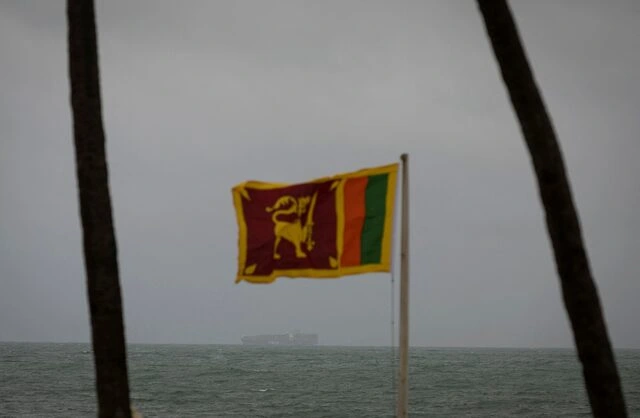
Sri Lanka ends eight-month state of emergency imposed after Cyclone Ditwah killed 643 people, with troops now withdrawn from relief operations.
COLOMBO: Sri Lanka’s government ended a state of emergency it declared after a cyclone that killed 643 people eight months ago, a minister said on Wednesday.
The extraordinary powers allowed the deployment of troops to carry out relief operations and had been extended monthly since Cyclone Ditwah hit in November 2025.
“From now on, there will be no state of emergency in the country,” Media Minister Nalinda Jayatissa told reporters.
President Anura Kumara Dissanayake imposed the state of emergency shortly after the cyclone brought heavy rain and strong winds across the island, causing infrastructure damage estimated at $4.1 billion.
Security forces were deployed to carry out search-and-rescue operations, as well as to clear highways and railways and restore a degree of normality.
However, the main opposition bloc has accused the government of using the emergency laws to crack down on political dissent, a charge the government denies.
The laws also allowed the state to acquire devastated properties to prevent looting and squatting.
Constitutionally, the president can declare an emergency for a period of one month at a time but it can be extended with the approval of parliament.
The cyclone, the worst natural disaster to hit the island in two decades, came as Sri Lanka emerged from its worst economic crisis in 2022.
Colombo has since secured a $2.9 billion bailout loan from the International Monetary Fund to help stabilise the economy. Inflation dropped to 6.8% last month, compared to 69.8% in September 2022.



