




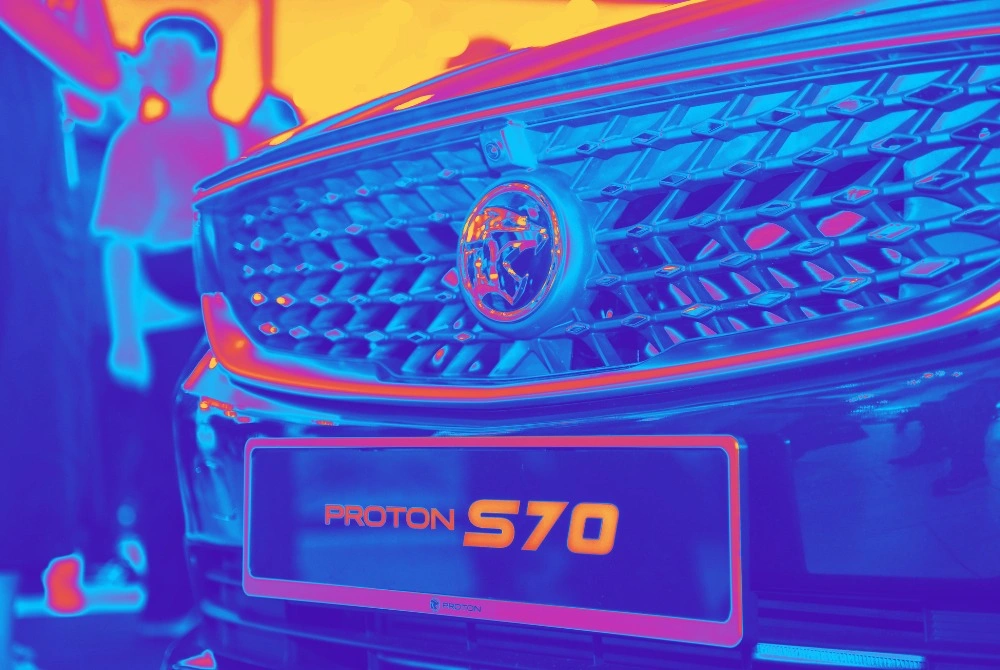
‘The selection of the Proton S70 as the taxi model under this programme was made based on its suitability for taxi operations, including safety, comfort and fuel efficiency.’
KUALA LUMPUR: The National Madani Taxi Renewal Programme will see the Proton S70 introduced as the country’s new taxi model, chosen for its safety, comfort and fuel efficiency.
Transport Minister Anthony Loke said the initiative aims to help taxi drivers transition to newer, higher-quality vehicles while enhancing the passenger experience and restoring public confidence in taxi services.
“The selection of the Proton S70 as the taxi model under this programme was made based on its suitability for taxi operations, including safety, comfort and fuel efficiency.
“This approach is in line with the government’s efforts to encourage the use of more modern and higher-quality taxis to increase public confidence in taxi services,” he said during the launch of the programme today.
Loke also highlighted Proton as the first national carmaker to collaborate with the government under the taxi rejuvenation programme.
“This collaboration creates greater opportunities for taxi drivers to transition to more modern, safer and higher-quality vehicles. At the same time, the quality of service provided to passengers can also be improved,” he said.
To support the programme, the DRB-HICOM Group, through EON-Avis, together with financial institutions, will provide financing options to help taxi drivers switch to new vehicles according to their financial capabilities.
Loke said the transformation of the taxi industry goes beyond replacing ageing vehicles with new ones.
“Today, the way people use transport has changed. In the past, passengers waited for taxis at taxi stands or by the roadside, but today, bookings are made through applications.
“That is why the transformation of the taxi industry is not merely about replacing old taxis with new ones, but also about ensuring taxi drivers have more opportunities to receive bookings through e-hailing platforms,” he said.
He added that the government views taxis and e-hailing services as complementary rather than competing modes of transport.
“We do not see the two as competitors, but as strategic partners that complement each other in providing better services to the people while helping increase taxi drivers’ income.”
Among the programme’s key measures are priority inspections for taxis at Puspakom and other licensed Motor Vehicle Inspection Centres (PPKM), as well as the introduction of a new taxi identity featuring a modern design without the traditional taxi topper, a special “GET” registration plate and digital taxi meters.
Under the programme, taxi drivers are expected to benefit from lower maintenance costs, improved safety and a more comfortable driving experience, while passengers will enjoy safer, higher-quality and more reliable taxi services.
The launch follows the government’s Budget 2026 announcement, which introduced a 100% exemption on excise duty and sales tax for taxi and private hire vehicle owners purchasing new nationally manufactured taxis or rental vehicles.
The incentive is aimed at lowering the cost of vehicle ownership and accelerating the renewal of the nation’s ageing taxi fleet.
Led by the Transport Ministry (MOT), the programme gives taxi drivers the opportunity to upgrade to more modern, safer and higher-quality vehicles while improving operational efficiency and reinforcing the role of taxis within the country’s public transport network.



