




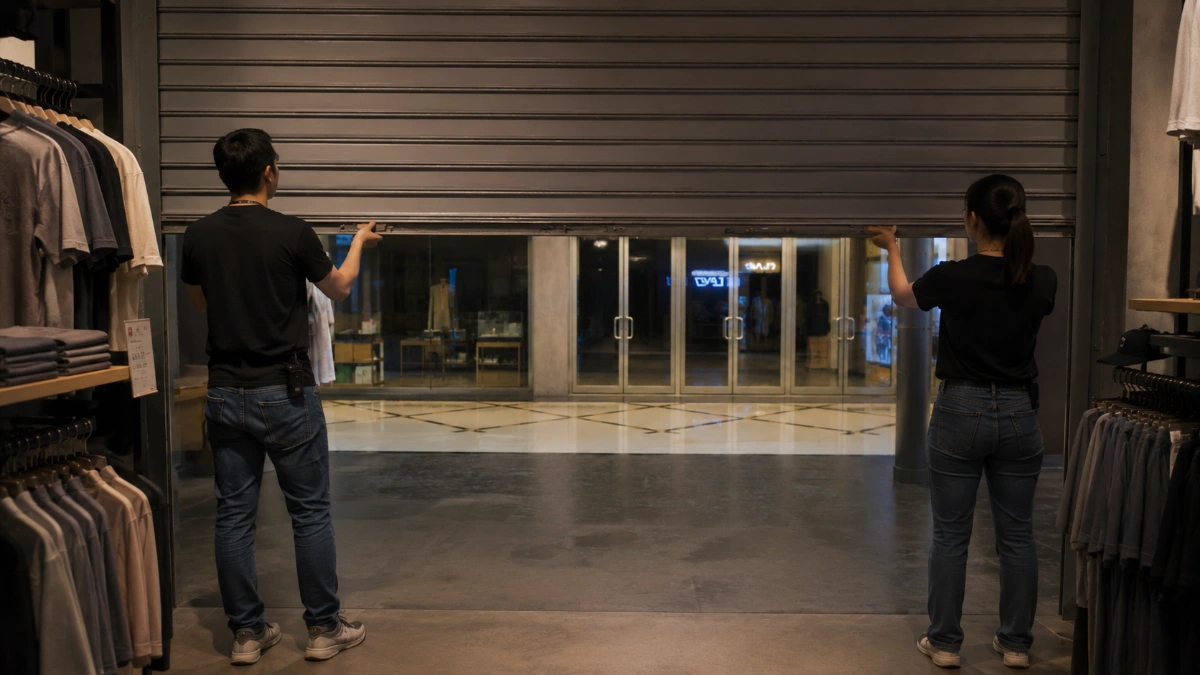
Retail workers snap as entitled customers crawl under closing shutters and browse without buying, sparking a fierce online debate about dignity versus convenience.
WHEN a customer crawls under a half-lowered security shutter to browse clothes, it is not a scene from a disaster film but a typical Tuesday night for many Malaysian retail staff.
This specific image of entitlement and disregard has caused many retail workers to reach breaking point, sparking fierce debate online.
It reflects the growing tension between customer convenience and workers’ right to be treated with dignity.
On Threads, one user vented their frustration at shoppers who arrive just as stores are preparing to close.
The original post described customers entering at 9.30pm, even though malls are scheduled to close at 10pm, acting as if they owned the premises.
The author stated that these latecomers often do not even make purchases but instead demand exchanges or spend time browsing indecisively.
The post appealed for basic consideration, stating: “We just want to go home, and you turn up acting as if you own the place.”
The post struck a chord with hundreds of service industry workers.
One user highlighted the inevitable backlash from entitled customers, noting that some would likely leave negative Google reviews claiming staff were lazy for enforcing closing times.
Another commenter shared a vivid anecdote about a customer who entered when the lights were already off and the shutter was halfway down, only to ask whether the store was closed. The staff member’s silent disbelief was palpable.
The discussion deepened with accounts of customers physically entering stores after closing time. One user described shoppers literally crawling under partially lowered shutters to browse clothing, displaying a complete lack of awareness or respect for store boundaries.
When confronted, these individuals often dismissed the situation by claiming they were “just looking”, ignoring the fact that closing procedures were already underway.
Financial considerations also emerged in the discussion. One netizen pointed out that tolerance for such behaviour varies by sector. Luxury brand retailers may be more willing to accommodate late shoppers because a single transaction can generate substantial commission.
In contrast, mass-market retail staff face the same pressure without the financial incentive, while also having to complete cash reconciliation and stock-taking procedures that cannot simply be paused for someone who is only browsing.
Another worker shared that last-minute shoppers rarely make quick purchasing decisions. Instead, they often spend more than 30 minutes browsing before leaving without buying anything, sometimes leaving merchandise in disarray. This forces staff to stay back to tidy the store, directly affecting their ability to leave work on time.



