




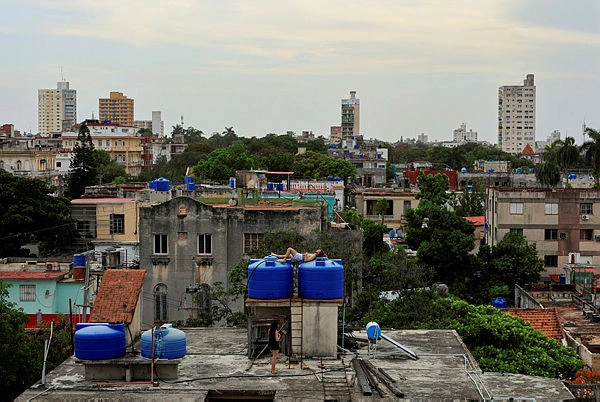
Power returns to most of Cuba a day after the third nationwide blackout in six months amid a severe economic crisis and US fuel blockade.
HAVANA: Power was restored to large parts of Cuba on Tuesday, a day after the third nationwide blackout in six months on the island, which is reeling from a severe economic crisis and US fuel blockade.
Ten of the country’s 15 provinces had been reconnected to the grid by Tuesday afternoon, but the low level of electricity output, caused in part by the oil blockade, meant some homes were still without power.
The Caribbean island was already struggling to keep the lights on during its worst crisis in decades when US President Donald Trump cut off its oil supplies in January as part of a pressure campaign aimed at ending six decades of communist rule.
With only one oil tanker from Russia making it to Cuba’s shores since then, the country’s creaking Soviet-era power plants are running out of critical fuel needed to generate electricity.
Monday’s blackout — the eighth on the island since late 2024 — was caused by voltage instability and low levels of electricity output, authorities said Tuesday.
It came as the state imposes increasingly draconian power cuts across the country — over 30 hours at a stretch in parts of Havana and over 70 hours in some rural areas — in a desperate attempt to conserve fuel.
President Miguel Diaz-Canel on Monday lambasted what he called Washington’s “genocidal” energy blockade, accusing the United States of trying to “trigger social unrest through strangulation.”
Foreign Minister Bruno Rodriguez used a UN General Assembly debate on the situation to accuse the United States of waging “multi-dimensional, non-conventional warfare” against its longtime foe situated just 90 miels (150 kilometers) off Florida.
Coping strategies
Power outages have been a feature of life for years in Cuba.
But the situation has deteriorated sharply since the start of the year.
Food, medicine and drinking water are all in short supply as state services collapses.
Rebeca Ceballo, a 73-year-old pensioner, said Cubans have learned how to deal with the challenges.
“You have to adapt,” she said.
Trump points to the US overthrow of Venezuela’s socialist president Nicolas Maduro and installation of a Washington-friendly successor as a potential blueprint for what he would like to achieve in Cuba.
Cuba has repeatedly said its political model is not up for discussion and vowed to resist any invasion militarily, but recently adopted a package of sweeping free-market reforms.
But it cuts an increasingly lonely figure on the world stage.
In a sign of its growing isolation, some traditional supporters, such as Germany and Canada, abstained from Tuesday’s vote at the UN on whether to debate the US fuel blockade.



