




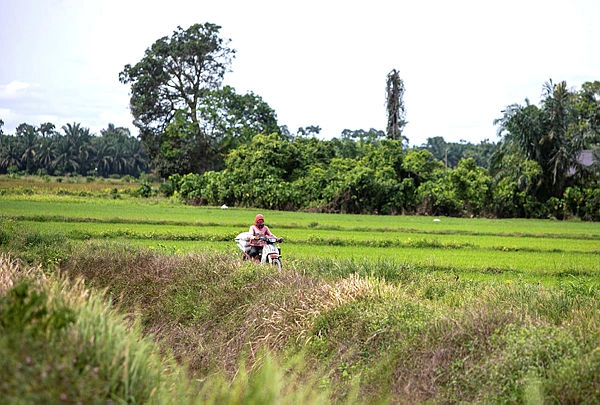
Hot weather and pump breakdowns have affected over 400 hectares of padi in Perak, disrupting the second cultivation season for farmers.
PARIT: More than 400 hectares of padi cultivation in Lambor Kanan, here, have been affected by hot weather, causing farmers to fail to start the second season of cultivation scheduled for this month.
Perak Malaysian Farmers’ Brotherhood Organisation (Pesawah) chairman Azhar Hashim said his party was informed that the problem had been ongoing since the beginning of the year and was caused by the breakdown of two pumps at Lambor Kanan Pump House, thus affecting the water supply from Sungai Perak to the padi cultivation areas in the affected locations.
“The situation has caused the growth of padi to be stunted because the plants do not receive sufficient water supply, thus affecting the plant growth and padi content.
“Padi farmers here should have finished harvesting the first season’s produce (in March) and this month (July) has entered the second planting season. However, the water supply problem has disrupted the planting schedule and they have lost a crop season,” he said.
He said this when met by reporters after conducting a survey of the padi planting area in Lambor Kanan, here, today.
Azhar said his party hoped that the pump problem could be resolved immediately because it would affect the livelihood of the padi farmers who depend entirely on the produce of the crop to continue their lives.
“We ask the authorities to take immediate action to ensure that the same problem does not recur and persist, causing padi farmers to suffer greater losses,” he said.
Meanwhile, Perak Tengah District Community Development chairman Nordin Abdul Malek said his party proposed a special task force to deal with weather problems for padi farmers at the district level.
He said the committee should compose relevant agencies such as the Irrigation and Drainage Department (JPS), the State Agriculture Department, Tenaga Nasional Berhad (TNB) and other relevant parties to coordinate actions to address issues of water supply, irrigation systems and padi farmers’ needs more comprehensively.
“For example, this month is expected to see El Nino. So, this committee can act as the main coordinator to ensure that preventive measures and immediate action can be implemented before the problem becomes more serious,” he said.
In addition, he said the matter needed to be given serious attention because he was concerned that more and more rice farmers were losing interest in cultivating rice after facing repeated losses due to various challenges including weather problems and production costs.



