




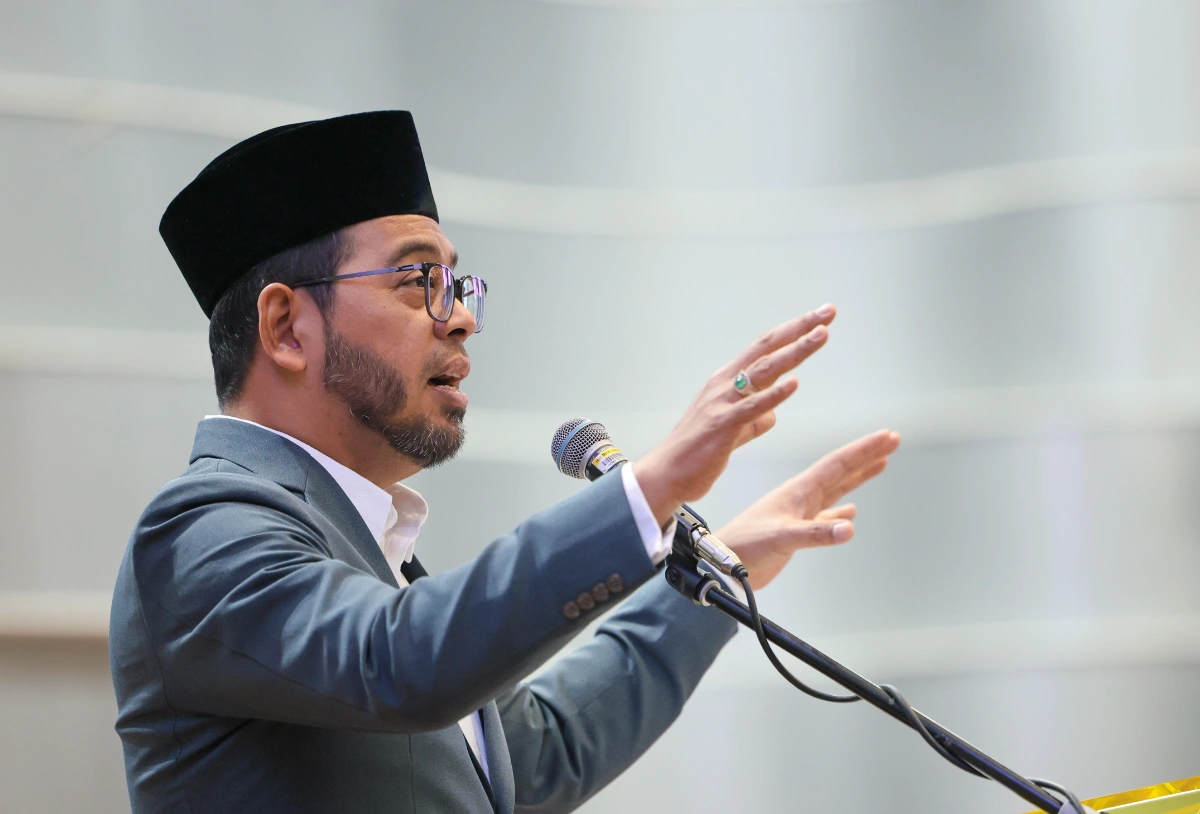
The government will refine the National Waqf Master Plan with state input to improve waqf management efficiency.
KUALA NERUS: The Prime Minister’s Department (Religious Affairs) will refine the National Waqf Master Plan by taking into account views from all states to ensure waqf management in the country is more efficient, competitive and in line with current needs.
Minister Dr Zulkifli Hasan said the master plan was already in place but required further refinement, particularly in the management of various forms of waqf assets rather than focusing solely on land and property.
“One of the key areas that requires attention is improving the efficiency of waqf management, not only in relation to land and property but also all forms of waqf assets,” he told reporters after officiating at the National Baitulmal Convention (KBK) 2026 at Dewan Al-Muktafi Billah Shah, Universiti Sultan Zainal Abidin (UniSZA) here today.
He said the MADANI Government and the relevant agencies now have a competitive and comprehensive master plan to be implemented collectively, enabling new opportunities to be identified to further strengthen waqf institutions.
Malaysia has several strategic institutions and agencies that play a key role in strengthening waqf development, including the Department of Waqf, Zakat and Haj (JAWHAR), Yayasan Wakaf Malaysia and Permodalan Wakaf Nasional.
However, he said the administration of waqf affairs at the state level remains under the jurisdiction of the State Islamic Religious Councils (MAIN). As such, close cooperation between the Federal Government and the states would continue to be strengthened through existing platforms.
He said continued collaboration among the relevant institutions and agencies was expected to position Malaysia among the leading countries in waqf development.
Commenting on the proposals put forward by Sultan Nazrin Shah of Perak on strengthening Islamic waqf management, Zulkifli said the guidance provided by the ruler would serve as a reference in efforts to enhance the country’s waqf management and development.
He said Malaysia has also recorded various achievements in the waqf sector through the introduction of more advanced and sophisticated waqf products based on hybrid instruments, while strengthening synergy between the public and private sectors through the public-private partnership approach.
“God willing, these efforts will continue to be strengthened, and we express our utmost appreciation for His Royal Highness’s proposals, which will serve as a guide in further strengthening waqf development in the country,” he said.
Yesterday, Sultan Nazrin proposed the establishment of a common set of internationally adoptable core principles for waqf governance to strengthen the management of Islamic endowments worldwide. The Perak Sultan said the proposed framework should build on existing waqf governance standards developed by Indonesia, the Accounting and Auditing Organisation for Islamic Financial Institutions (AAOIFI) and Kazakhstan. He also suggested that the International Centre for Education in Islamic Finance (INCEIF) University be considered to serve as the secretariat.



