




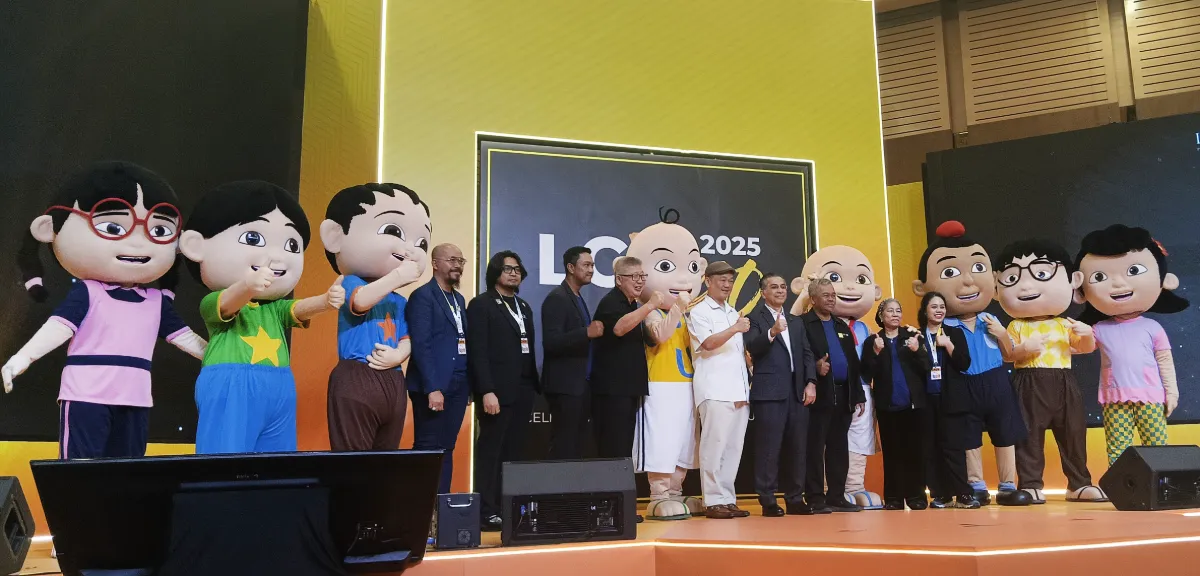
KUALA LUMPUR: The announcement of the Upin & Ipin Theme Park marks a significant milestone for Malaysia’s entertainment and property landscape, with the joint development by King’s Park Management Sdn Bhd a rare commitment in the industry and a major step forward for a homegrown intellectual property.
The project, undertaken in partnership with Les’ Copaque Production Sdn Bhd, has been years in the making and represents a long-term vision finally materialising.
According to Erman Taib, CEO of Quality Home Realty (M) Sdn Bhd, the journey began nearly a decade ago as the team sought the right collaborator capable of elevating Upin & Ipin into a world-class attraction.
Various proposals and locations were explored over the years, each contributing to deeper industry understanding and strengthening the pursuit of the ideal partnership.
“The process taught us patience and clarity. We knew the right partnership required more than just land or funding — it needed belief in the potential of a uniquely Malaysian IP,” Erman shared when met at the announcement event at the World Trade Centre.
Industry players were consulted throughout the process, including surveyors, developers and strategic advisers, who played an essential role in identifying a partner with the capability and confidence to undertake such a large-scale entertainment venture.
Affiq Hakim Kamisan, the chartered surveyor involved in the early assessments, noted that the development’s first phase will span more than 50 acres within King’s Park’s master plan.
“The Upin & Ipin theme park will eventually sit among other major brands, bringing together a vibrant entertainment ecosystem in Genting Highlands,” he said.
From a legal standpoint, Asiah & Hisam Advocates & Solicitors served as the legal adviser for the collaboration.
Its managing partner, Ahmad Ziadi Zaidon, said, the partnership represents a significant development for Malaysia’s creative, commercial and intellectual property ecosystem.
“This collaboration underscores the maturity and commercial strength of Malaysian intellectual property. When a single local IP like Upin & Ipin is able to anchor a project of this scale, it reflects increasing confidence from industry players in the value of homegrown brands,” Ziadi said.
He noted that the development serves as a strategic reminder to Malaysian businesses, particularly SMEs, that intellectual property is no longer a peripheral asset, but a core driver of commercial growth.
“In today’s market, IP is not merely a legal formality. It is a business asset that determines scalability, investor confidence and long-term commercial potential. Many SMEs only realise this after opportunities pass them by,” he explained.
Ziadi emphasised that successful partnerships of this magnitude are built upon proper IP structuring, documentation and protection conducted at the earliest stages.
“When ideas carry commercial promise, the right IP framework transforms them into tangible economic value. This is what enables collaborations of this nature to happen—and it is a process every growing business should take seriously.”
He hopes the landmark project will encourage more Malaysian companies to recognise the strategic importance of safeguarding their intellectual property.
“Malaysia has world-class creativity and innovation. With proper IP protection, SMEs can position themselves for partnerships, funding and expansion far beyond the domestic market. Strong IP is the foundation that allows a business to scale with confidence,” Ziadi said.



