




A reflective Christmas essay on public fear, resilience and choosing shared joy despite modern anxieties and threats UK
ANOTHER Christmas circles the calendar, another year gasps its last breaths. We string up lights as if to ward off the deepening dusk, gathering in glittering clusters under trees like the one at Rockefeller Centre, a monument of pine and wire that feels less like celebration and more like a defiant beacon in a rising fog.
I stood there days ago, shoulder-to-shoulder with hundreds of joyful faces, bathed in that cold, perfect glow. And all I could think was: what a spectacular target we make. This is not grief. Grief is for a singular, devastating loss. This is something else – a constant, low-grade anxiety at the base of the skull, the emotional equivalent of an emergency broadcast system test.
It is a background app of our life, draining us, the fear that we are not safe anywhere. Death, of course, has always kept its own course. But the manner of its RSVP these days feels borrowed from a movie script or a boring fiction we may have read.
It is not just being in the wrong place at the wrong time anymore. It is the chilling notion that any place can become the wrong place and any time, especially a time of collective joy, can be twisted into the wrong time.
The news feed confirms it with brutal efficiency. A beach sojourn on a sunny summer, a university library, a village or a place of worship are all platforms for life turned into stages for senseless finales. The logic is impossible to comprehend.
How can one person look at another and see anything but a fellow life deserving of grace? The extent of hatred that ends in cold blood is a language we have all been forced to hear but none of us can speak.
So, we are left not just mourning the victims but also the very idea of public peace. We have become experts of exit strategies, subconsciously mapping escape routes in a restaurant. For example, judging the density of a crowd not by its energy but by its potential for crush or concealment.
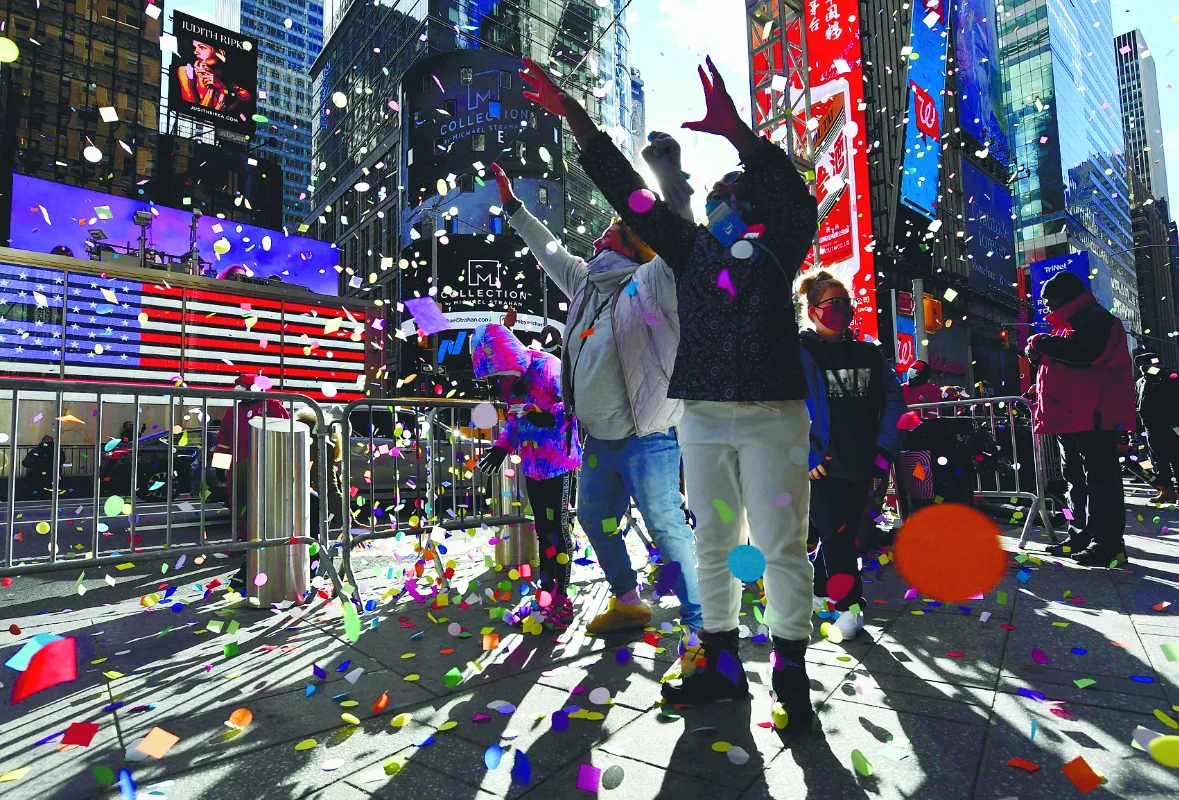
Yet, here is the truly cynical miracle: we still go, we gather and we bring our children to see the giant tree. We fill the stadiums, pack the concerts and gather in places of worship and spirituality. It is not heroism, not exactly. It is a complex, flawed and deeply human form of coping. It is a mutual, unspoken agreement to pretend the uninvited guest isn’t in the room, just so we can have a few hours of normalcy.
We trade the absolute safety of our locked homes for the energy of shared experiences. The spectacle becomes a ritual of defiance. Every string of lights is our head held up to the gloom, a collective whisper that says, “you will not make us hide”.
We cope by living in the contradiction. We acknowledge the vulnerability that the very act of gathering is a risk and we choose to pay the price.
We have commercialised our own anxiety, buying tickets to events that will be secured by a small army of personnel scanning for threats we hope they will catch. We call it “security theatre” and we participate enthusiastically because even theatre is a structure, a script, and that feels better than chaos.
We cultivate a dark, necessary humour. We make memes about our doom-scrolling. We joke about the end of the world over coffee or teh tarik. We brave any eventuality and choose not to be paralysed by the unknown. To say “yes, this is a perfect target” while still walking through the target, is the ultimate act of weary modern resistance. Perhaps this is the new normal, a life lived with a dual consciousness. One part of the brain admires the beauty of a holiday, the other – almost idly – considers how shrapnel may travel through the plaza.
It is not healthy but it is functional. It allows joy to exist, not as a naive state, but as a conscious, hard-won choice. The light does not blind us to the darkness; we simply decide, en masse, to look at the light anyway.
I am days away from home where it feels safer. But is it? At its deepest level, the feeling of being safe taps into an ancient, biological imperative – the den, the nest and the cave – a bounded space, able to be defended, where you can rest, heal and be vulnerable. The walls are symbolically an extension of your own skin.
When from afar I saw social media expansively featuring the crowded streets in Bukit Bintang as revellers had decided not to miss out, I said a silent prayer.
The year ends not with a sense of safety restored but with a grudging acceptance of the precarious balance. We will gather, knowing we are gathered. We will celebrate, acknowledging the risk celebration now implies. And we will do it, not because we are foolish, but because the alternative – ceding all public spaces to the spectre of chaos – is a slower, colder kind of death.
The trees are lit and up. The crowd is everywhere. Let the record show we were present – foolishly, courageously, cynically and wonderfully alive, despite everything.
Merry Christmas and a Happy New Year.
Dr Bhavani Krishna Iyer holds a doctorate in English literature. Her professional background encompasses teaching, journalism and public relations. She is currently pursuing a second master’s degree in counselling. Comments: [email protected]



