




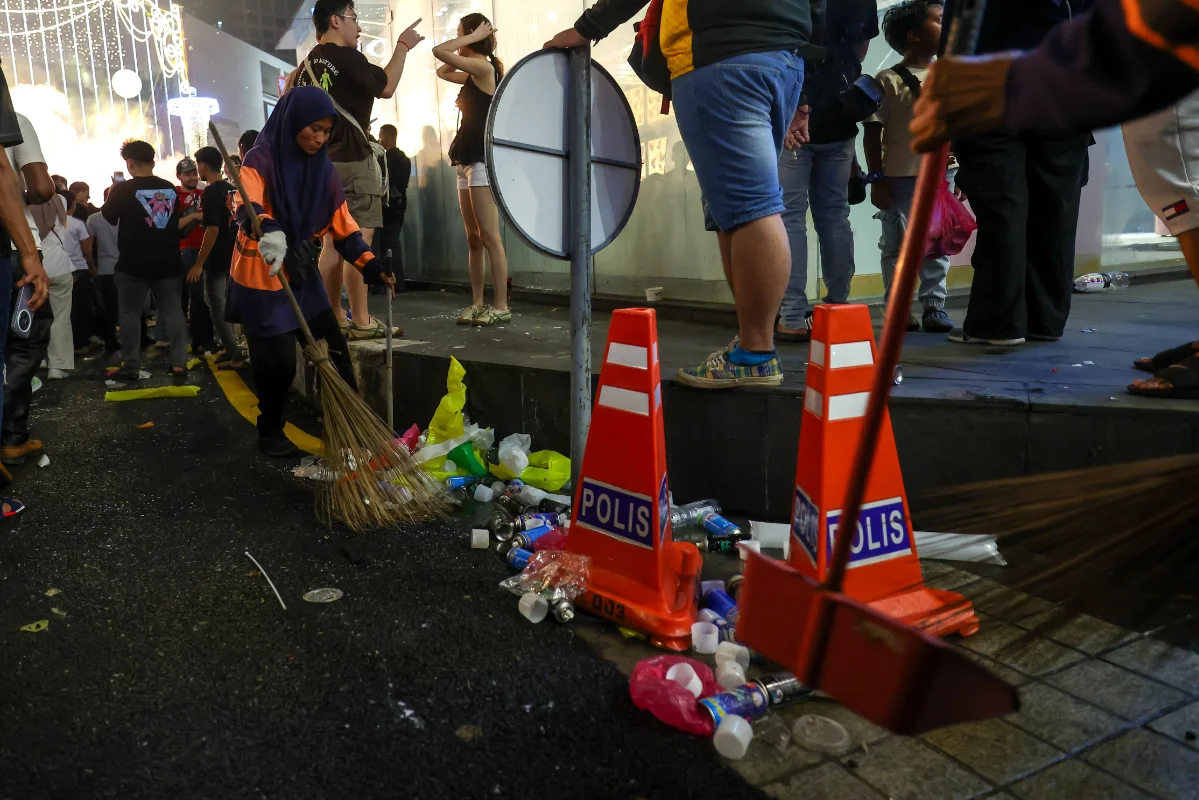
Alam Flora collected 3.2 tonnes of waste from Kuala Lumpur’s New Year’s Eve hotspots, an 11% decrease from 2025, with KLCC generating the most.
KUALA LUMPUR: Alam Flora Sdn Bhd collected approximately 3.2 tonnes of waste from three major areas in Kuala Lumpur during the 2026 New Year’s Eve celebrations.
This represents an 11% decrease from the 3.6 tonnes collected during the previous year’s festivities.
The cleanup operation targeted high-traffic public areas including Bukit Bintang, Dataran Merdeka and the vicinity of the Petronas Twin Towers (KLCC).
Operations ran from 10pm on New Year’s Eve until 8am today to ensure the city was restored to a clean state.
Chief executive officer Shariman Yusuf Mohamed Zain said KLCC recorded the highest amount of waste at 1.4 tonnes.
Bukit Bintang generated one tonne of waste, while Dataran Merdeka produced 0.8 tonnes.
A total of 152 personnel were involved in the operation, including management staff, pre-cleaning teams, drivers and general crews.
The company strategically placed 36 large and 25 smaller mobile garbage bins to facilitate proper waste disposal.
Three compactor trucks were deployed for efficient collection, and water jets were used to wash pavements in high-footfall areas.
Shariman Yusuf noted that this year’s waste collection was relatively manageable, especially at Bukit Bintang.
“Crowd sizes at each location may vary depending on public preferences for celebration spots,” he said.
“Nevertheless, our teams remain fully prepared to manage waste collection efficiently, regardless of turnout.”
He stressed the company’s ongoing dedication to environmental sustainability and urban cleanliness.
The initiative aligns with the company’s mission to enhance community well-being and contribute to a greener future.
He said the effort also reflects parent company Malakoff’s commitment to responsible operations.
It supports Malakoff Environmental Solutions’ focus on environmental management and delivering solutions for society and the planet.
The cleanup is in line with the United Nations Sustainable Development Goal number 11.
This goal aims to make cities and human settlements inclusive, safe, resilient and sustainable.



